LOCAL FIT KUMANOBack to list
Oyunohara: The "Birthplace" of Kumano Hongu Taisha
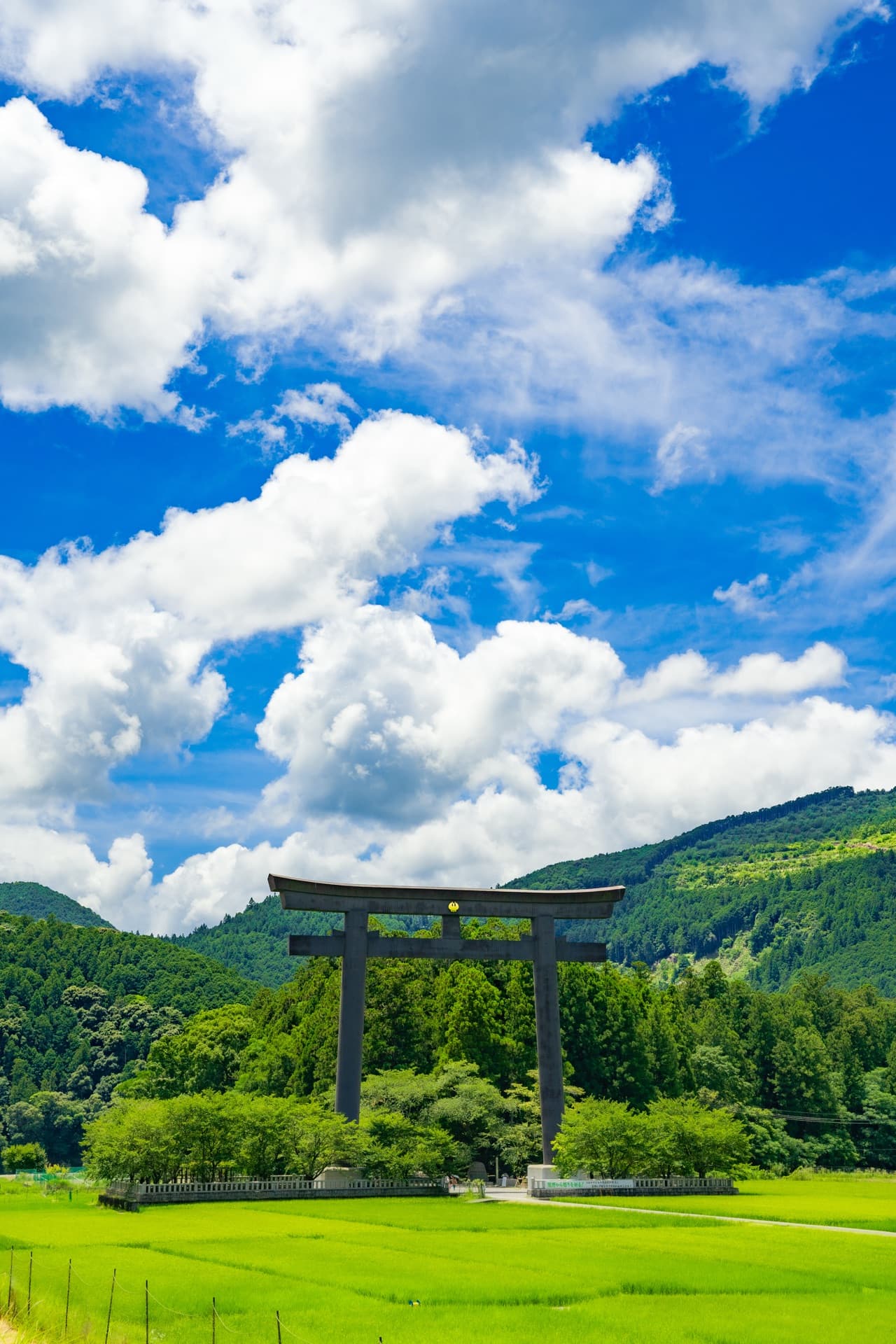
Along the Kumano River in Hongu, Tanabe City, a massive torii gate rises into view beyond the rice fields. This is the entrance to Oyunohara. It is the former site of Kumano Hongu Taisha and is also included as a component of the UNESCO World Heritage Site "Sacred Sites and Pilgrimage Routes in the Kii Mountain Range."
Oyunohara is situated on a sandbank-like piece of land formed at the confluence of the Kumano, Otonashi, and Iwata Rivers. Shrine halls once stood here, and many pilgrims visited. If you're paying your respects at Kumano Hongu Taisha, this is a place to visit together with the current shrine.
The Great Flood of the Meiji Era and the Shrine's Relocation
In 1889 (Meiji 22), most of the shrine buildings at the original site were washed away in a great flood. The surviving structures were later moved to the current elevated site, forming the Kumano Hongu Taisha we see today.
Oyunohara remains a vast, open forest space with no shrine buildings. Precisely because nothing stands here, it is easier to imagine the former grandeur and the Kumano faith that lived alongside the rivers.
Highlights of the Great Torii
The great torii at the entrance is known as one of the largest in Japan. Looking up at it from nearby, you'll be overwhelmed by its scale.
Try Different Angles
- From a distance: Viewed beyond the rice fields, it embodies the quintessential Hongu landscape. Its expression changes with the seasons and weather.
- At its base: Standing beneath the torii, you can truly appreciate the thickness of its pillars.
- Looking back: After passing through the torii, turn around from inside the grounds and the mountains and sky frame the scene like a picture.
A Recommended Order for Visiting with Hongu Taisha
The Suggested Flow: "Hongu Taisha → Oyunohara"
We recommend visiting the current Kumano Hongu Taisha first, then heading to Oyunohara. Walking the former site after understanding why the shrine was relocated changes the way you see it. From the shrine, it's about a 10-to-15-minute walk at a relaxed pace.
What to See on the Grounds
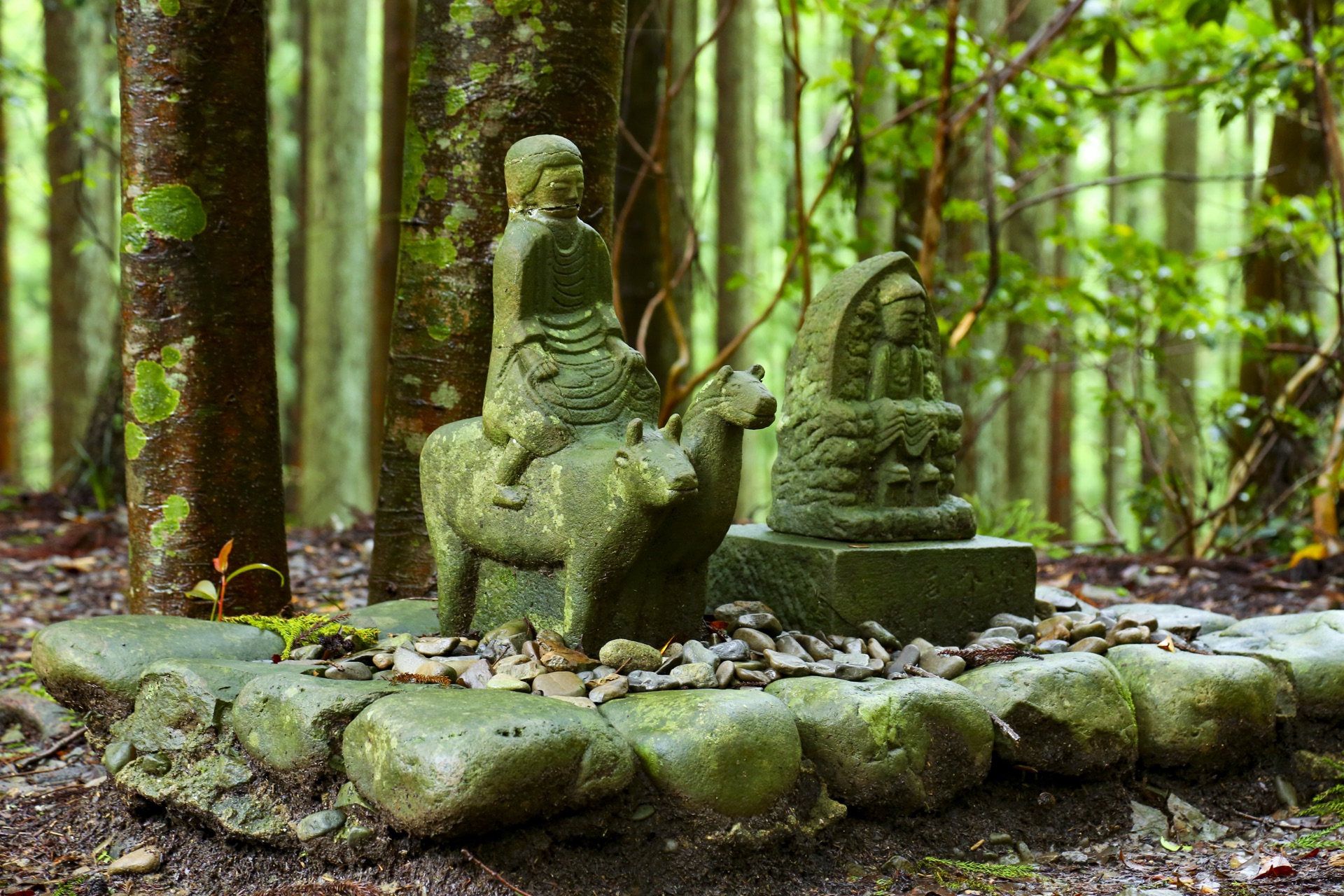
Small stone shrines line the grounds of Oyunohara. They symbolize the deities once enshrined at Hongu, and you'll often see visitors placing their hands together in prayer. It's a place to approach with a quiet heart.
Tips for Walking and Best Times to Visit
- Mornings and evenings are less crowded, with softer light, making for a more peaceful experience.
- The area around the torii can become muddy underfoot. Wear comfortable walking shoes.
- This is a sacred area. Avoid loud voices, and be mindful of others when taking photos.
- In summer, there is little shade, so a hat and water are advisable.
Combining Your Visit with the Kumano Kodo
Hongu is also the final destination of the Nakahechi route of the Kumano Kodo. For those who have walked the ancient trail, visiting Hongu Taisha and then continuing on to Oyunohara makes for a fitting conclusion to the journey. Even if you arrive by car or public transport, you can comfortably cover the area in half a day.
Summary
Oyunohara in Hongu, Tanabe City is another face of Kumano Hongu Taisha, told through its great torii and expansive forest. As you reflect on its history as a World Heritage sacred site, take your time and walk slowly. It may not be flashy, but it is a place where quiet emotion stays with you.
*Opening hours and visiting rules may change. Please check official information before your visit.
Image: 大斎原 (via (公社)和歌山県観光連盟)