LOCAL FIT KUMANOBack to list
Nonaka in Nakahechi, Tanabe: A Village Where You Can Feel the Kodo's Atmosphere Without Long Hiking
The Kumano Kodo Nakahechi route is long, and walking the entire trail takes both stamina and several days. For those times, we'd like to recommend the village of Nonaka in Nakahechi, Tanabe.
Here, you'll find classic Kumano Kodo highlights—Tsugizakura-oji, Nonaka's Ippo-sugi (one-sided cedars), and Nonaka Spring—all gathered within walking distance. It's a small mountain hamlet, so even on days when you can't walk long distances, you can still soak up plenty of the old road's atmosphere.
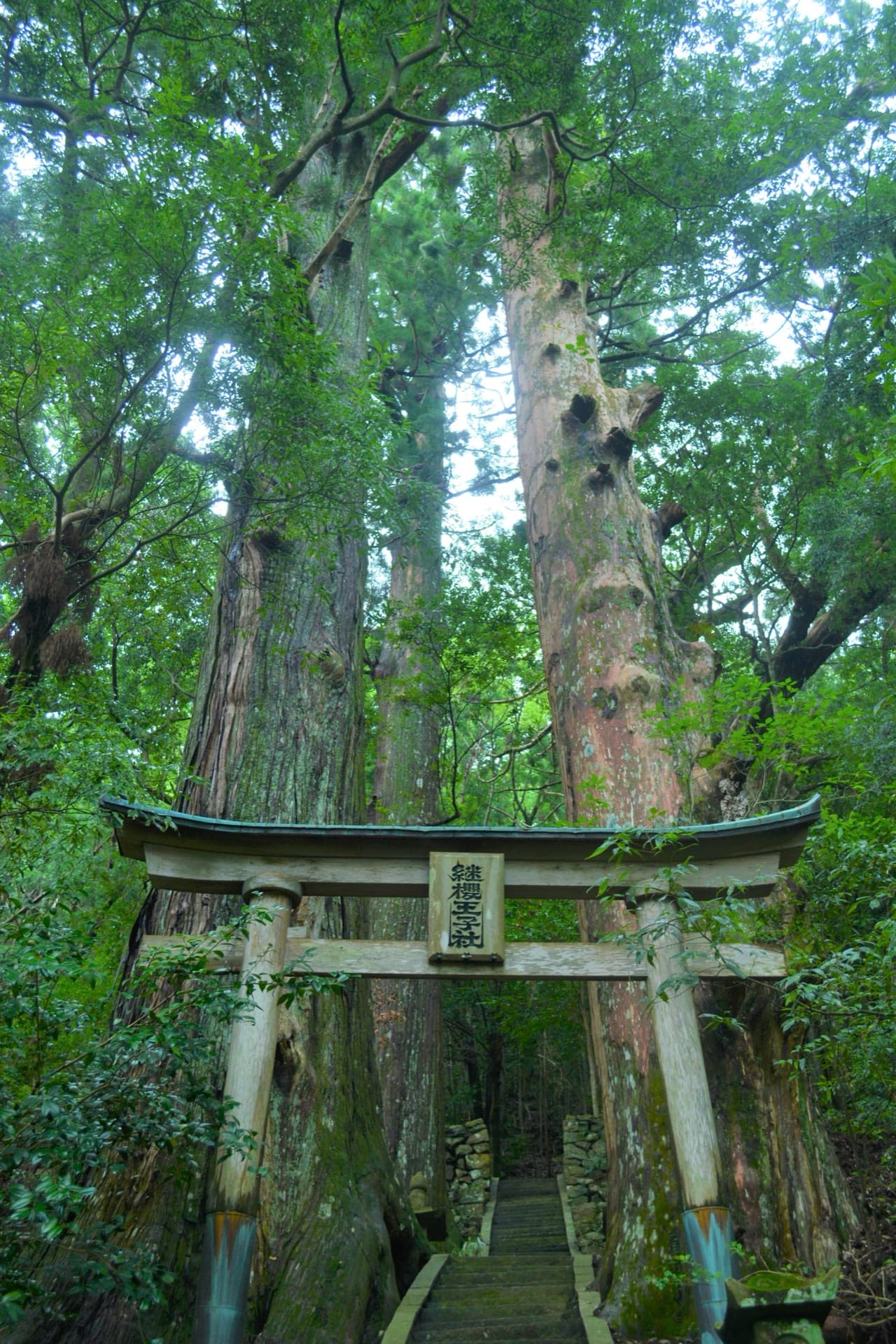
Tsugizakura-oji | One of the Ninety-Nine Oji Shrines, Where Travelers Prayed for Safe Passage
A Look at the Name's Origin
Tsugizakura-oji is one of the 'Ninety-Nine Oji' shrines that line the Kumano pilgrimage routes. The name 'Tsugizakura' (literally 'grafted cherry') is tied to a legend about Fujiwara no Hidehira of Oshu. Reading the on-site explanation of its origin makes the pilgrims of nearly a thousand years ago feel a little closer.
How to Appreciate an Oji Shrine
Oji shrines were places where travelers heading to Kumano prayed for safety along the way. Rather than looking for grand halls, turn your attention to the atmosphere of the precincts and the presence of the trees. For the basics, our existing article 'What Is an Oji Shrine?' is also a helpful reference.
Nonaka's Ippo-sugi | Mysterious Giant Cedars Whose Branches All Stretch the Same Way
As you walk through the Tsugizakura-oji precincts, towering ancient cedars come into view. These are Nonaka's Ippo-sugi. As the name suggests, their branches extend in only one direction—said to point toward Kumano Hongu.
True or not, once you hear this, you can't help but look up to check the direction of the branches. You can sense how, since ancient times, people have projected their thoughts of Kumano onto these cedars.
Tips for Looking Up
- Stand close to a trunk and slowly raise your gaze from the roots to the treetop
- Step back a little and look at how the branches all align
- Observe the shadows on the trunks in the slanting light of morning or evening
Nonaka Spring | A Famed Water Village Where You Can Rest Your Tired Feet
Within the village lies Nonaka Spring. Selected by Japan's Ministry of the Environment as one of the '100 Famous Waters of Japan,' it has long been beloved as a spring that quenched travelers' thirst.
To find a place where water flows along the Kumano Kodo is truly a blessing. Please always check the on-site signage for information on whether the water is potable and for rules on its use. When filling your own flask, remember to be considerate of others around you.
Putting Together a Half-Day Stroll
1. Morning: Visit Tsugizakura-oji and take in the Ippo-sugi at a leisurely pace
2. Around midday: Stop by Nonaka Spring and enjoy the atmosphere of the village
3. Afternoon: Depending on your time and energy, walk a short section of the old road nearby
The trick is not to be greedy—leave plenty of time to pause along the way. Getting here mainly means using local buses or a car. Buses are often infrequent, so be sure to check the timetable in advance for peace of mind.
What to Bring and How to Approach the Walk
- Non-slip shoes (especially on stone paving or earthen paths after rain)
- Water and a light snack
- Rain gear and an extra layer (temperatures change quickly in the mountains)
- Plenty of unhurried time to take in the giant trees and the spring
In Closing
Tsugizakura-oji, Nonaka's Ippo-sugi, and Nonaka Spring. Nonaka, where all three come together, is a small gem along the Kumano Kodo Nakahechi where you can experience prayer, giant trees, and famed water all at once. Even on days when you can't walk far, if you pause here, you'll find yourself touching the same flow of time as the pilgrims of a thousand years ago.
Image: 熊野古道中辺路 継桜王子 (via (公社)和歌山県観光連盟)