 LOCAL FIT KUMANOBack to list
At Kumano's shrines and souvenir shops, you'll encounter a black bird with three legs. Many visitors wonder, "Why does the Yatagarasu have three legs?" In this article, we gently unpack the theories behind this mystery, and following the theme of "three," we also introduce recommended Kumano hot springs to soothe your feet after a day of walking.
Why Does the Yatagarasu Have Three Legs? Three Leading Theories
The Yatagarasu is the bird said to have guided Emperor Jimmu on his journey from Kumano to Yamato. There is no single accepted reason for its three legs — instead, several theories are passed down.
1. Modeled After China's "Three-Legged Crow"
Ancient China has a legend of a three-legged crow living inside the sun. It is thought that this image of a solar bird was transmitted to Japan, where it merged with the figure of the guiding bird.
2. Symbolizing "Heaven, Earth, and Humanity"
This interpretation likens the three legs to the harmony of heaven, earth, and humanity. It's a view often introduced because it resonates with Kumano's spiritual world, where gods, nature, and people support one another.
3. Representing the Three Kumano Sanzan Shrines
Some enjoy linking the three legs to the three sacred sites of Hongu, Hayatama, and Nachi. Rather than an origin story, this is better known as a playful way for travelers to appreciate the symbol.
The fascinating thing about legends is that none of these theories can be declared the single "correct" answer.
Choosing a Kumano Hot Spring, Inspired by the "Three Legs"
Just as the bird stands firmly on three legs, Kumano's hot springs are easier to choose when sorted into three types. Use this as a guide for resting feet weary from walking the ancient trails and visiting shrines and temples.
Leg One: Experience the Atmosphere of a Healing Spring — Yunomine Onsen
This mountain hot spring has long been cherished as a traditional healing (tōji) retreat. Thinking of its history as a place where pilgrims readied body and mind before and after their journeys, the very act of soaking feels like part of the Kumano pilgrimage. Recommended for those seeking quiet time.
Leg Two: Riverside Openness — Kawayu Onsen
This hot spring area stretches along the banks of the Otonashi (Ōtō) River. With the sound of the river and a sense of open space, it suits those who want to relax in nature.
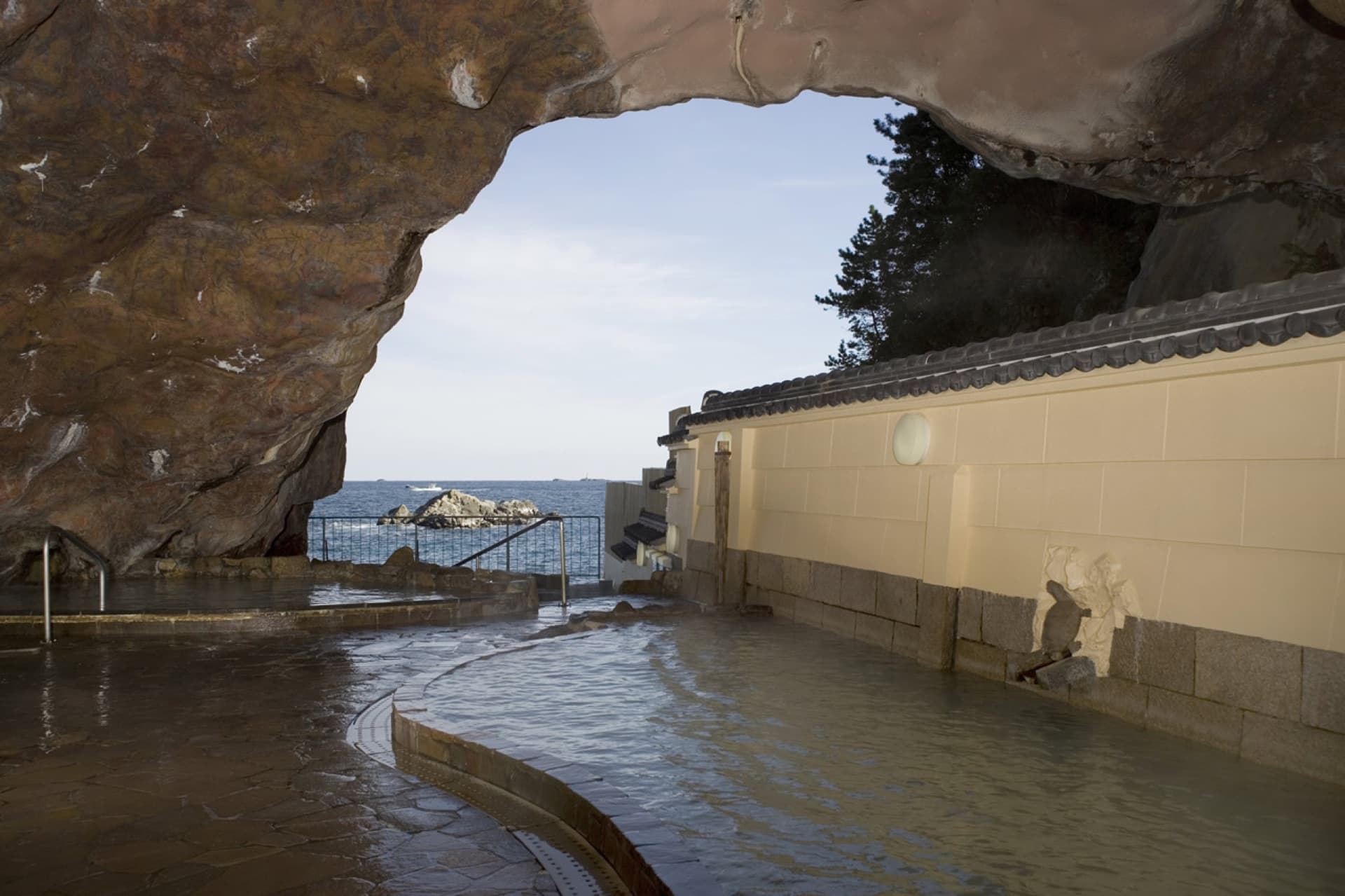
Leg Three: Enjoy Seaside Baths — Katsuura Onsen
This coastal hot spring area is easy to combine with visits to Nachi Falls and Daimonzaka. Descending from the sacred mountains to the port town and closing your journey with ocean views is a luxury unique to Kumano.
When in Doubt, Choose a Spring Near Where You Walked
The simplest answer to "which Kumano hot spring is best" is to bathe near where you walked that day. Around Hongu, choose Yunomine or Kawayu; around Nachi, choose Katsuura. The less you travel, the lighter the burden on your feet.
The guiding bird may show you the path, but it won't tell you where to rest your feet. Walk under the watchful gaze of the three-legged bird, then let the hot waters loosen your tired legs. Take your time and enjoy this kind of Kumano journey.
*Opening hours and bathing conditions may change. Please check the latest information at each facility before visiting.
Image: 南紀勝浦温泉 忘帰洞 (via (公社)和歌山県観光連盟)