 LOCAL FIT KUMANOBack to list
What is Yatagarasu? The Three-Legged 'Guiding Crow'
Yatagarasu is a guiding bird that appears in Japanese mythology. It is usually written as 八咫烏, though 八咫鴉 is also used — both read the same way.
In the Kojiki and Nihon Shoki, when Emperor Jimmu lost his way deep in the rugged mountains of Kumano, a great crow sent from heaven showed him the direction to take and guided him to Yamato. 'Yata' is a word meaning 'large,' and the crow is characteristically depicted with three legs.
In Kumano, this bird has long been loved as 'the one who shows the way.' The three-legged motif often seen around Kumano Hongu Taisha also represents a watchful presence over travelers walking the long pilgrimage roads.
The Kumano Kodo Iseji: 'A Road That Heads South Without Getting Lost'
Recalling the story of Yatagarasu showing the way in the mountains, the Iseji stands out as a particularly memorable route among the Kumano Kodo trails.
The Iseji is the pilgrimage route that leads from Ise Jingu to Kumano. Sea and mountains alternate along the way: you cross a pass, descend to a beach, and climb into another pass. The full route stretches over 100 km, making it difficult to walk in one go. That is exactly why choosing your sections wisely matters.
Three Recommended Sections of the Kumano Kodo Iseji
1. Magose-toge Pass: The Gateway to the Iseji
With its stone-paved path lined by tall cedars, this is the signature section of the Iseji. For first-timers, it is the classic choice to get a first taste of the 'atmosphere of the old road.' Tips on walking stone pavement are covered in another article, so for now just remember this as your 'first one to try.'
2. Matsumoto-toge Pass: A Short Walk Out to the Sea
On the Kumano City side, Matsumoto-toge offers the mood of a mountain pass within a relatively short walk. After finishing, you emerge onto the long coastline of Shichirimihama Beach, so you can enjoy that distinctly Kumano shift of scenery from mountain to sea. It is also easy to combine with nearby sites such as Hana-no-Iwaya Shrine.
3. Yakiyama-goe: A Challenging Course for Experienced Walkers
This is known as one of the most demanding passes on the Iseji. Given the elevation gain and distance, it is best for days when you have ample stamina and time to spare. There is no need for beginners to force themselves to try it — save it as a goal for after you've gained some experience.
Tips for Choosing Your Section
- For first-timers: Pick one shorter pass and leave time to rest in a seaside town afterward
- For experienced walkers: Link two passes in a day, but don't be too ambitious with distance
- In every case: Plan your timing so you can descend before dark
In the mountains of Kumano, nothing matters more than not missing the trail markers and not overexerting yourself. It is truly a place where a 'guide along the way' is something to rely on.
Before You Head Out
Bus and train schedules, as well as trail conditions, can change. Please check the latest information from local municipalities and tourism associations before setting out. Keeping the legend of the three-legged crow in mind, choose the one section that suits you best and set out on your walk.
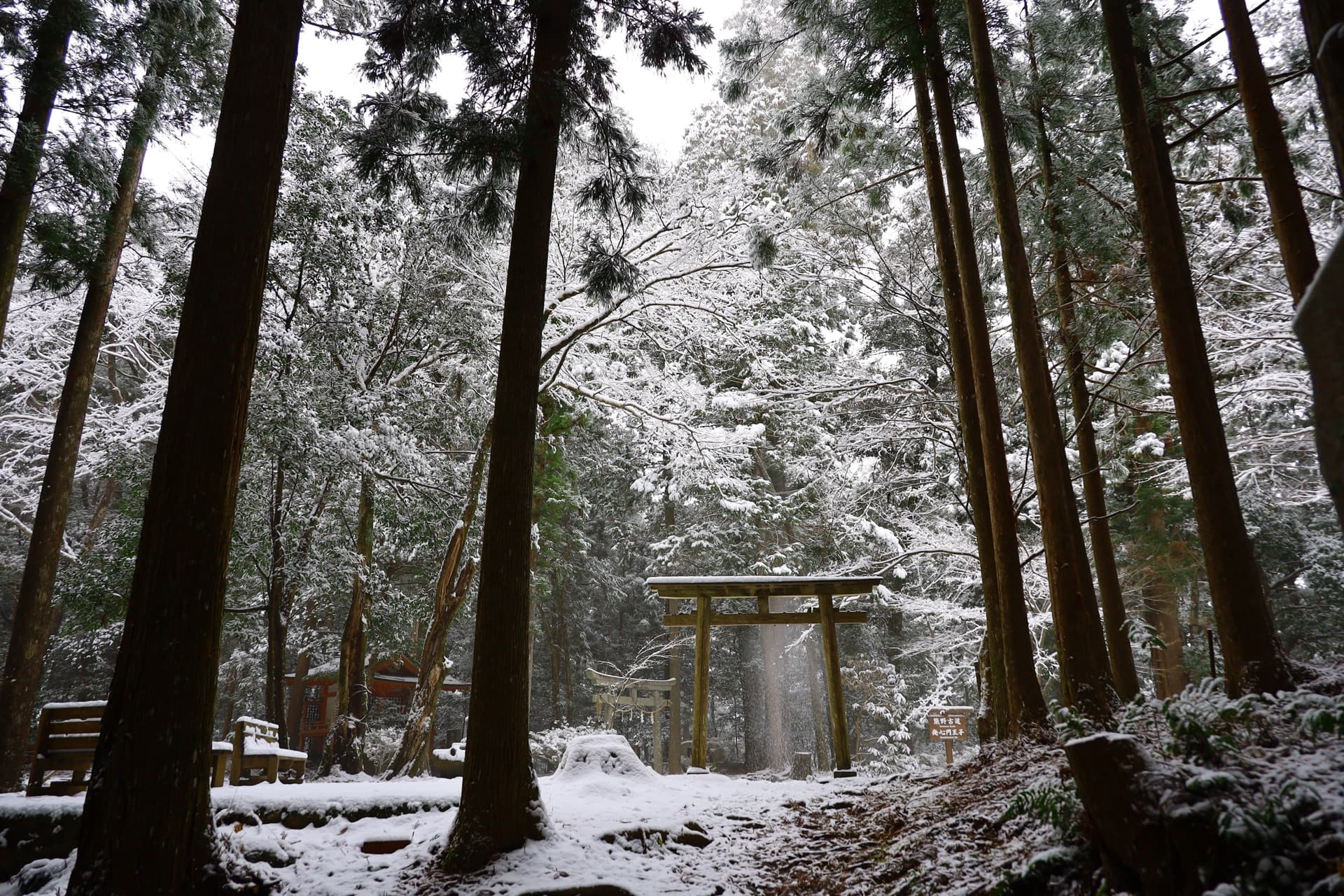
Image: 熊野古道中辺路 発心門王子 (via (公社)和歌山県観光連盟)