 LOCAL FIT KUMANOBack to list
Searching for "Shingu lunch recommendations" tempts you to pick by restaurant name. But Shingu is also a "transit town" on the Kumano journey. What you should decide first isn't the restaurant — it's how much time you can spare for lunch.
Decide Your Shingu Lunch by "How You'll Use Your Midday"
Shingu Station is a gateway that almost every traveler to the Kumano Sanzan or Kumano Kodo passes through at some point. People who eat lunch here tend to fall into two groups.
- Those who eat leisurely while exploring town: Settling in for a proper meal before or after visiting Kumano Hayatama Taisha
- Those who grab a quick bite between connections: Making it quick in the window before the next bus or train
If you're in the first group, you'll have time to sit down and enjoy a set meal or assortment of local foods. If you're in the second, something easy to carry and eat will serve you better. Making this distinction first makes everything else much easier.
Choose Local Foods by "How You'll Eat Them"
When it comes to must-try Shingu local foods, mehari-zushi and sanma-zushi top the list. Before comparing flavors, think about the setting in which you'll eat them.
Mehari-zushi: Hand-Held, Perfect for Lunch
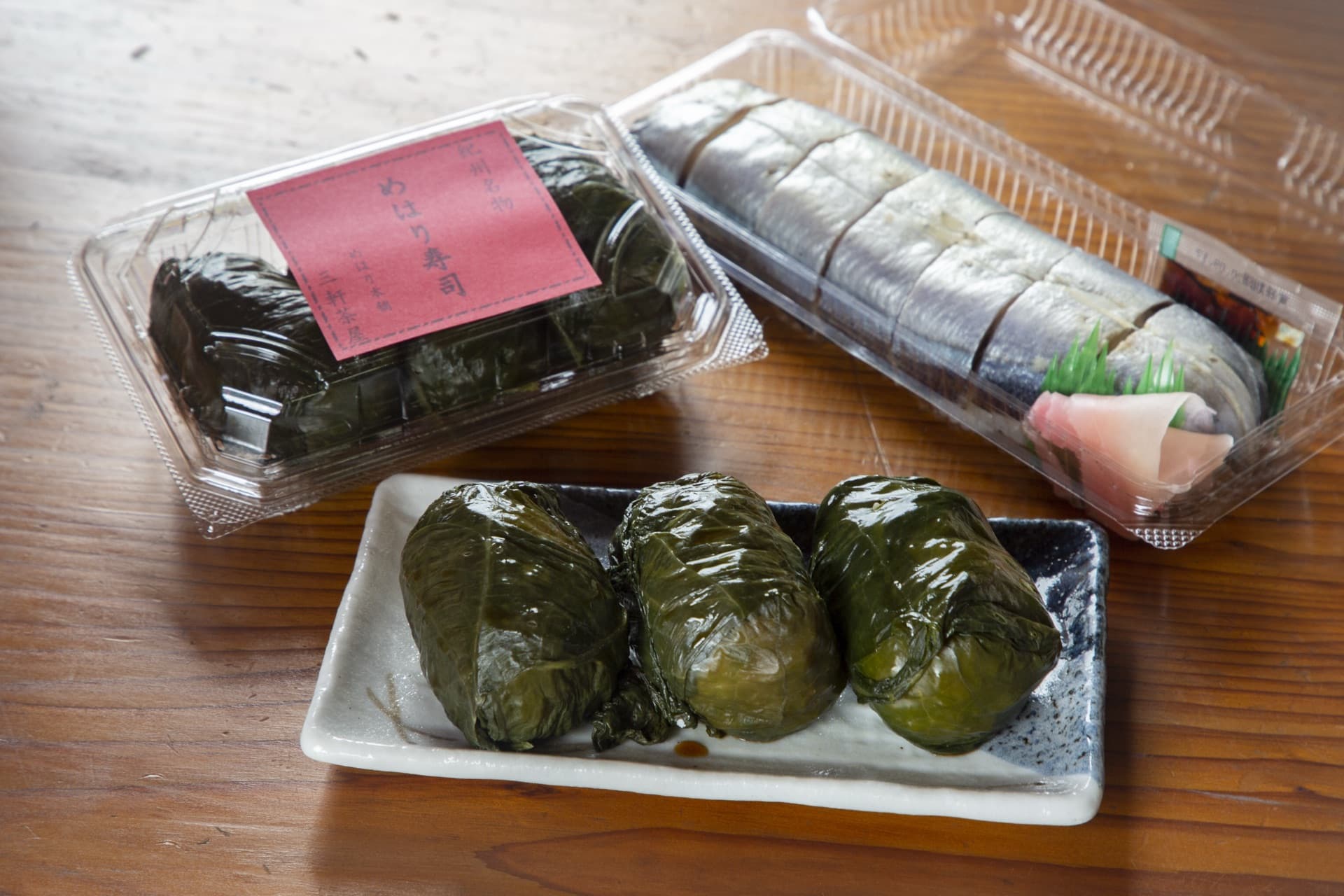
Mehari-zushi is a local food resembling a rice ball, with rice wrapped in pickled takana (mustard greens) leaves. The name's origin reportedly has several theories, including "opening your eyes (and mouth) wide to eat it."
Since it's firmly wrapped in leaves, it's easy to hold and eat by hand. That makes it well-suited to a break while walking or a light lunch before you move on. The savory tang and saltiness of the takana give it a simple flavor that's easy to keep eating.
Sanma-zushi: A Local Taste Best Enjoyed Sitting Down
Sanma-zushi is a pressed sushi made with Pacific saury (sanma), rooted in the daily life of communities along the Kumano-nada coast. The level of vinegar curing, how it pairs with the rice, and the garnishes and portion sizes vary by maker, giving each shop its own character.
Generally, sanma is a fish that develops its richest fat from autumn into winter. If you want to enjoy a seasonal taste, a trip during that time of year will be especially memorable. It's the kind of dish you want to savor one slice at a time, calmly, with a cup of tea.
If You Can't Decide, Try "A Little of Both"
When you can't narrow it down to one, sets or assortments let you try a bit of each. Note, though, that menu offerings vary by shop and season. If you spot one, feel free to ask about it on the spot.
Small Etiquette Tips for Takeout
If you're picking up a packed meal between connections, decide where you'll eat it in advance as well.
1. Picture where you'll eat it: Can you eat on the train, or will you use a waiting room or outdoor bench? It depends on your mode of transport.
2. Mind the moisture and smell: The scent of vinegar or pickles can be noticeable in enclosed spaces. Be considerate of those around you.
3. Plan to carry your trash out: Keeping a small bag on hand lets you tidy away wrappers and disposable chopsticks without hassle.
4. Eat it sooner rather than later: Local foods come with recommended consumption times, so it's reassuring to ask when you buy.
Check Sell-Outs and Hours "On the Day"
Popular items of local food can sell out quickly. Business days and hours vary by shop and may change, so it's a good idea to confirm again just before or during your trip.
If you absolutely want to eat it for lunch, strategies like buying in the morning or arriving earlier in the day work well. Leaving some buffer before your next connection also helps reduce stress.
Summary
Lunch in Shingu starts not with searching for a shop name but with deciding how you'll use your midday. Roughly speaking, choose sanma-zushi if you want to sit and savor, mehari-zushi if you want something easy to carry — that's enough to go on. Starting from the station, build in a little slack in your schedule and add a taste of Kumano to one scene of your journey.
Image: めはり寿司とさんま寿司 (via (公社)和歌山県観光連盟)