 LOCAL FIT KUMANOBack to list
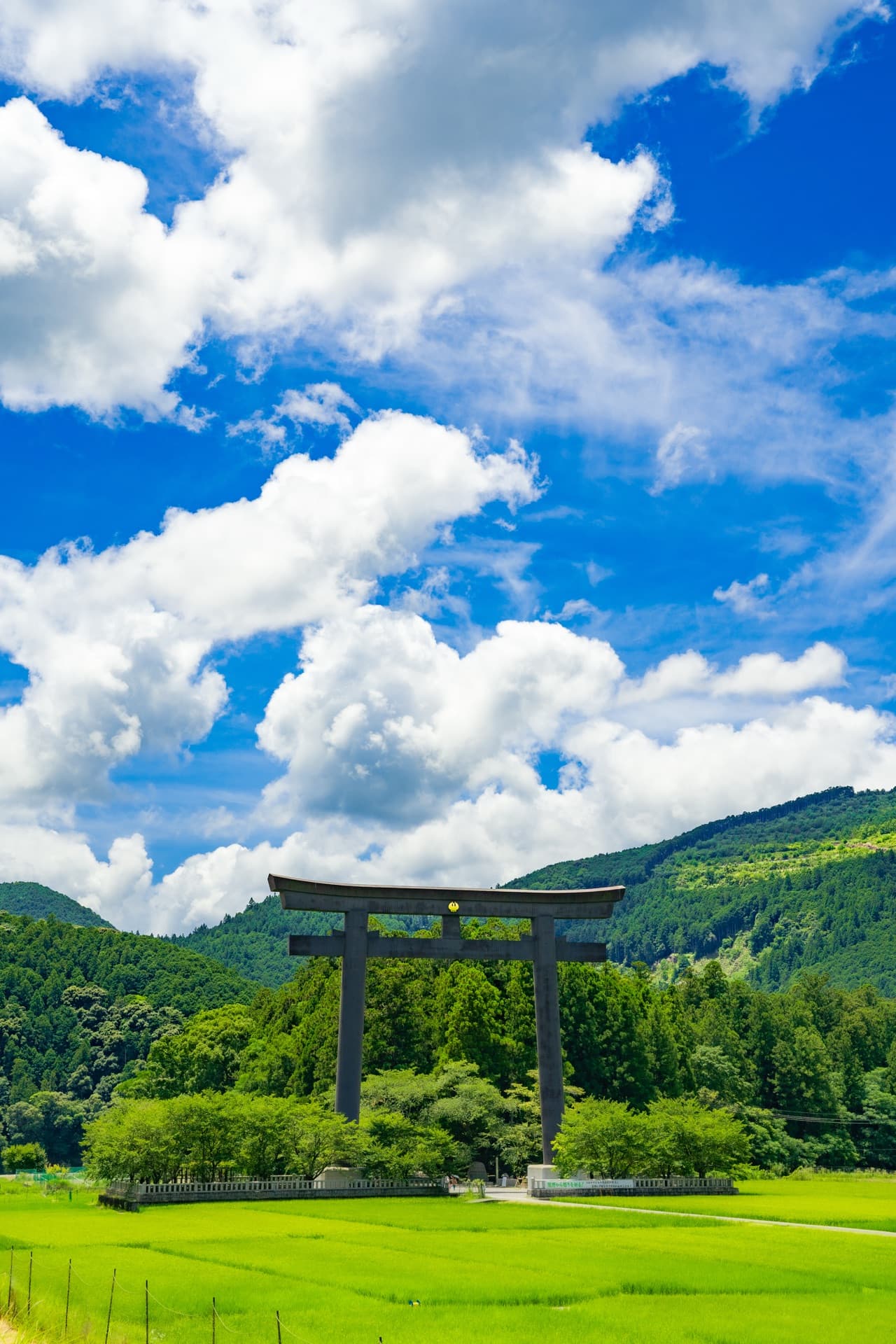
At Oyunohara, Sunrise Arrives a Little Later Than the Clock Says
If you search for "Oyunohara sunrise," the first thing you'll want to know is the sunrise time. But Oyunohara — the former site of Kumano Hongu Taisha — sits on a sandbar in a valley between the Kumano River and the Otonashi River, surrounded by deep mountains. Even when the sun rises at the time listed in the almanac, the light doesn't actually spill into the precinct until after it clears the ridgeline.
Rather than focusing on numbers, this article walks you through the flow of how light arrives, and how to spend a morning at Oyunohara.
Savor Sunrise in Three Phases
Before the Sky Pales: Settle into the Silence
Arrive a little before the almanac sunrise time and let your eyes adjust to the darkness. All you'll hear is the sound of the river and the first birds of the morning. The silhouette of the great torii — said to be one of the largest in Japan — slowly emerges against the color of the sky.
As the Ridgeline Brightens: Watch the Sky's Colors
Even before the sun itself is visible, the sky beyond the ridge begins to take on color, and the valley gradually brightens. In Kumano, morning feels as if the sky wakes first and the ground follows.
Once the Light Arrives: The Precinct Transforms
Light moves in sequence — to the treetops, the base of the great torii, and around the stone monuments. There are moments when the lingering damp of night glimmers faintly in the morning sun.
How the Light Enters Changes with the Seasons
The sun rises from different points along the ridgeline depending on the season. Generally, it rises farther south in winter and farther north in summer, so the view feels different even from the same spot.
- Winter: The air is often crisp, and low-angle light stretches long. The cold is sharp, so dress warmly in layers.
- Spring & Autumn: Morning mist is common. On misty days, the hazy, white-shrouded atmosphere of the precinct becomes the main attraction rather than the sunrise itself.
- Summer: Dawn comes early, letting you walk quietly before the heat of the day sets in.
What you see depends heavily on the weather and cloud cover. We recommend arriving with the mindset that "if you can't see it, that's also a Kumano morning."
Things to Keep in Mind When Visiting in the Dark
- Oyunohara is sacred ground. Keep your voice low, and avoid blocking other visitors' paths with tripods or equipment.
- Footing is hard to see, so a small light and non-slip shoes are reassuring. Keep bright lighting to a minimum.
- Access and nearby parking conditions can change, so check the latest information before your visit.
- Mornings in the mountain valleys are colder than you might expect. Bring an extra layer.
After Sunrise, Continue on Foot to Hongu Taisha
Once the light has arrived and the precinct brightens, it's natural to continue on to the present-day Kumano Hongu Taisha. Greeting the morning on the site where the shrine once stood, then climbing the stone steps to its current location, connects the "before and now" of the same faith in a single line.
In Summary: Enjoy the Waiting More Than the Numbers
Sunrise at Oyunohara isn't the kind that delivers a dramatic moment right on schedule. Its charm lies in waiting for the ridgeline to brighten and watching the light descend little by little. Try staying overnight nearby so you can take in the morning air itself as part of your journey.
Image: 大斎原 (via (公社)和歌山県観光連盟)


