 LOCAL FIT KUMANOBack to list
Oyunohara in the Morning: Beautiful Because Nothing Is There
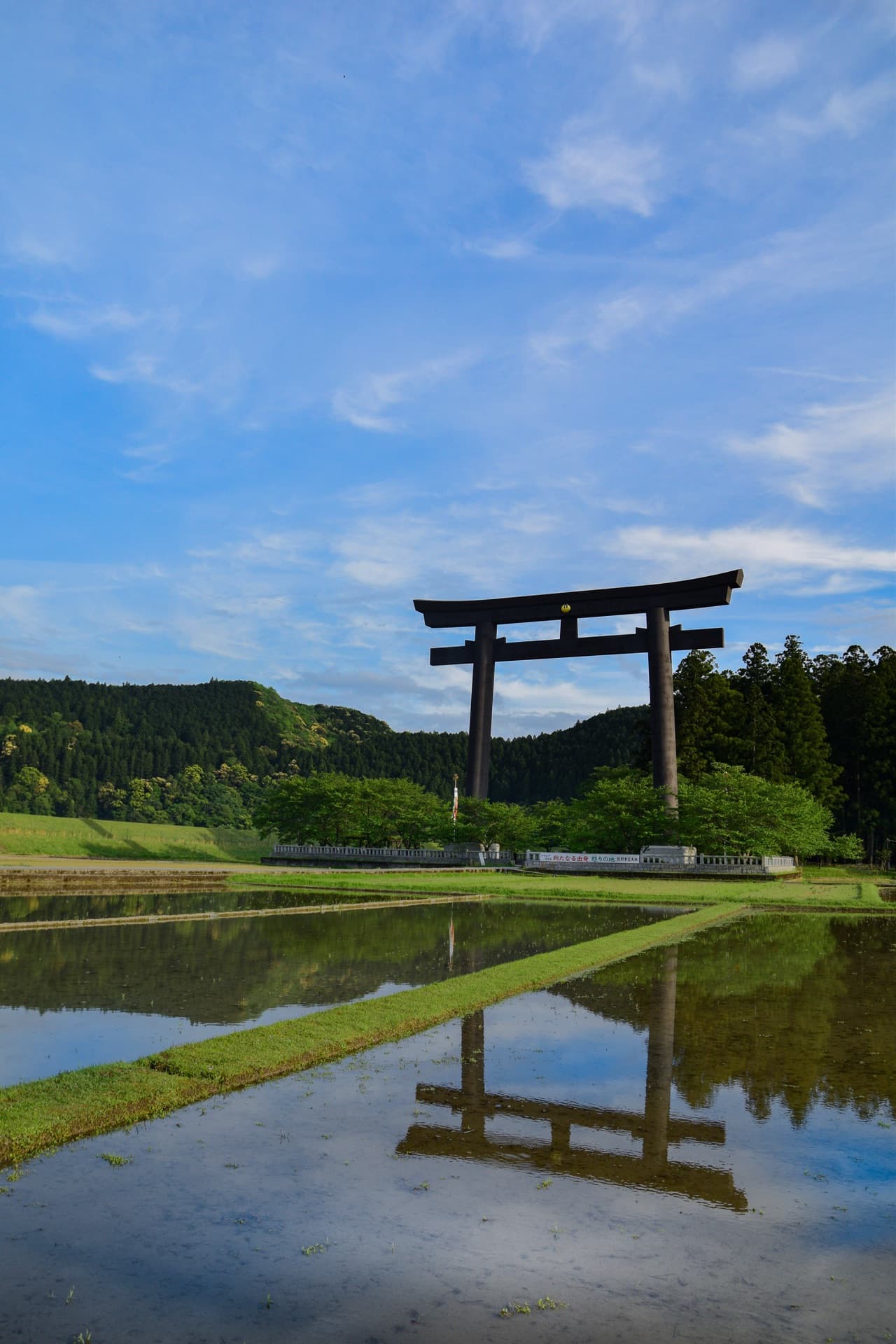
Descend the stone steps of Kumano Hongu Taisha, walk a little further, and you'll reach Oyunohara. At the entrance to a wide expanse of grassland stands a Great Torii gate that seems to pierce the sky.
There are no shrine buildings. And yet, standing here in the morning, the empty vastness itself becomes a stillness that quietly settles into your chest. This article explores the history of Oyunohara and how to enjoy the hours around sunrise.
The History of Oyunohara | Where Shrine Pavilions Once Stood
A Sandbar Surrounded by Three Rivers
Oyunohara sits on a sandbar at the confluence of the Kumano, Otonashi, and Iwata rivers. Land encircled by water has long been regarded as a "special place." The pavilions of Kumano Hongu are said to have stood here for a very long time.
The Great Flood of 1889 Swept the Pavilions Away
The turning point came with the great flood of 1889 (Meiji 22). Rising waters of the Kumano River damaged many of the shrine buildings. Afterward, the pavilions that had survived were relocated to higher ground, becoming the present-day Kumano Hongu Taisha.
Today, stone shrines mark where the former pavilions once stood. Precisely because the buildings are gone, there is room to imagine "what once stood here."
Enjoying a Morning When Light Reaches the Great Torii
The Great Torii was built relatively recently, in 2000 (Heisei 12), and is said to be one of the largest steel torii in Japan. Against the morning sky, its silhouette stands out all the more.
Savor the "Process of Brightening" More Than the "Moment of Sunrise"
The position of the rising sun and the way light enters change with the season and where you stand. Because this land lies among mountains, it's different from a horizon sunrise—here, the sky gradually whitens, and eventually light reaches the grassland. Enjoy this flow of time.
- Start waiting slowly, before the sky's colors begin to shift
- View the torii not only from the front, but also from a slight distance
- Once light arrives, turn your eyes toward the grassland and stone shrines as well
Things to Keep in Mind on a Morning Visit
- In the early hours, the ground can be hard to see and may be wet with dew. Wear non-slip shoes and walk carefully as the light changes.
- This is also a place of worship—keep your voice low and respect the areas open to visitors.
- Conditions near the rivers change with the weather. Don't push yourself after heavy rain or when the water looks like it's rising.
Stopping Here Before Your Shrine Visit Changes How You See It
If you first stand at Oyunohara and sense "the former shrine grounds" before heading to Kumano Hongu Taisha, climbing the stone steps feels different. You begin to see the overlay of history—of what was swept away, and of the time during which the deities have been enshrined again.
If you have time to spare, take a deep breath in front of the torii and listen to the sounds around you. The presence of the river, birdsong, grass rustling in the wind. These small sounds shape the morning scenery of Oyunohara.
In Summary
Oyunohara has become "a place to imagine" precisely because its pavilions were lost. Keep a little history in mind and try waiting for the morning light to reach the Great Torii. The scenery isn't dramatic, but it should give you time to feel the quiet power of Kumano.
For goshuin, highlights and parking, see our complete Kumano Hongu Taisha guide.
Image: 大斎原 (via (公社)和歌山県観光連盟)