 LOCAL FIT KUMANOBack to list
Traveling Kumano by Public Transport: Think 'Slow,' Not 'Not Enough'
Kumano is a region where seaside towns and mountain sanctuaries are spread far apart. If you try to hop between trains and buses with a big-city mindset, you'll run into some unexpectedly long waits.
But rather than being inconvenient, this is actually a mechanism that naturally slows the pace of your journey. In this article, we'll sum up the mindset for traveling Kumano by public transport under the keyword 'one area a day.'
Think of Trains and Buses as Having Different Roles
Along the Coast, the Railway Is the Backbone
Along the coastline of the Kii Peninsula, JR lines form the north–south backbone. To reach hub towns like Katsuura or Shingu, the basic approach is to come in by train first. From the station, you continue on foot or by bus to each spot.
In the Mountains and at the Sacred Sites, Local Buses Take Over
In mountain areas like around Hongu or Nachisan, local buses are the main players. Multiple operators and routes may be involved, so it's reassuring to trace 'which station connects to which bus stop' on a map and timetable in advance.
Three Reasons to Plan 'One Area a Day'
1. A Missed Connection Won't Ruin Your Day
On routes where buses run infrequently, missing one can mean a long wait for the next. If you focus on just one area, a missed bus simply turns into 'time for a cup of tea in that town.'
2. You'll Have Time to Really Enjoy Each Shrine and Walk
Kumano's highlights deepen in character the longer you linger on their stone paths and shrine grounds. When you're rushed between destinations, the very scenery you came to see just becomes a point you pass through.
3. It's Easier to Plan Backwards From Your Return Trip
When traveling by public transport, the trick is to build your day backwards from the last departure. Decide your return connection before your outbound plan, and you'll feel much more at ease.
How to Get Along With the Timetable
- Check the latest times before you leave: Schedules can change by season, so confirm them on official websites of the operators or tourism associations just before you travel.
- Lock in your return trip first: Prioritize the return leg over the outbound.
- Have a Plan B for missed connections: A nearby restaurant, a foot bath, a path for a short walk — having one way to pass the waiting time keeps your mind relaxed.
- Check payment methods in advance: Some routes may be cash-only, so it helps to carry a bit of small change.
Pack Light, and Wear Comfortable Shoes
You'll find yourself walking from bus stops more often than you might expect. Use luggage storage services at your lodging or at stations for larger bags so you can move around unencumbered — getting on and off becomes much easier. For footwear, choose non-slip shoes that can handle stone steps and slopes.
Waiting Time Is Time to Meet the Real Kumano
Peek into a shop in front of the station, feel the breeze at the harbor, offer a quiet prayer at a small shrine near the bus stop. The gaps in time that arise during public transport travel often turn out to be the moments you remember most.
Instead of fitting yourself to the timetable, let the margins the timetable creates work in your favor. That may well be the greatest luxury of traveling Kumano by public transport. Start by picking just one place you want to visit, and trace on a map the combination of train and bus that will take you there.
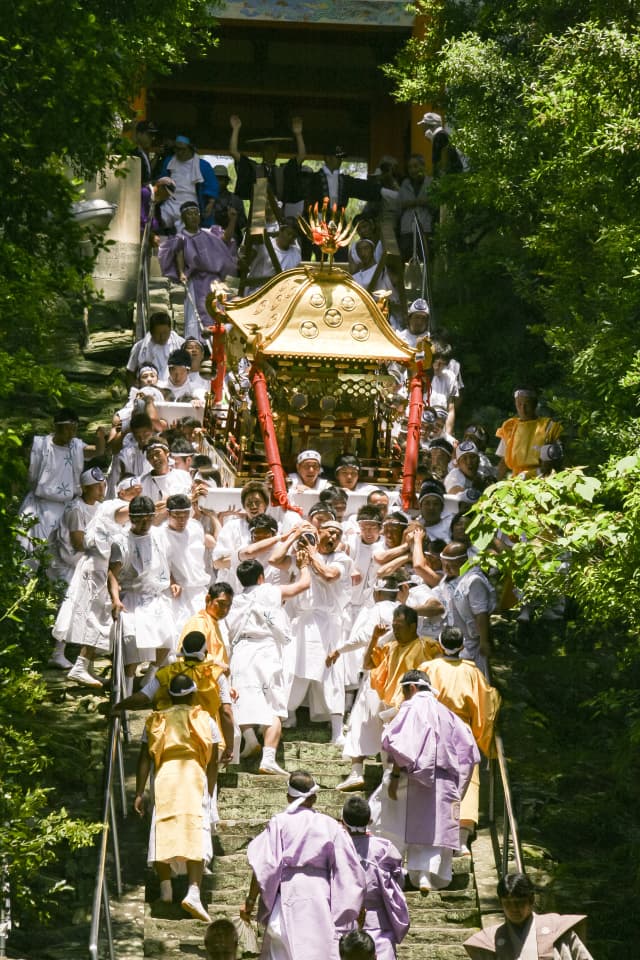
Image: 和歌山フォトライブラリー (via 和歌山フォトライブラリー)


