 LOCAL FIT KUMANOBack to list
Think of Time at Kumano Nachi Taisha in Three Parts: 'Walking, Waiting, Pausing'
We often get asked, "How much time should I budget for Kumano Nachi Taisha?" Since Nachisan also has the famous waterfall and the ancient pilgrimage trails, the conversation tends to broaden. Here, let's change perspective and look only at the time from arriving at the shrine precincts to leaving them.
Time spent within the precincts is easier to read if you divide it into these three categories:
- Walking time: Time spent going up and down the approach and stone steps
- Waiting time: Waiting at the goshuin desk, the amulet counter, or in crowds
- Pausing time: Enjoying views, taking photos, or resting
If you only come to pray, this can be kept very short. But in reality, the biggest differences come from "waiting" and "pausing."
Dividing the Precincts into Three Zones
1. The Zone of Climbing the Stone Steps to the Main Hall
This is mostly "walking time." Kumano Nachi Taisha sits partway up the mountain, and you reach the precincts by climbing stone steps. It's a spot where you'll likely get out of breath, so allowing time to pause and catch your breath will give you more leeway. Those who walk slowly, or who come with small children, should budget a bit more time here.
2. The Worship and Goshuin Zone at the Main Hall
Worship itself—simply putting your hands together—doesn't take long. However, there are points of interest scattered around the precincts. If you walk slowly and take in the atmosphere of the shrine buildings and the great camphor tree, time passes in a flash.
If you plan to receive a goshuin (shrine seal), remember that waiting times vary greatly depending on how crowded it is. During times when tour groups arrive at once, lines can form at the reception. Whether you head to the goshuin desk right after arriving, or go after worshipping, will also change your flow of movement.
3. The Zone Heading to Nearby Seiganto-ji
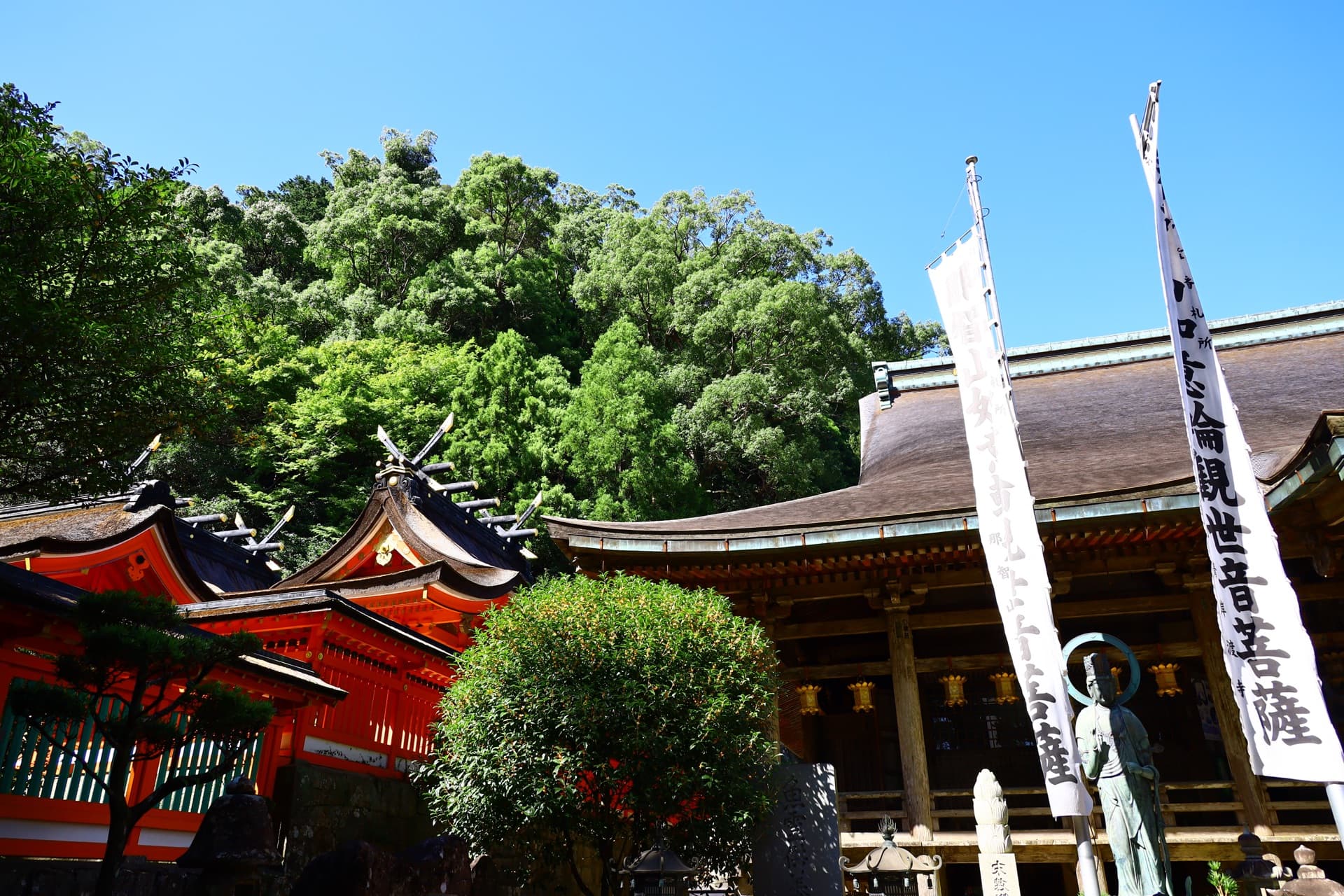
Right next to Kumano Nachi Taisha stands Seiganto-ji, where you can still feel the lingering atmosphere of the historical fusion of Shinto and Buddhism. Many visitors extend their trip here rather than ending at the shrine. There's also a spot where you can view the three-storied pagoda together with Nachi Falls—likely the zone where "pausing time" grows the longest. Photography enthusiasts will feel more at ease if they plan on spending extra time here.
How to Build a Rough Estimate (Just One Example)
Time varies greatly from person to person, so please read these as rough guides only.
| Style | Content | Time Estimate |
|---|---|---|
| Quick visit | Climb the steps and worship at the main hall | Around 30 minutes |
| Standard | Worship + goshuin + exploring the precincts | Around 1 hour |
| Leisurely | Including Seiganto-ji, the three-storied pagoda, and breaks | 1.5 hours or more |
If you plan to receive a goshuin, visit during a busy season, or walk at a slower pace, it's safer to allow even more time.
Hidden Factors That Affect Your Time
- Season and weather: On rainy or hot days, your pace on the stone steps will slow.
- Time of day: Mornings and evenings tend to be relatively relaxed, while around midday the crowds pick up.
- Who you're with: If you're with children or elderly companions, you'll take more breaks.
- Bus and parking schedules: If you need to work around a return bus, you'll end up rushing through the precincts.
On days when your return bus time is fixed, working backwards from your "pausing time" within the precincts will help you avoid feeling rushed.
A Word from a Local
Kumano Nachi Taisha is a place where, the more you try to shorten your time, the harder it becomes to feel its true appeal. The mountain air, the scent of the trees, and the faint presence of the waterfall in the distance—these are things you sense in a few minutes of doing nothing on purpose. Plan your time with "breathing room" included, and if you end up with a little more time than you'd first planned, take a seat on a bench and catch your breath. Savor your time at Nachisan with that kind of ease.
*Please check official sources for the latest details on hours, reception times, fees, and so on before your visit.
Image: 熊野那智大社と那智山青岸渡寺 (via (公社)和歌山県観光連盟)


