 LOCAL FIT KUMANOBack to list
Can You Walk the Kumano Kodo in Winter? The Answer Depends on Which Trail
Most people searching "Kumano Kodo winter walkable?" want to know whether the trails are snowed in or dangerous. The short answer: yes, there are trails you can walk in winter. But not every trail offers the same conditions. The dividing lines are elevation and trail surface.
Kumano has a mild, warm image, but the deeper you go into the mountains and the higher you climb, the colder it gets. Even when the foothills are calm, conditions at the top of a pass can feel like another world.
Dividing Line #1: Reading "How Walkable" by Elevation
Lower Trails Near the Coast: A Good Entry Point for Winter
Sections near the sea, like parts of the Iseji route, tend to be relatively walkable in winter. You can cross cobblestone passes while still sensing the ocean nearby—one of the route's great charms. That said, even on short passes, the stone pavement in shaded areas gets cold and damp, so don't let your guard down.
Mid-Elevation Trails: Time of Day Becomes Your Ally
On routes like the Nakahechi, which weaves between villages and mountains, the trail surface looks completely different in a sunny afternoon versus a shaded morning. Some days the ground is frozen firm in the morning, then softens and gets slippery by midday.
High Mountain Passes: Approach With Caution in Winter
Trails like the Kohechi, which links Koyasan to Hongu via a series of high passes, carry a much higher risk of snow and ice. These are not routes a winter beginner should set out on thinking "I can walk this." They require experience, proper gear, and the judgment to know when to turn back.
Dividing Line #2: Letting the Trail Surface Decide If Today Is a Walking Day
Even on the same trail, the answer changes day by day. Three things to use as a guide:
- Temperature from the previous night into the morning: On days that drop below freezing, shaded stone pavement and tree roots can be icy.
- Recent rain or snow: Wet moss and fallen leaves are slippery even in winter.
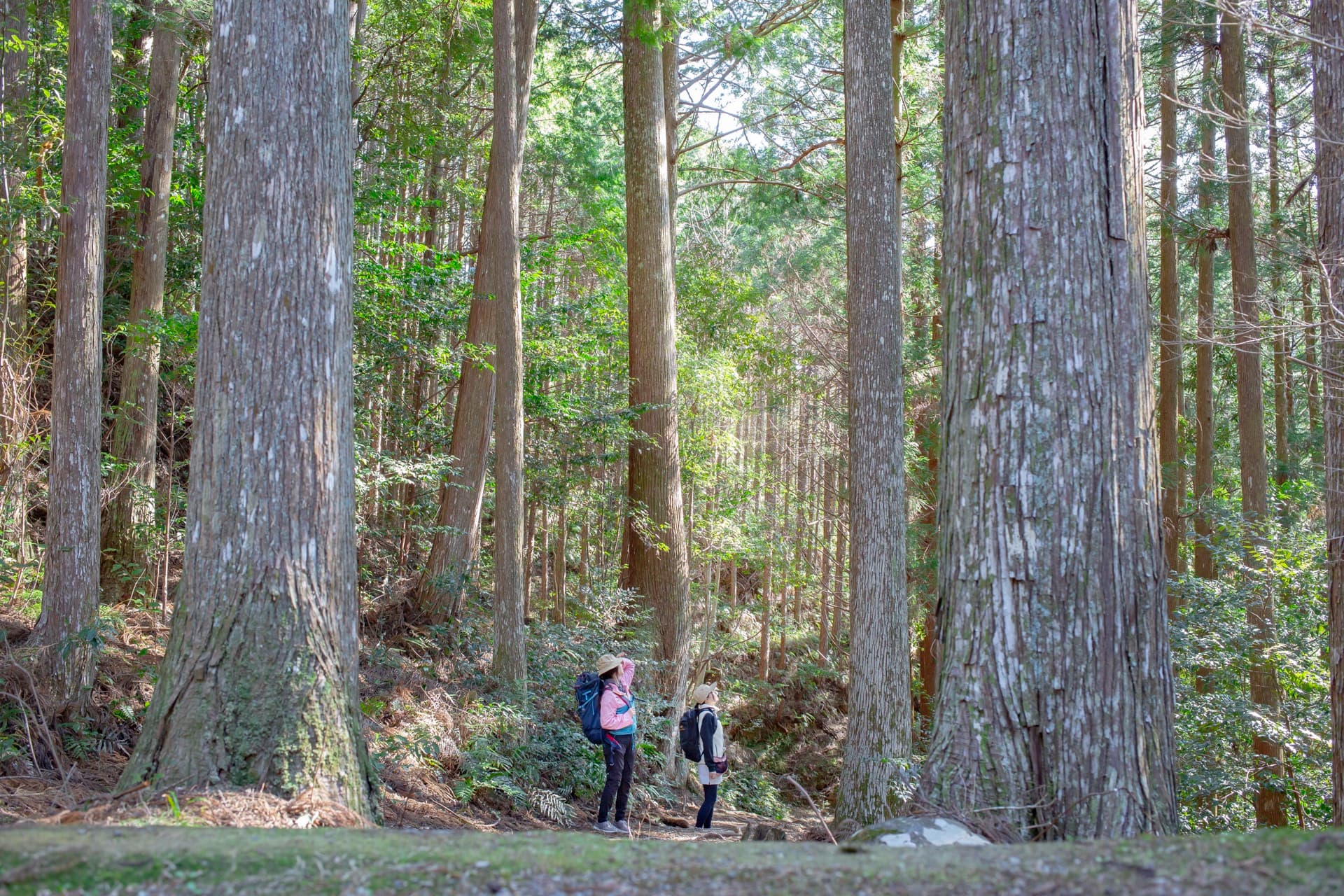
- How much of the trail is in shade: Sections lined with dense cedar groves can hold frozen or wet patches even in the middle of the day.
The trick is not to think "the weather at the foot of the mountain is fine, so I'll be okay," but rather "what's the trail surface like at the elevation I'll be walking?"
Things to Check Before You Set Out
In winter, snow, fallen trees, and trail damage can make passage difficult. For the section you plan to walk, please check the latest information from the local tourism association or municipality both the day before and the day of your hike. The guidance here is general—it does not guarantee safety on any particular day.
Don't Let a "No-Walk Day" Be a Bad Day
If ice or heavy rain makes you cancel a walk, there's no need to feel disappointed. Soak in an onsen, linger over a meal in a port town—Kumano in winter offers plenty beyond hiking. If you plan with the mindset of "walking only on days when it's safe to walk," winter on the old trails becomes a much calmer, more rewarding experience.
Choose the right trail, and choose the right day. That's the surest path to enjoying the Kumano Kodo at its best in winter.
Image: 熊野古道 (via (公社)和歌山県観光連盟)


