 LOCAL FIT KUMANOBack to list
Before Deciding 'Where,' Decide 'What Kind of Route'
When you search for 'where to start walking the Kumano Kodo,' you'll find endless lists of oji shrine names and train stations, which often leaves you more confused than before. The Kumano Kodo isn't a single trail — it's a collective name for several pilgrimage routes. That's why, before looking for an entry point, it helps to first decide 'what kind of route do I want to walk?' Doing so will narrow down your options dramatically.
Here, we'll organize the five main routes by the 'character' of the walking experience each one offers.
Getting to Know the Character of the 5 Routes
Kiiji: A Long Prologue from the Capital to Kumano
This route heads south down the western side of the Kii Peninsula from the Osaka area toward Tanabe. Pilgrims of old made their way toward Kumano while stopping to pray at the oji shrines lining the road. Many sections pass through urban and residential areas, so rather than a 'mountain pilgrimage path,' it feels more like tracing a 'historical road.' Rather than walking it all at once, it suits travelers who prefer to pick and choose interesting sections.
Nakahechi: The Classic Choice Most Often Picked by First-Timers
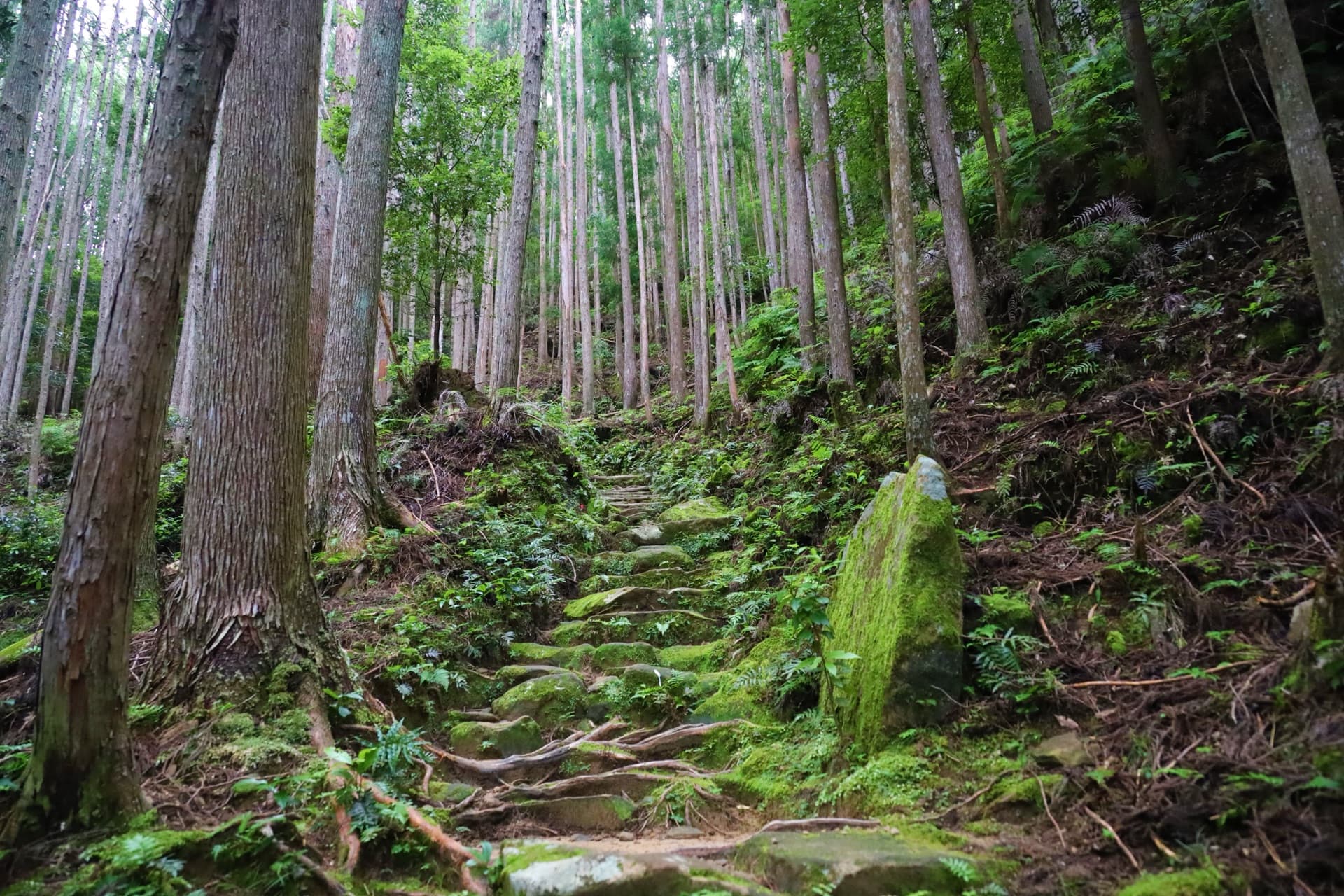
Running from Tanabe to Kumano Hongu Taisha, this is said to have been the most traveled of the pilgrimage routes. Stone-paved paths, groves of cedar, and scattered oji shrines all help you feel the quintessential atmosphere of the Kumano Kodo. Because difficulty varies by section, you can choose an entry point to match your fitness level and schedule. If you're not sure where to begin, starting with the Nakahechi is a safe bet.
Kohechi: A Mountain-Crossing Path Walked Like an Ascetic Practice
This route crosses several steep passes on its way from Mt. Koya to Kumano Hongu. The scenery is magnificent, but it's not suited for a casual day hike. It's for those with hiking-level gear and plenty of time in their schedule — here, the question is less 'where to start' and more 'how to prepare.'
Ohechi: A Quiet Route That Lets You Feel the Sea
This route heads south along the coast from Tanabe, passing through the Kushimoto area toward Nachi. What sets it apart is that you can sense the sea, not just the mountains. It suits travelers seeking quiet solitude or those tackling the Kumano Kodo for a second time. Trail conditions vary by section, so checking information in advance is essential.
Iseji: A Route Linking Sea and Mountain Passes from Ise to Kumano
This is the eastern approach, heading to Kumano from the direction of Ise Jingu. Coastal scenery and stone-paved mountain passes alternate along the way. For travelers who want to experience the Kumano Kodo from the Nachisan side, it's an appealing option as Kumano's 'eastern gateway.'
A Guide to Choosing an Entry Point by Purpose
- First-timers who want to taste the atmosphere: Choose a shorter section of the Nakahechi
- Those who want to carefully trace history: Visit the oji shrines along the Kiiji
- Those who want to enjoy ocean views as well: Choose from the Ohechi or Iseji
- Those who want a serious long-distance walk: Plan the Kohechi with plenty of time
Once You've Chosen Your Entry Point, Check One More Thing
Once you've narrowed down your entry point, be sure to check your 'return transportation.' In the mountains of Kumano, some sections have very limited bus service, and getting back from where you finish walking can be surprisingly tricky. The transportation at your end point matters just as much as at your starting point.
Summary
Once you understand the character of each route, your entry point for the Kumano Kodo will naturally come into focus. There's no single right answer for 'where to start walking.' The quickest path to an enjoyable walk is choosing the one route that fits your fitness level, schedule, and the scenery you want to see. Be sure to check the latest trail conditions before you set out.
Image: 熊野古道中辺路 (via (公社)和歌山県観光連盟)


