 LOCAL FIT KUMANOBack to list
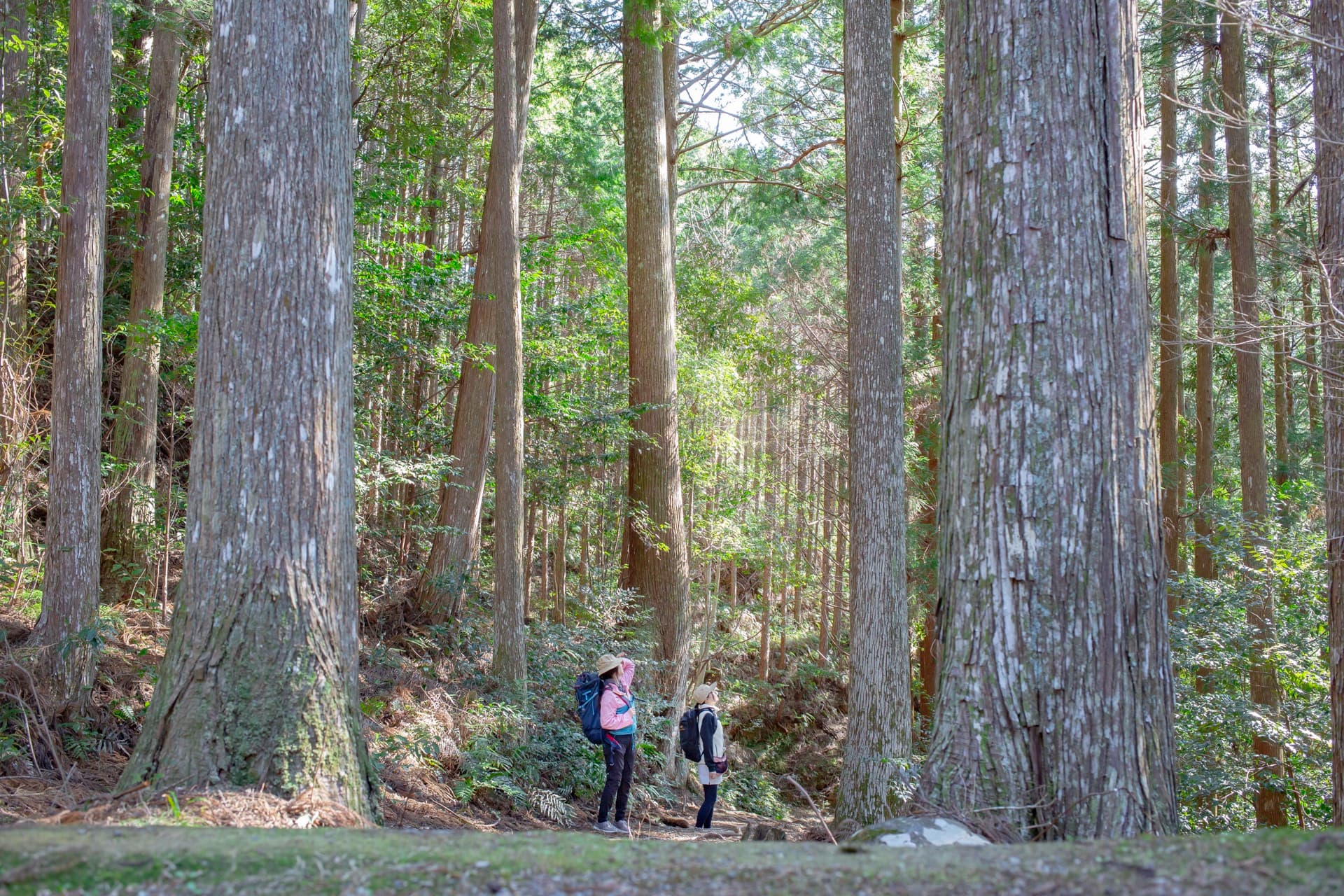
Many travelers wonder, "Do I need a walking stick to hike the Kumano Kodo?" The short answer is that a stick is not essential. But depending on the route, your fitness, and the weather, just having one can make your footing significantly more stable. Here are some guidelines to help you decide whether to bring one.
Whether you need a stick depends on "descents" and "surface," more than "distance"
The Kumano Kodo is not a flat, paved road. The trail constantly shifts in character — stone paving, dirt paths, sections laced with tree roots, muddy stretches along streams. Fatigue hits hardest on the climbs, but you're actually most likely to slip on downhill slopes and wet surfaces. Rather than thinking about total distance, consider how much of this kind of terrain you'll encounter.
People and situations where a stick really helps
- Anyone with knee or ankle concerns who feels uneasy bracing on descents
- Days after rain, or in rainy weather, when walking stone paving or mossy paths
- Half-day or longer walks where your legs are likely to grow heavy in the latter half
- Hikers carrying heavy luggage who may lose their balance more easily
Cases where you can comfortably go without
- Short sections walked at a leisurely pace on fine-weather days
- Hikers already used to mountain trails and hiking
- Times when you want both hands free for a camera or smartphone
If you're unsure, ask yourself: "Will I feel anxious going downhill?" If there's even a little hesitation, bringing a stick is well worth it.
Wooden stick or trekking pole — which is better?
In practical terms, many people find an adjustable, lightweight trekking pole easier to handle. You can change the length between climbs and descents, and fold it away in your bag when not needed. A wooden stick, on the other hand, has a simple, hand-friendly feel and an atmosphere befitting a pilgrimage route. Whichever you choose, make sure the tip has some kind of protection (such as a rubber cap).
Etiquette and consideration when using a stick on the old roads
The Kumano Kodo is still cherished today as a path of faith. Keeping the following points in mind will make your walk more pleasant for everyone.
- Don't damage the stone paving or steps: avoid tips with bare metal; use rubber or similar protection
- Mind others when passing: never point the tip at people, and in crowded spots either hold the stick short or carry it bundled
- Show respect at shrines and oji (sacred sites): within precincts, avoid striking the ground forcefully
- Don't jab roots or moss: to protect the natural surroundings, plant your stick on stable, firm ground
A tip for preparation: don't use it for the first time on the big day
If you bring a stick out for the first time on the actual hike, it can sometimes make walking harder, not easier. Before you set off, try it out on a nearby slope or set of stairs to get a feel for the right length and grip. Also, stick rentals and sales on site vary by location and season. Check in advance with your lodging or a tourist information center — don't rely on finding one locally, and bring your own if needed.
Summary
A walking stick is not essential on the Kumano Kodo, but for anyone worried about descents or stone paving after rain, or planning a longer day on the trail, it can be a reassuring companion. Don't overdo it, be mindful of those around you, and don't damage the path. With these three things in mind, choose the companion that suits you best. When your footing is secure, you'll also find the ease to slowly savor the mossy stone paving and the stillness of the cedar groves.
Image: 熊野古道 (via (公社)和歌山県観光連盟)


