 LOCAL FIT KUMANOBack to list
Temperatures on the Kumano Kodo can't be judged by forecast numbers alone
"The forecast said it would be warm today, but once I stepped into the cedar forest it felt chilly." This is something we often hear from people walking the Kumano Kodo.
Rather than seasonal clothing advice, this article focuses on how to read temperatures on the Kumano Kodo. Even on the same day, what you feel at your starting point and on the trail can be quite different.
Three reasons the temperature feels off
1. The higher you climb, the cooler it gets
As a rule of thumb, the temperature drops about 0.6°C for every 100 m of elevation gained. Even if the forecast for a coastal town is mild, it can be several degrees cooler on a section that crosses a mountain pass.
On the Kumano Kodo, the environment changes dramatically between the coastal areas around Nachikatsuura and Shingu and the mountainous areas around Hongu. As a basic rule, check the forecast for a location close to the section you'll be walking.
2. Valleys and cedar forests stay cool in the shade
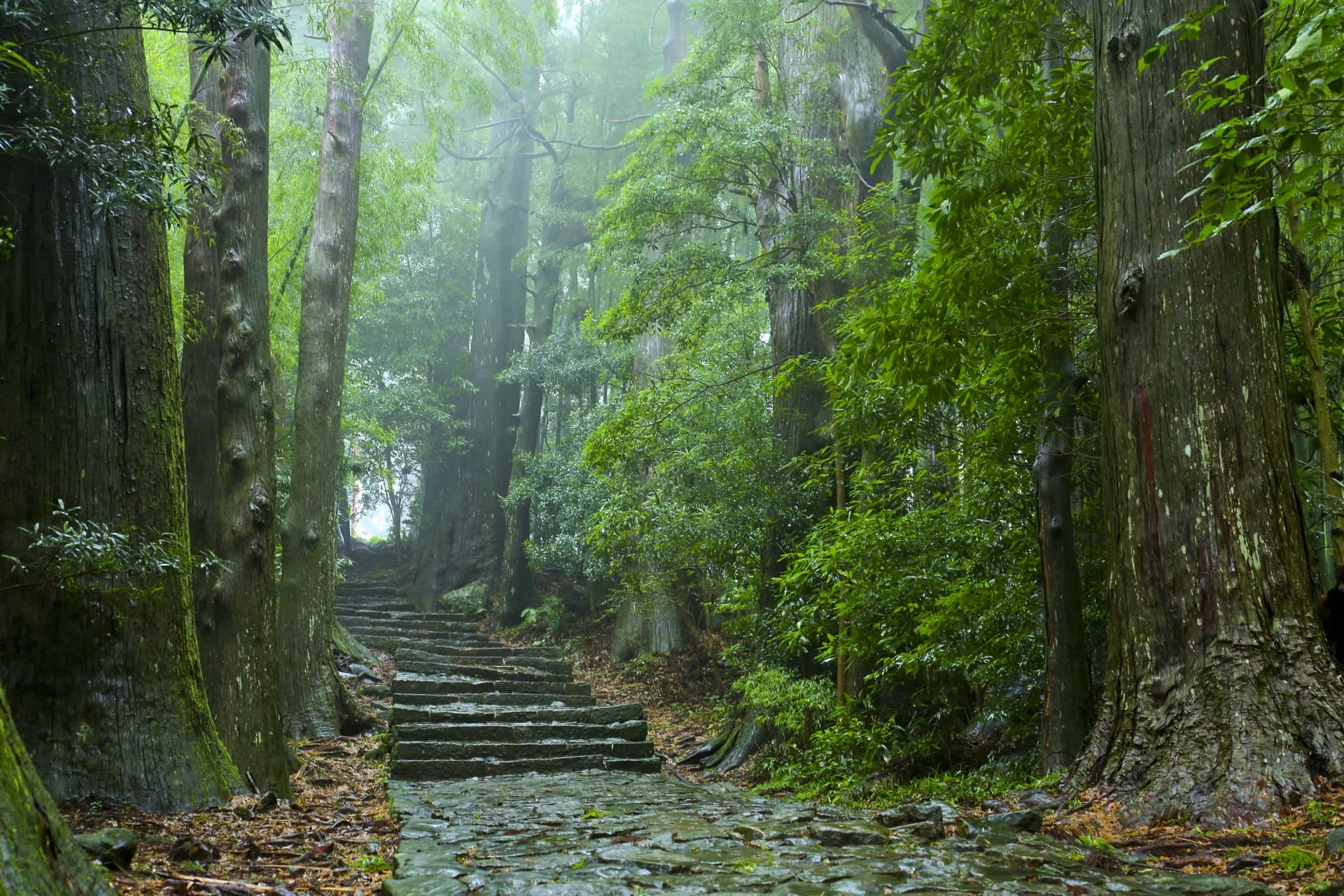
The mountains of Kumano are deep, with long stretches of cedar and cypress forest. On stone-paved paths where the sun doesn't reach, the chill gradually creeps up from your feet.
After rain, humidity is high and the same temperature feels colder. Conversely, on open ridges and paved village roads, you'll feel the sunlight strongly. One characteristic of the Kumano Kodo is that you move back and forth many times in a single day between the warmth of the sun and the coolness of the shade.
3. The gap between morning and midday is large
Mountain mornings tend to be cold, but once you start walking and your body warms up by late morning, it can feel hot. As evening approaches, the valleys suddenly cool down again.
Three things to check before you set out
- Forecast for a point close to the section you'll walk: Check not only the town where you're staying, but also the forecast for the mountainous area.
- The gap between the day's low and high: On days with a wide range, clothing that's easy to put on and take off really earns its keep.
- Rainfall in the days before: When the trail surface is damp, it feels colder than the actual temperature suggests.
As a guideline, estimating about 2–3°C lower than the forecast number makes decisions easier.
Tips for adjusting to the temperature as you walk
The basic rule: take a layer off before you get hot
If you remove a layer only after you've started sweating, the sweat cools during your break and drains your energy. Take a layer off just before a climb, and add one before you stop for a break. This "stay-one-step-ahead" approach makes a big difference in comfort.
Keep a thin layer where you can easily grab it
Store a light jacket somewhere you can take out quickly, not at the bottom of your pack. You'll waste less time digging through your bag to change, and your walking rhythm won't be broken.
Stay hydrated even on cool days
Even when the temperature is low, you'll sweat on the climbs. The less thirsty you feel, the more conscious you should be about taking small, frequent sips.
Reading the temperature makes the Kumano Kodo even more enjoyable
Morning light filtering onto stone pavement, the cool air rising from a valley, the warmth you feel as you emerge from a stand of cedars. These shifts in temperature are part of what makes the Kumano Kodo special.
Take the numbers as "a little lower than the forecast," and adjust ahead of time. That alone will greatly reduce any worries on the trail. Make the temperature your ally, and enjoy the atmosphere of these ancient paths at your own pace.
*Weather and trail conditions on the day can change quickly, so please check the latest information before setting out.
Image: 熊野古道中辺路 大門坂 (via (公社)和歌山県観光連盟)


