 LOCAL FIT KUMANOBack to list
Kumano Kodo Matsumoto-toge: An Ancient Path Just Behind Town
When you hear "Kumano Kodo," you might picture a full day of hiking deep in the mountains. But along the Iseji route, there are places where the ancient path lingers right alongside everyday town life. One of the best examples is Kumano Kodo Matsumoto-toge in Kumano City, Mie Prefecture.
It lies between the urban center of Kumano City and Onigajo, famous for its rugged rocky coastline—essentially a short pass connecting town and sea. Even without serious hiking gear, it's an accessible way to savor the atmosphere of the old road.
The Appeal of Matsumoto-toge: "Stone Pavements" and "an Opening Sea View"
Stone Paths Beside Daily Life
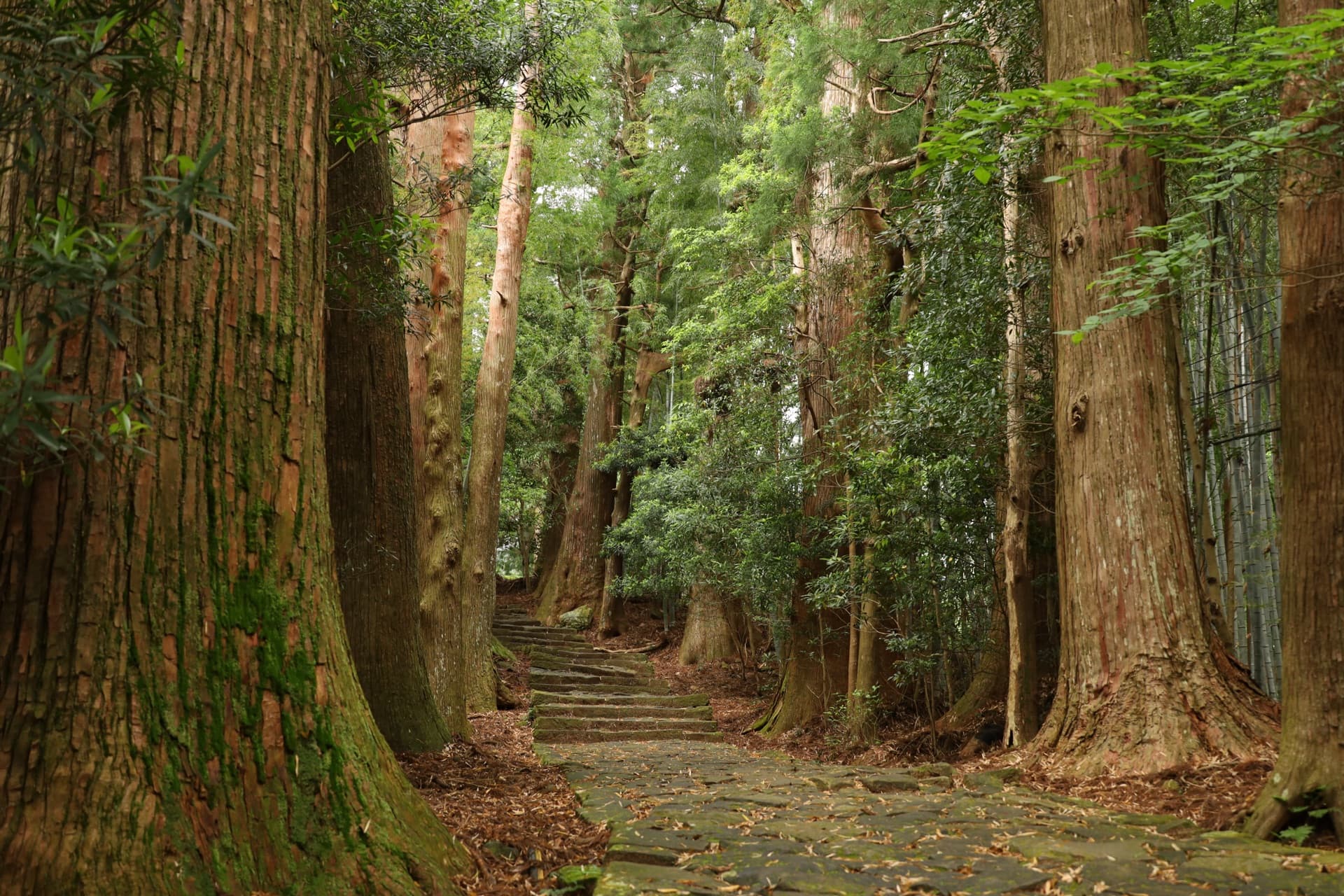
A short way up from the trailhead, the feel of the residential neighborhood fades, and a tree-shrouded stone path emerges. Unlike the moss-covered paths deep in the mountains, this one has a warmer, more familiar expression—a sense of human touch. The stones underfoot have been rounded over long years, and when you realize that travelers of old walked this very same path, your pace naturally slows.
The Kumano Sea Beyond the Pass
Near the top of the pass, the blue of the Kumano Sea peeks through the trees. You thought you were walking a mountain trail, yet before you know it, the presence of the sea is close by. This "shift of view from mountain to sea" is what makes Matsumoto-toge especially memorable among the Iseji passes.
A Half-Day Stroll Linking Onigajo and Shichiri-mihama
Rather than ending at the pass itself, combining it with the surrounding sights makes for a far more satisfying day.
1. Over the Pass to Onigajo
Descending from the pass, you reach Onigajo, a stretch of cliff walls carved by the waves. The wild, dramatic natural forms stand in sharp contrast to the quiet of the stone-paved road. Moving from the mountain path to this coastal scenic spot, you realize just how varied Kumano's landscapes can be.
2. Walking the Pebbles of Shichiri-mihama
Turning your eyes along the coast, you'll find Shichiri-mihama, a long beach of rounded pebbles. Walking to the sound of waves and the dry rustle of shifting stones is the perfect afterglow to the pass crossing. The beach itself has long been part of the ancient pilgrimage route, so following the sequence "pass → coast → beach" lets you lightly retrace the Kumano pilgrimage experience.
3. If You Have Energy to Spare: Hana-no-Iwaya Shrine
If your legs still have some strength, consider extending your walk to Hana-no-Iwaya Shrine within Kumano City. Encountering this ancient form of worship—where a massive rock itself is enshrined as the deity—offers a glimpse into the deep spiritual roots of the Kumano region.
Three Tips to Know Before You Walk
- Choose your direction based on your plan: Whether you enter from the town side or the Onigajo side changes how you arrange your return transport and lunch. Deciding your return route in advance brings peace of mind.
- Even for a short walk, wear proper shoes: The stone pavement becomes slippery after rain. Avoid smooth-soled town shoes.
- Allow extra time: The path itself is short, but factoring in stops at scenic spots fills the walk out nicely. Check the latest transport schedules and trail conditions before setting out.
Summary | For Those Seeking a "Just-Right Kumano Kodo"
Even without confidence in long distances or steep elevations, you can still breathe in the atmosphere of the Kumano Kodo. Kumano Kodo Matsumoto-toge is an introductory Iseji walk where town, pass, and sea flow seamlessly together. Combine it with Onigajo and Shichiri-mihama for a relaxed half-day between Kumano's sea and mountains.
Image: 熊野古道中辺路 大門坂 (via (公社)和歌山県観光連盟)


