 LOCAL FIT KUMANOBack to list
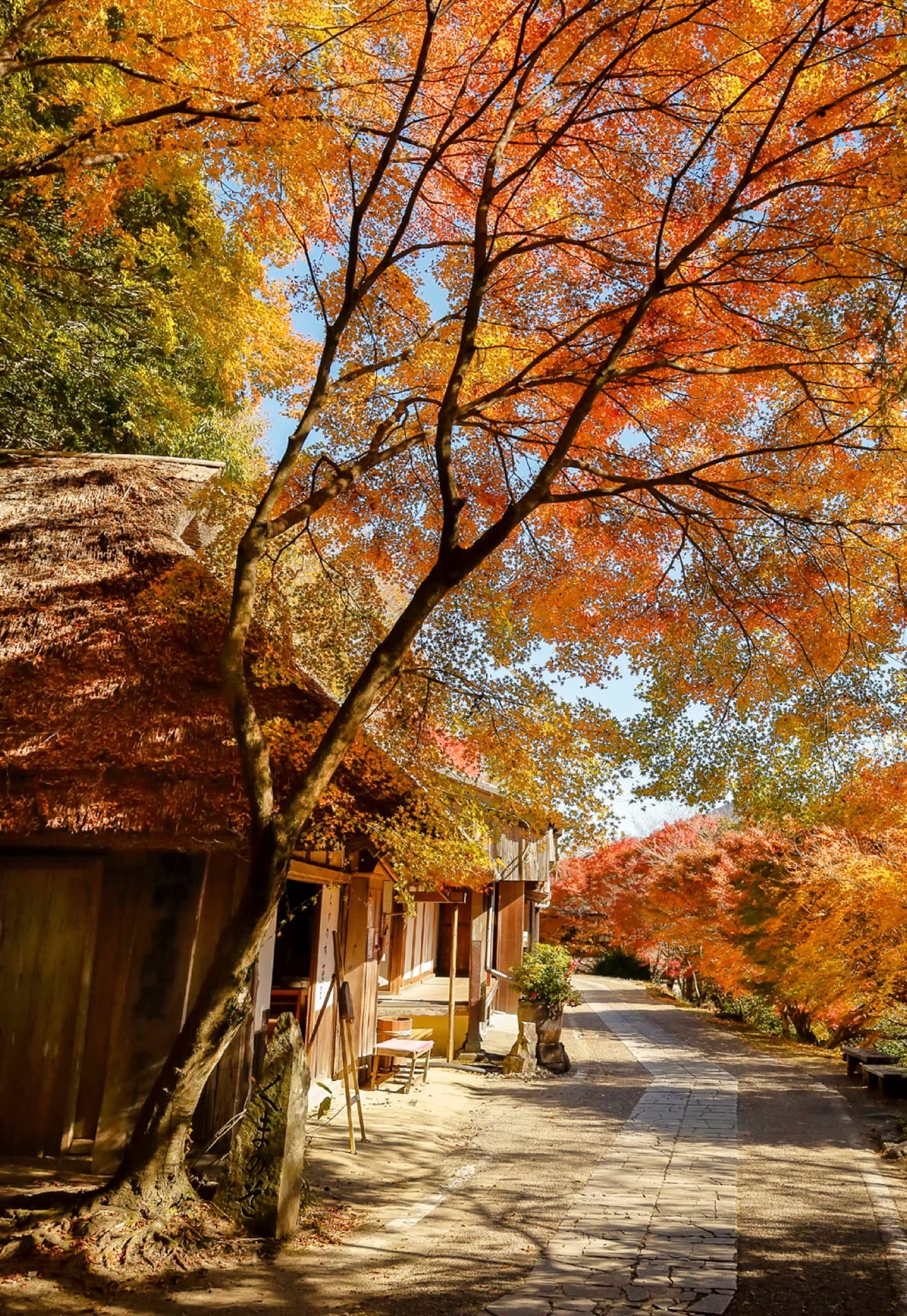
When people ask us, "When is the best time to see autumn leaves on the Kumano Kodo?" locals here answer, "It depends on which trail you walk." Kumano has a mild climate thanks to the Kuroshio Current, and the ancient trails span a wide range of elevations, so even within the same autumn season, the way the leaves turn varies considerably from route to route.
In this article, rather than pinning down specific dates, we'll introduce a way of thinking about timing based on chasing the autumn colors by elevation.
Autumn Leaves on the Kumano Kodo Are an "Accent Color," Not the Main Act
Reds and Yellows That Stand Out Against the Evergreen Forest
Much of the Kumano Kodo passes through deep forests of cedar and cypress. Because evergreens take center stage, you won't find entire mountainsides blazing in color like in northern Japan. Instead, you'll see a quieter autumn — scattered touches of red and yellow from maples and deciduous broadleaf trees mingling among the green. If you walk the trails with the mindset of enjoying the contrast against stone pavement and mossy green, you'll find the experience all the more rewarding.
Expect Variation from Year to Year
The timing of color change shifts depending on each year's temperatures and rainfall. Treat any guidelines as rough estimates, and check the latest information just before you go for peace of mind.
Three Steps for Chasing Autumn by Elevation
Generally, the higher the mountain, the lower the temperature, and the earlier the leaves turn. You can use this principle to plan your autumn itinerary.
Step 1: Start with the Higher Trails (Early Autumn)
The Kohechi route, which extends from Koyasan, and the mountain passes that gain elevation around Hongu are areas where leaves tend to turn earlier. However, morning and evening chills also set in sooner, so be sure to bring plenty of warm layers.
Step 2: Aim for Peak on the Mid-Elevation Trails
The mountain sections of the Nakahechi route and the ancient trails around Hongu sit at moderate elevations, and tend to hit peak color as autumn deepens. On the paths connecting the oji shrines, fallen leaves in the dappled sunlight make for quintessential autumn scenery.
Step 3: Finish with the Lower Trails (Late Autumn)
Trails close to the sea and at lower elevations, like the Daimonzaka slope at Nachi, turn colors later. You can sense the slow shift of the season all the way through late autumn. The mountain passes of the Iseji route, being closer to the sea, also seem to usher in autumn more gradually.
Three Things to Check Before You Go
1. The latest peak-viewing information: Check official updates from local tourism associations for conditions that week.
2. Sunset time: Autumn days are short, and forests in the valleys grow dark much earlier than you might expect. Start out early, and confirm the schedule of your return bus.
3. Weather and trail conditions: Stone pavement and fallen leaves become slippery after rain. Choose shoes with sturdy soles.
For a Pleasant Autumn Walk on the Ancient Trails
- Even on sunny days, it stays cool inside the forest. Layers that are easy to put on and take off are convenient.
- Stones and steps can be hidden beneath fallen leaves. Watch your footing carefully as you walk.
- Don't be discouraged if you see few autumn leaves. The crisp air and the deep green of the moss are charms unique to autumn.
In Summary
Rather than pinpointing "this place at this time," we recommend staggering your timing and chasing autumn from the higher trails down to the lower ones along the Kumano Kodo. Even if you miss the peak on one trail, you may well encounter just-right colors on another. Searching for flashes of red lit up against the green forest, take your time and enjoy autumn in Kumano at a leisurely pace.
Image: 熊野古道中辺路 とがの木茶屋 紅葉 (via (公社)和歌山県観光連盟)