 LOCAL FIT KUMANOBack to list
What is Fushiogami-oji? | The Spot Where Pilgrims First Worshipped Hongu
As you walk the Nakahechi route of the Kumano Kodo toward Hongu, there is a place along the ridge where the view suddenly opens up. This is Fushiogami-oji.
The name is said to come from pilgrims who, catching their first distant glimpse of the shrine buildings of Kumano Hongu Taisha (then on its former grounds, Oyunohara), were so moved that they fell to the ground in worship. For travelers who had crossed mountains and passes from Tanabe, finally arriving here must have brought a swelling sense of "I made it."
Fushiogami-oji is counted among the Kujukuoji — the ninety-nine subsidiary shrines — and lies along the UNESCO World Heritage "Sacred Sites and Pilgrimage Routes in the Kii Mountain Range." There are no grand buildings here. Instead, the very act of "seeing" is the highlight.
The Highlight Lies in Where Your Gaze Falls
Picturing Hongu Across the Valley
Standing near the oji and turning your eyes toward the valley, you'll see the mountains of Kumano folded one behind another. Long ago, the shrine complex of Oyunohara is said to have stood on a sandbar deep within that valley. The buildings are no longer part of today's view, but when you imagine, "Hongu once stood over there," the earnestness of this distant act of worship begins to sink in.
How the view appears will change with the season, the weather, and the thickness of the foliage. Some days it is hazy; on others, the air is clear and the mountain ridges stand out sharply. What kind of scenery you'll meet is a pleasure to leave to the day itself.
Listening to the Legend of Izumi Shikibu
A legend about the Heian-period poet Izumi Shikibu has been passed down here. Just before reaching Hongu, she realized she was ritually impure and hesitated to make her pilgrimage. That night, the deity of Kumano appeared in her dream, and after an exchange of poems, she was granted permission to worship.
Rather than asking whether this is historical fact, it feels right to see the story as expressing an image of "a Kumano that accepts everyone." A memorial stone and an informational sign stand on site, so take your time reading them as you let the story sink in.
A Mindset for the Walk
Walk It as a "Reward Spot"
If you are walking the Nakahechi toward Hongu, Fushiogami comes near the end of the journey. Arriving tired from the road and taking a breath before an open view — this is the kind of reward-like stop that suits the place best.
At the lookout, try to pause for just a few unhurried minutes. Taking photos is fine, but first, let your own eyes rest on the far-off valley. That alone, I think, brings you a little closer to the feelings of the people who walked here long ago.
What to Bring and How to Prepare
- Footwear suited to earthen and stony trails
- Water and light snacks (shops may not be nearby along mountain paths)
- A layer or rain gear in case the weather shifts
- In seasons when the sun sets early, plan your route with time to spare
Trail conditions, bus services, and access can change depending on the season, so it's reassuring to check the latest information with official tourism sources before setting out.
With the Path to Hongu Still Ahead
Fushiogami-oji is not so much a "place to look at something" as "a place along a long road where your feelings shift." From here on, your steps toward the sacred grove of Hongu are sure to feel a little lighter.
If you're walking the Kumano Kodo, why not walk not only to visit the sights but also to share in that moment — the "I can see it!" moment — felt by travelers long ago. Fushiogami-oji is a quiet hill that reminds us of just such a feeling.
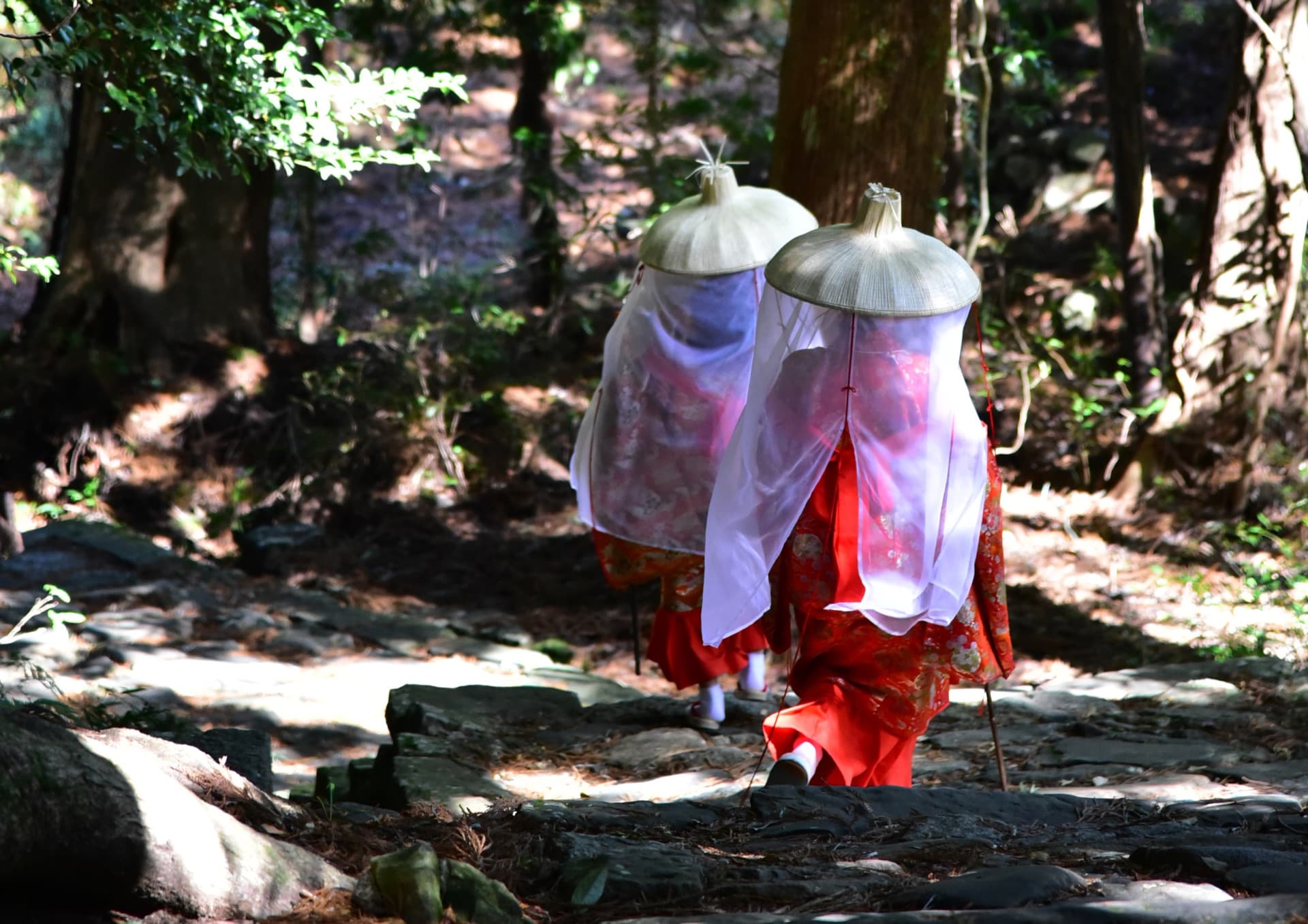
Image: 熊野古道中辺路 大門坂 (via (公社)和歌山県観光連盟)


