 LOCAL FIT KUMANOBack to list
From Kyoto to the Kumano Kodo: Actually, a 'Classic Pilgrimage Route' That Has Continued for a Thousand Years
Many people who search for 'Kumano Kodo from Kyoto' are likely thinking about extending their trip after sightseeing in Kyoto, or wondering whether it's possible to visit Kumano using Kyoto as a base.
Trace the history of the Kumano Kodo, and you'll find that Kyoto and Kumano are deeply connected. From the Heian period onward, retired emperors and aristocrats of the imperial capital spent many days traveling to Kumano. Retired Emperor Go-Shirakawa and Retired Emperor Toba are said to have made the journey to Kumano dozens of times in their lifetimes. In other words, the journey from Kyoto to Kumano is a classic pilgrimage that has continued for a thousand years.
The Route Then, the Route Now
The Heian Kumano Pilgrimage Was 'By Boat and On Foot'
The parties of the time are said to have sailed down the Yodo River from Kyoto toward the Osaka area, and from there walked south along the western coast of the Kii Peninsula. That pilgrimage route was called the 'Kiiji,' and from around Tanabe it connected into the Nakahechi, which heads into the mountains.
Today, 'Rail + Bus' Is the Basic Approach
Today, the basic idea is to head from Kyoto toward Osaka and transfer to a limited express train that runs south down the Kii Peninsula. Reaching gateway towns like Tanabe or Kii-Katsuura takes several hours including transfers. Travel times and the number of services vary by season, so please check the latest timetables before setting out.
When traveling from Kyoto, it's tempting to think of a day trip, but Kumano is vast, and bus services in the mountain areas are limited. Allowing yourself 2 nights and 3 days makes it much easier to secure time for walking as well.
A 2-Night, 3-Day Model Plan from Kyoto
Day 1: Leave Kyoto in the Morning and Head to the Tanabe Area
Depart Kyoto in the morning and travel south down the Kii Peninsula by rail. Once you arrive in Tanabe, rather than forcing yourself to walk that day, we recommend resting at your inn. This is the gateway to the Kumano Kodo, and you can also experience the local food culture of fresh fish and plums.
Day 2: Walk the Nakahechi to Kumano Hongu
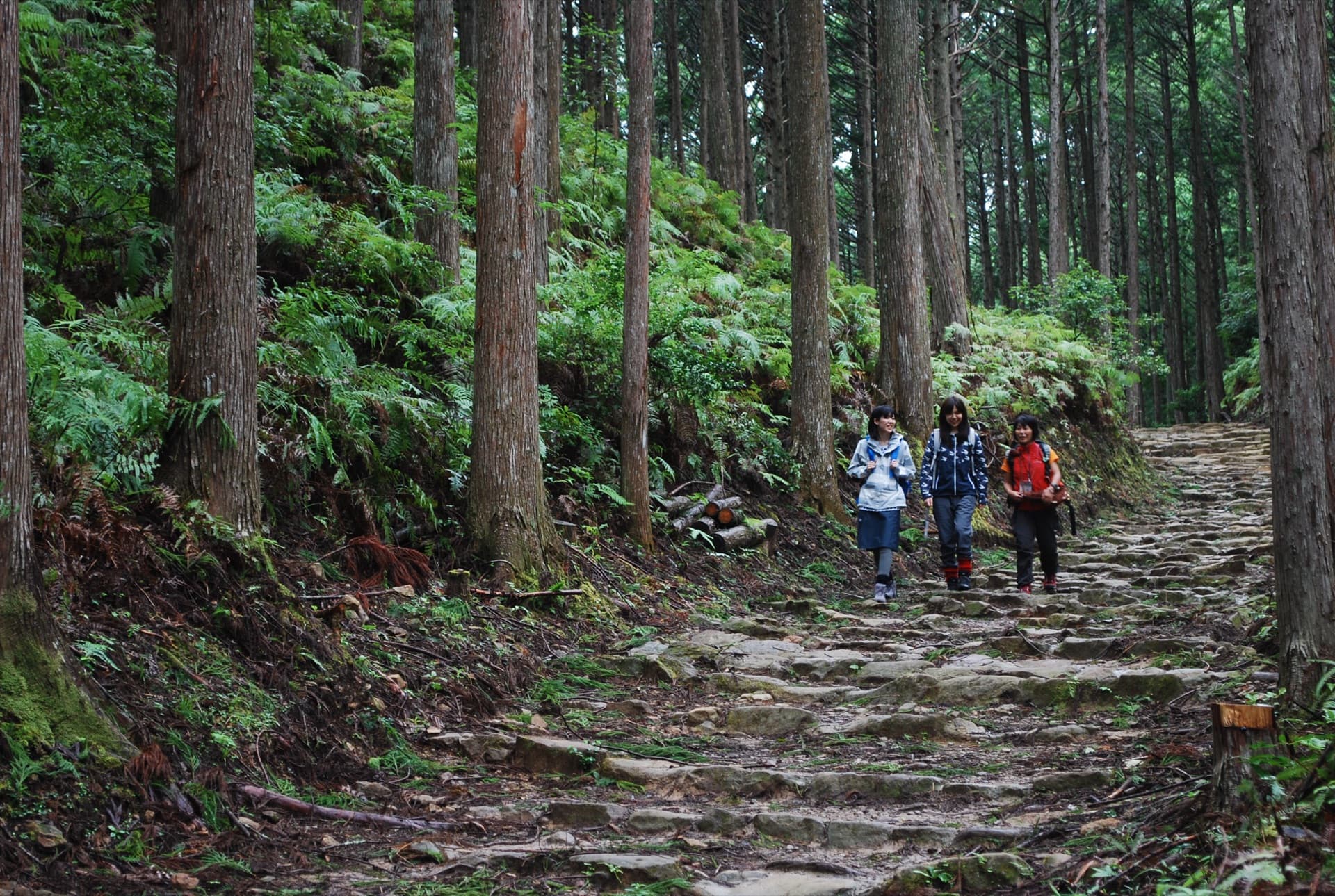
The Nakahechi is arguably the main artery of the route that the people of the imperial capital once followed. Depending on your stamina and time, choose a few 'oji' (small shrines dotted along the pilgrimage route) to walk between. Rather than being greedy about distance, deciding 'today, just one section' creates room to savor the scenery. In the evening, let your feet rest at one of the hot spring areas around Hongu.
Day 3: Visit Kumano Hongu Taisha and Head Home
In the clear morning air, pay your respects at Kumano Hongu Taisha. Working backward from your return bus and train times, it's safest to leave the shrine grounds with time to spare.
Packing Notes for Travelers Coming from Kyoto
- Well-worn walking shoes: Rather than the shoes you'd wear strolling around Kyoto, choose non-slip footwear.
- Rain gear and layers: The weather in the mountains changes quickly, and it can be colder than in the city.
- Small luggage: Since travel is long, keep your luggage to a minimum. Consider forwarding bags to your inn if needed.
- Cash and drinks: Places to shop are limited in the mountain villages.
The Mindset to Savor 'From the Capital to the Sacred Land'
After visiting Kyoto's temples and shrines, when you then travel to Kumano, you'll notice that even though both are 'paths of prayer,' the quality of the scenery is completely different between the city and the mountains. From manicured gardens to moss-covered stone pavements and deep groves of cedar. That very transition is the real joy of a journey heading from Kyoto to Kumano.
The route that retired emperors spent many days walking, we can now cover in a single stretch by rail. That's exactly why the final steps should be your own. For your next destination after Kyoto, please consider choosing Kumano.
*Please check official sources for the latest information on train schedules and facilities before departure.
Image: 熊野古道 (via (公社)和歌山県観光連盟)


