 LOCAL FIT KUMANOBack to list
February on the Kumano Kodo: It's Not So Much "Cold" as "Full of Temperature Swings"
When walking the Kumano Kodo in February, many people think, "I just need to bundle up." But from a local perspective, what we'd really recommend is to expect your perceived temperature to rise and fall like peaks and valleys throughout the day.
On a sunlit climb you may break into a sweat, yet on a shaded descent, in the wind at a mountain pass, or while standing still during a break, you can get chilled in an instant. This is the hallmark of winter on the old pilgrimage routes. For February clothing on the Kumano Kodo, you'll have more success if you build your outfit around "ease of putting on and taking off" rather than sheer thickness.
Layering for Four Different Scenes
1. Before the Morning Start | Head Out Feeling "a Little Chilly"
Valleys and wooded sections are especially cold in the morning. But once you start walking, your body warms up quickly. If you're too warm at the start, you'll sweat on the first climb, and that sweat will later chill you down. Setting off feeling "a touch cool" is just about right.
2. While Climbing | A Base Layer That Doesn't Trap Sweat
For the layer closest to your skin (the base layer), choose synthetic or wool fabrics that wick sweat away. Cotton underwear holds moisture, dries slowly, and will steal your body heat the moment you stop. Over that, add a thin fleece or similar insulating layer that you can easily shed when you get too warm.
3. Breaks and Shrine Visits | Keep a Jacket Within Easy Reach
When you stop at an oji shrine or a former teahouse site, your body cools down faster than you'd expect. Pack a lightweight down jacket or windshell near the top of your backpack so you can throw it on the moment you stop. Making this a habit will transform how comfortable your winter walk feels.
4. Evening and After the Hike | Plan for Short Days and Falling Temperatures
In winter, the sun sets early, and once it starts dipping, temperatures drop sharply. Give yourself plenty of buffer in your finish time, and prepare a dry change of layer (a jacket or socks) for the trip back so you can relax.
Accessories Make the Difference: Neck, Hands, and Feet
- Neck: A neck warmer or buff is easy to put on and take off, making it an all-purpose temperature regulator.
- Hands: Thin gloves come in handy during cold morning transfers. If you use trekking poles, choose a non-slip type.
- Feet: Socks that are too thick can feel cramped inside your boots. Wear slightly thick hiking socks that fit well with your shoes. Stone-paved paths get slippery when wet, so shoes with good grip are a real asset.
- Head: A knit cap or a hat that covers your ears is lightweight, easy to carry, and great for warmth.
Styles to Avoid
Dressing entirely in cotton layers, or walking in heels or slip-ons, is something you'll want to avoid on winter trails. Also, relying on one bulky, heavy coat makes it hard to adjust when you get hot.
When in Doubt, Assume You'll Be Taking Layers Off
February on the Kumano Kodo is a season for quiet walks through crisp, clear air. If you're unsure what to wear, try this approach: layer three thinner pieces and adjust by adding or removing them. Since how you feel depends on the weather, elevation, and section you're walking, check the latest forecast and local information before setting out, and enjoy your walk within your comfort zone.
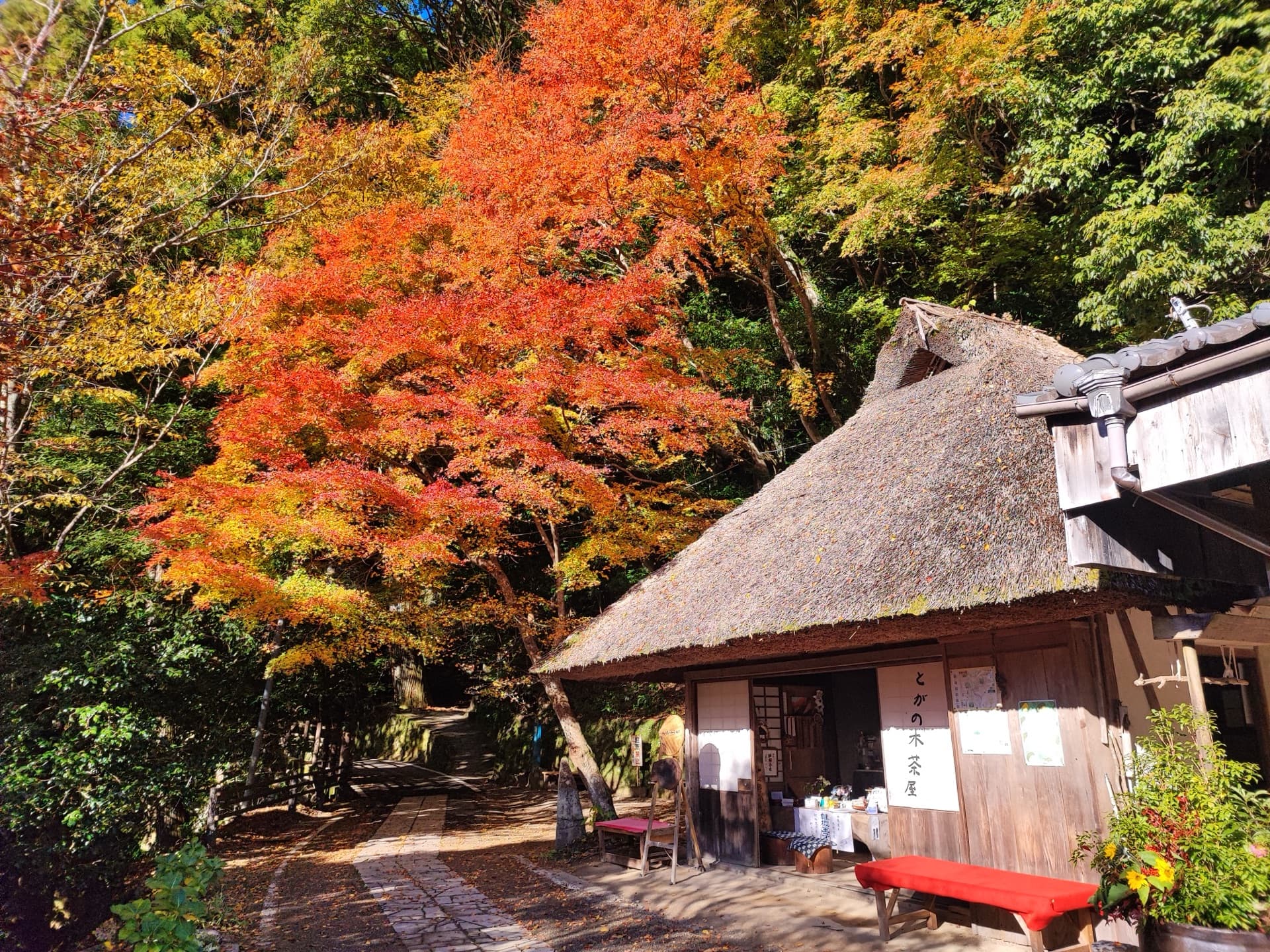
Image: 熊野古道中辺路 とがの木茶屋 紅葉 (via (公社)和歌山県観光連盟)


