 LOCAL FIT KUMANOBack to list
Decide Your Day-Trip Model Course on the Kumano Kodo by 'Walking Time'
The Kumano Kodo isn't a single path—it's a collective name for the network of pilgrimage routes that stretch across the Kii Peninsula. For that reason, when planning a day trip, it's easier to first decide 'how long you want to walk' rather than 'which route to take.' Here, we introduce how to think about day-trip model courses in three tiers based on walking time. We've also organized how to work in a visit to the Kumano Sanzan—the final destination of the ancient routes—into a single day.
[Around 1 Hour] A Course for a Quick Taste of the Stone-Paved Path
If you're thinking, 'I'm curious about the Kodo, but I'm not confident I can walk a long distance,' then focusing on a short section is a great choice.
Who it suits
- First-time Kumano Kodo walkers
- Those focused on shrine visits or sightseeing, who want to experience the Kodo as a taste
- Families with children, or those unsure of their footing
Tips for planning
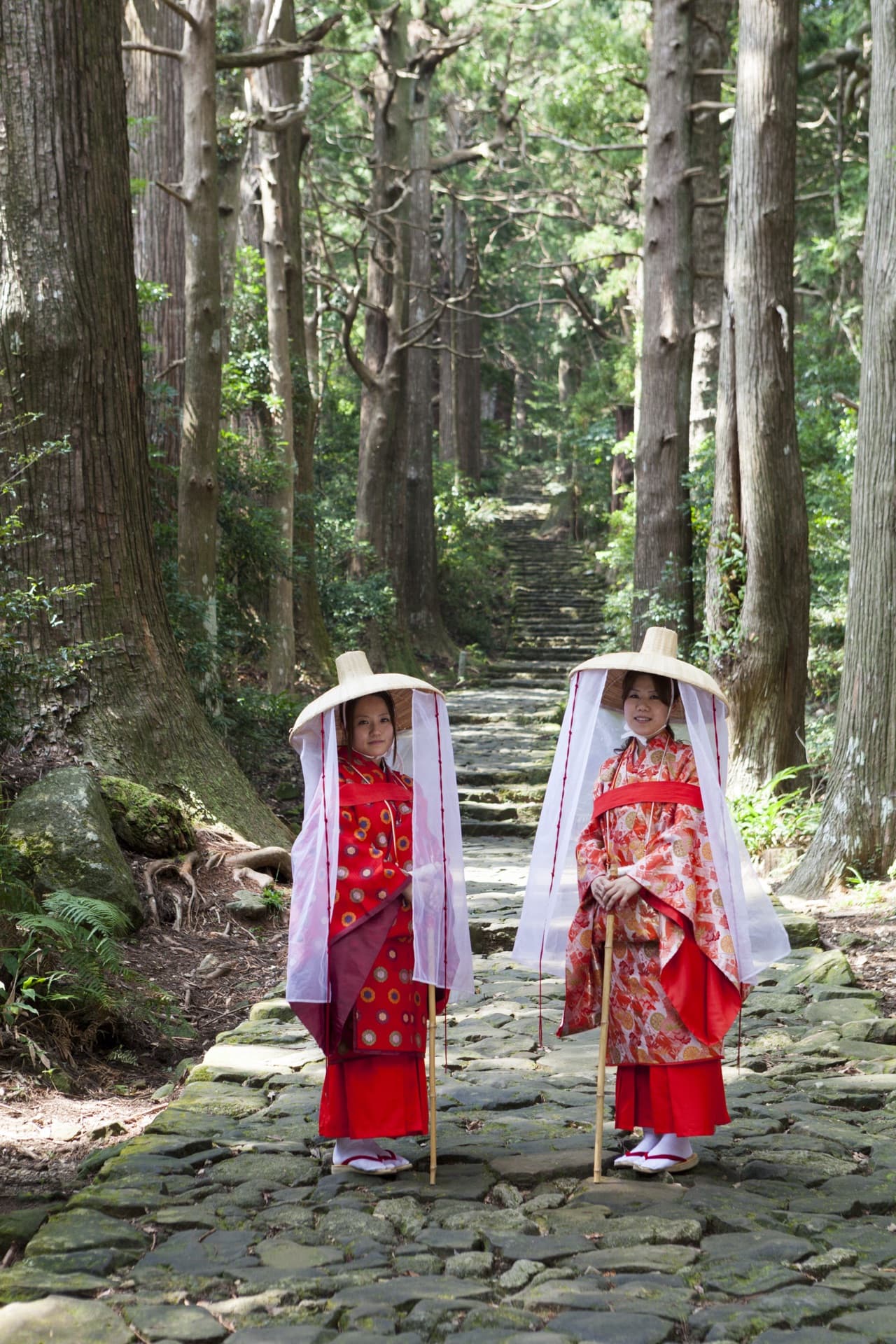
Spots like Daimon-zaka at Nachisan let you experience moss-covered stone paving and towering cedar groves in a short time. Giving yourself room to walk the Kodo, then visit the shrine, and take a break nearby will keep things from feeling rushed. Don't let the shortness fool you—the stone paving becomes slippery when wet, so at the very least, make sure your footwear is up to the task.
[Half-Day] The Classic Course Using 'Oji' as Waypoints
If you want to really soak up the mountain-path atmosphere that makes the Kumano Kodo special, a half-day course will be the heart of your day trip.
Use the Oji shrines as checkpoints
Small shrines called 'Oji' are scattered along the Kodo. Using them as pace-check markers makes it easier to gauge 'how far have I come?' and gives you natural stopping points when you're tired.
If you choose a classic Nakahechi route
On the Nakahechi route heading toward Kumano Hongu Taisha, plans that start walking from a section near Hongu are popular with beginners. Because the goal is the grand shrine itself, you can finish your walk and immediately pay your respects with a sense of accomplishment. For details on how to walk it, please also refer to our Nakahechi articles.
Rough time allocation for a half-day course
- In addition to walking time, factor in breaks, photos, and the shrine visit
- Set your return bus or car time with plenty of leeway
- Check in advance for points where you could cut the walk short if you fall behind schedule
[Full Day] A Serious Course for the Satisfaction of Walking a Whole Section
If you're confident in your stamina and can start early, you can also plan to walk one section thoroughly over a full day.
Things to keep in mind for a full-day course
1. Start early: Mountain paths take longer than you'd expect. Plan to come down before the sun starts to set.
2. Check escape routes: It's reassuring to have options for turning back if your condition or the weather changes.
3. Secure your return transport first: Always check bus schedules or how you'll retrieve your car before setting out.
There are also routes like the Iseji where you can enjoy the sea alongside the stone paving. Even on the same 'day trip,' whether your focus is the mountains or the coast will greatly change the character of your journey.
Day-Trip Plans Combined with the Kumano Sanzan | The Keyword Is 'Don't Overreach'
Kumano Hongu Taisha, Kumano Hayatama Taisha, and Kumano Nachi Taisha. 'I want to visit all three World Heritage shrines of the Kumano Sanzan in one day'—it's a request we locals hear often. In short, visiting all three in a day is not impossible. However, the three shrines are much farther apart than you might imagine. And if you're combining it with a walk on the Kodo, 'don't overreach' becomes all the more important.
We cover two-day, one-night itineraries in a separate article, so here we'll organize three types of day plans for those who 'can only do a day trip.'
First, understand the geography of the three shrines
Each of the three shrines sits in a completely different setting, with its own scenery and atmosphere.
- Kumano Hongu Taisha: Inland, deep in the mountains. A sacred spot in dense forest, near the banks of the Kumano River
- Kumano Hayatama Taisha: In the city center of Shingu. Close to where the river meets the sea
- Kumano Nachi Taisha: On a mountainside overlooking the sea. Paired with Nachi Falls and Daimon-zaka
On a map, they form a large triangle, and even by car, travel between shrines takes a fair amount of time. Exact travel times vary with the season and road conditions, so it's safest to check your map app before setting out.
Type 1 | 'A Fast-Paced Day' Visiting All Three Shrines
This is for those who have access to a car, taxi, or private transport.
1. First thing in the morning, start with the shrine that's farthest away
2. Move to the middle shrine, and have lunch in central Shingu
3. Finish at the third shrine while it's still bright out
The key is to accept that your time at each shrine will be short. You won't have the luxury of taking in every stone step or point of interest within the precincts, so if you reframe it as 'a day to feel the atmosphere of all three shrines,' your satisfaction will go up. With this plan, it's realistic to skip walking the Kodo and focus on the shrine visits. If you'd like to receive goshuin (shrine stamps), reception hours differ at each shrine, so be sure to check the official information in advance.
Type 2 | Taking Your Time with the Two Coastal Shrines: 'Hayatama + Nachi'
Shingu and Nachikatsuura carry less travel burden than other combinations and are easy to navigate by train or bus.
- Morning: Visit Kumano Hayatama Taisha and take a short walk around Shingu
- Lunch: Fresh seafood in the port town
- Afternoon: Head up to Nachisan and take your time at Kumano Nachi Taisha and Nachi Falls
In the afternoon at Nachisan, if you walk the stone paving of the aforementioned Daimon-zaka on your way to the shrine, you can slot in the 'around 1 hour' course just as it is. The appeal of this plan is experiencing the 'Kumano of the sea,' and even though you only visit part of the Sanzan, the depth of your journey is actually greater.
Type 3 | Sacred Mountains and Hot Springs: 'Hongu + Onsen'
Among the three shrines, Kumano Hongu Taisha is the central presence of the Kumano Kodo.
- Morning: Visit Kumano Hongu Taisha and extend your walk to Oyunohara, the former site of the shrine
- Afternoon: Rest at a nearby hot spring
If you have time and energy to spare, placing a 'half-day course' walking the Nakahechi section nearer Hongu before your shrine visit in the morning is also a good combination. Even visiting just one of the three shrines, you can still fully feel the 'pilgrim spirit.' You can leave the other two for the pleasure of your next trip.
When You Can't Decide Which Course to Take
Choosing by walking time
| Situation | Guideline |
|---|---|
| First-timer / with family | Around 1 hour |
| Experienced walker / exercises regularly | Half-day |
| Has hiking or long-distance walking experience | Full day |
When in doubt, choosing a course one tier shorter is the surest way to avoid disappointment. You can spend any leftover time on hot springs or local food for a highly satisfying day trip.
Choosing by Kumano Sanzan type
- Have a car / can leave early → Type 1 (all three shrines)
- Want to travel by train or bus → Type 2 (Hayatama + Nachi)
- Want to leisurely enjoy a hot spring too → Type 3 (Hongu + onsen)
For a day trip in Kumano, 'did I spend quality time at each shrine?' tends to stay with you as a memory far more than 'did I visit them all?'
Final Checklist Before You Set Out
- Check the day's weather and the time of sunset
- Check the latest transit information and the last return times
- If receiving goshuin, confirm reception hours in each shrine's official information
- Prepare water, comfortable walking shoes, and rain gear
The Kumano Kodo isn't a path to be walked quickly—it's a path to be savored over time. Choose a length that suits you and a shrine visit that doesn't push you too hard, and enjoy a relaxed day-trip model course.
*Content was revised and updated on October 17, 2026.*
Image: 熊野古道中辺路 大門坂 (via (公社)和歌山県観光連盟)


