 LOCAL FIT KUMANOBack to list
The Kumano Kodo Best Section Depends on What You Want to Take Home
Search for 'kumano kodo best section' and you won't find a single, definitive answer. Some travelers want the satisfaction of a long trek; others want to breathe in the atmosphere of the ancient pilgrimage route in just half a day.
This article is for the latter. For you, we suggest Daimon-zaka, the stone-paved slope leading up to Nachisan, as one great answer. It isn't a long path. And yet the feeling of 'I'm really walking the Kumano Kodo' is packed into this small stretch of road.
Reason 1: Cedar Groves and Stone Pavement Create the 'Ancient Path' Atmosphere from the Very First Step
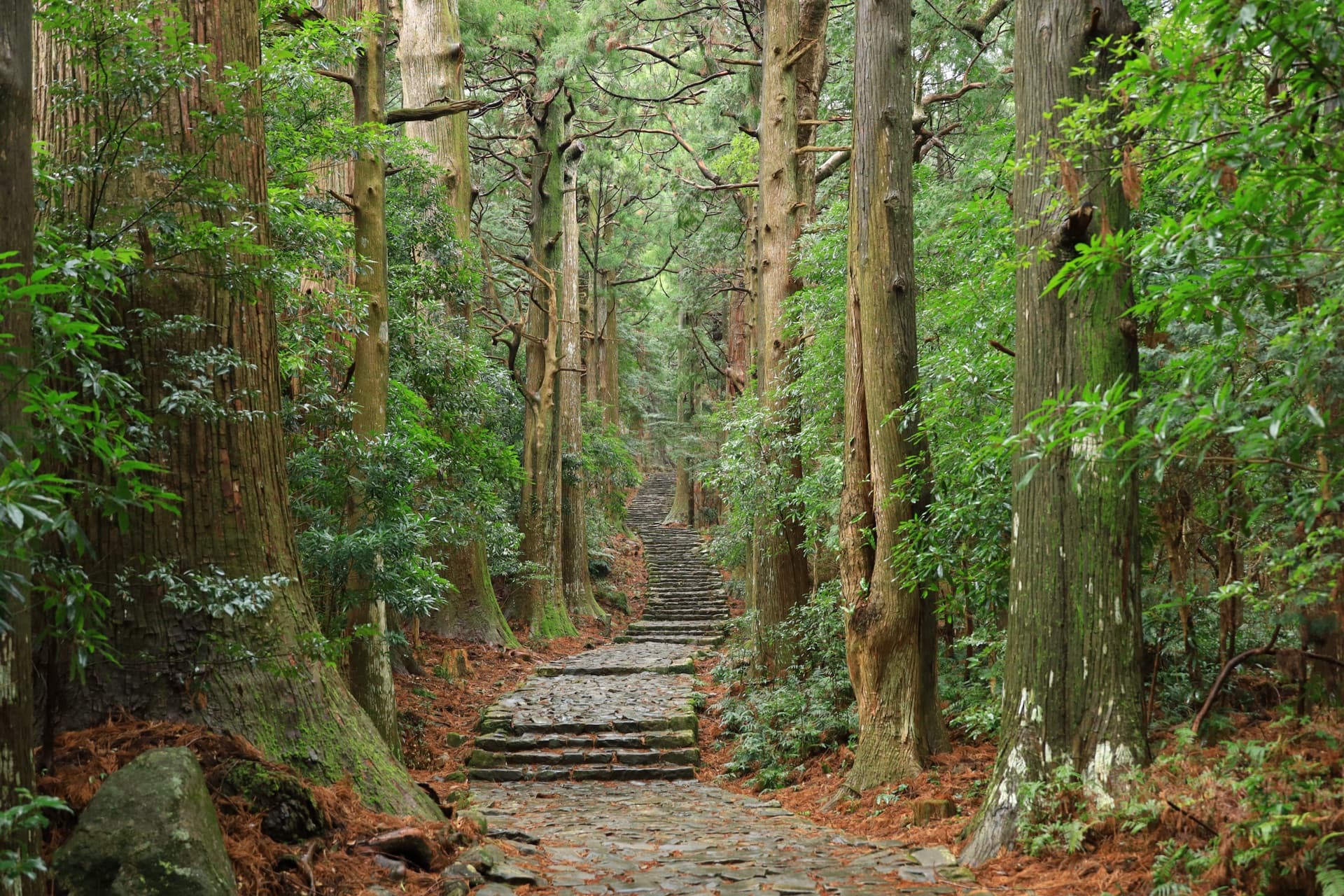
Daimon-zaka is a sloped path lined on both sides by towering cedars, with moss-covered stone steps underfoot. Some of the trees are said to be hundreds of years old — tall enough that your neck will ache from looking up.
As you begin to walk, the sounds of the modern world slowly fade. The trees soften the light, and after rain, the stones underfoot deepen in color with moisture. Dappled sunlight on clear days, hushed stillness on misty mornings — each has its own charm.
Along the way, landmarks like the Meoto-sugi (Husband-and-Wife Cedars) give you reasons to pause. Even stopping to take photos, you'll find the distance just right for a relaxed pace.
Reason 2: The Presence of the Oji Shrines and the Stories of a Pilgrimage Road
One important thing to know when walking the Kumano Kodo is the presence of the 'oji' shrines scattered along the way. Along Daimon-zaka, too, you can sense the places where pilgrims once stopped to put their hands together in prayer.
To our modern eyes, it may look like just a forest path. But walk it thinking, 'This is where travelers of old caught their breath,' and the same stone steps begin to look a little different. The charm of the ancient road lies not only in the scenery, but in the accumulated time of all those who have walked it.
Reason 3: The View of Nachi That Awaits at the End
Part of what makes Daimon-zaka so rewarding is what unfolds once you reach the top. Enter the sacred grounds of Nachisan and you'll find shrine halls, temples, and in the distance, a glimpse of the great waterfall. 'Walk → worship → gaze' flows together as one experience, so even a short visit brings deep satisfaction.
Compared with the long-distance sections of the Kodo, it's also easier to leave room in your schedule and your legs. For first-time visitors to Kumano who want a taste of the ancient path's atmosphere, it makes an ideal introduction.
A Few Small Tips Before You Walk
- Wear shoes with good grip: The stone paving can be slippery after rain or morning dew.
- Climb at your own pace: It may be short, but a slope is a slope. Turn those moments of stopping to look up at the cedars into rest breaks.
- Allow extra time: If you want to enjoy photos and little detours, don't pack your schedule too tightly.
- Check the weather just before you go: Mountain weather can shift quickly, so an extra layer is reassuring.
How to Think About It When Choosing Between Sections
If you want a serious hike, there's Nakahechi; for a mix of coast and stone paving, there's Iseji — each section of the Kumano Kodo has its own character. Among them, Daimon-zaka is the section that lets you touch the essence of the ancient path in a short amount of time.
'Best section' naturally means different things to different people. But for anyone who wants to feel the spirit of Kumano all at once, or to start without strain, this is one we can recommend with full confidence. Walk this one stone path first, and then let your feet lead you to the next road you want to explore.
Image: 熊野古道中辺路 大門坂 (via (公社)和歌山県観光連盟)