 LOCAL FIT KUMANOBack to list
When Picking a Beginner Route on the Kumano Kodo, Look at the "Number of Exits"
Search for "Kumano Kodo beginner route" and you'll find plenty of recommended courses. But before you set out, there's one key point to understand: the Kumano Kodo is not a single trail. It's a bundle of paths, each with its own character, so the trail you choose will greatly change how it feels to walk.
In this article, rather than focusing on distance or time, we'll use the "number of exits" as our main axis — in other words, can you turn back if needed, or get picked up by a bus along the way? On your first mountain walk, this is what gives you peace of mind.
The Four Trails That Make Up the Kumano Kodo
Nakahechi | The Classic Route Often Chosen by Beginners
This is the path that pilgrims have long walked from Tanabe toward Kumano Hongu Taisha. It's dotted with *oji* (small shrines that served as pilgrimage markers), which makes it easy to break your walk into manageable sections. Guidebooks and tourist information often introduce beginner-friendly segments along this route.
Kohechi | The Mountain Trail Linking Koyasan and Kumano
This deep-mountain path crosses several passes. While its appeal is great, rather than attempting the full route right away as a beginner, it's safer to first gain experience on another trail.
Ohechi | The Long Coastal Route
This trail follows the coastline, offering scenic variety. On the other hand, trail conditions and walkability vary from section to section, so advance research is essential. For a first-timer, it's wiser to check the latest information and walk only parts of it.
Iseji | A Path with Stone Pavements and the Scent of the Sea
Running from the Ise area toward Kumano, this route has stone-paved sections remaining at each pass. Some areas can be tried in short segments, so you can enjoy it with a "let's just walk one pass today" approach.
Three Points for Beginners to Check
1. Is the entry point close to a bus stop or train station?
Being able to use public transport at both the start and end of your walk makes it easier to adjust your plans based on energy or weather.
2. Can you reach a paved road or village midway?
Compared to trails that stay deep in the mountains, sections where you can step onto a road here and there feel much more reassuring for a first walk.
3. Does it end with a descent or a climb?
If the final stretch is uphill when you're already tired, it hits harder than you'd expect. Walking in the direction where the last part is downhill or flat is one good strategy.
How to Decide When You're Stuck
- First time on a mountain trail → Walk a short section of the Nakahechi, visiting the *oji* shrines one by one
- Want to experience the stone-paved atmosphere → Choose a short section of the Iseji or around Nachisan
- Want to enjoy scenic variety → Walk part of a coastal section after checking current information
- Want to build experience and take on a challenge → Save routes like the Kohechi for after you've grown accustomed
A Word from a Local
The Kumano Kodo isn't about walking the whole thing. Even locals often say, "That's enough for today," and come back another day to continue. For beginners, walking a short distance and heading home with energy to spare is just the right amount.
Always check the latest trail conditions and any closures through official sources such as the local tourism association before setting out. Start from the entry point that suits you, and walk the paths of Kumano a little at a time.
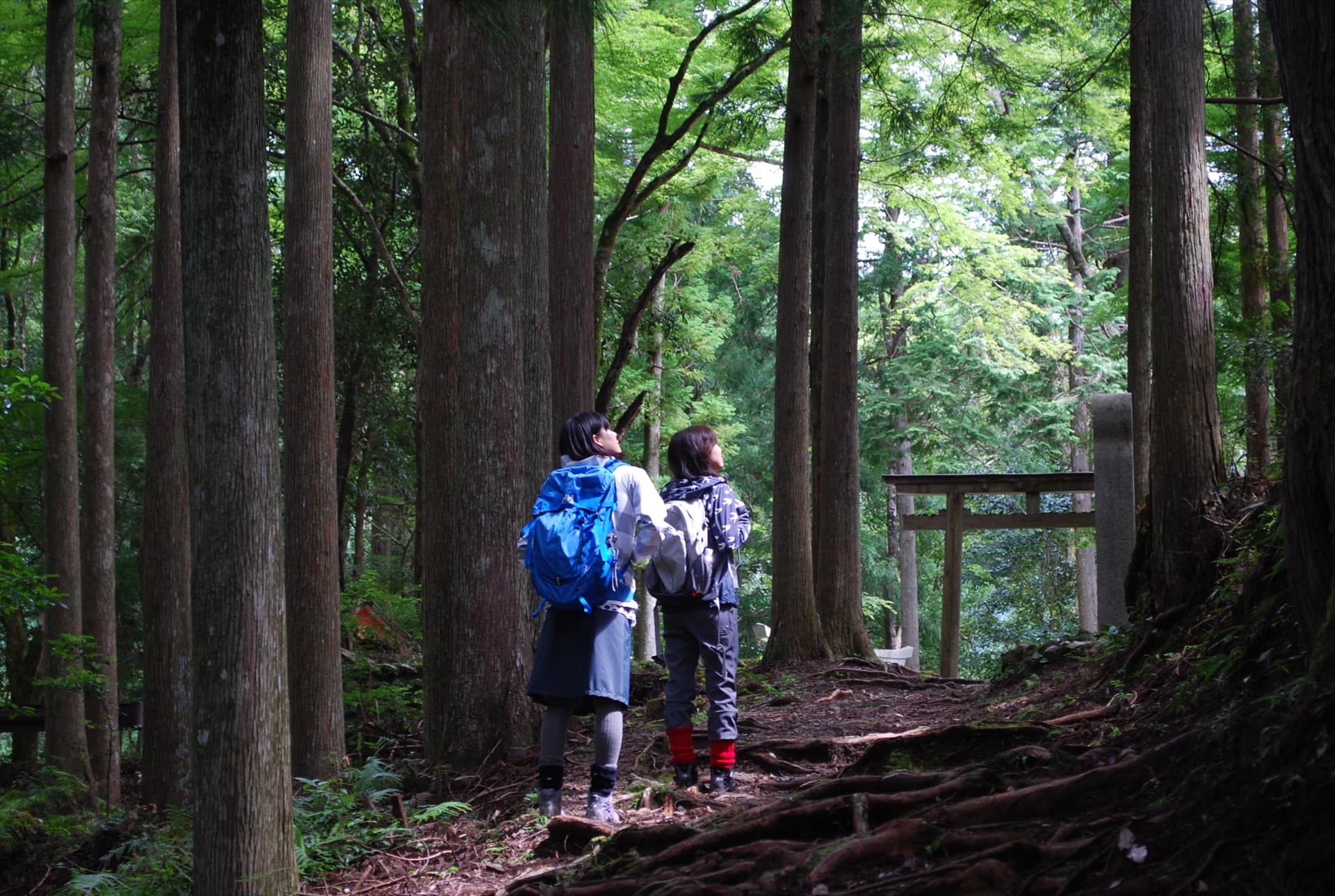
Image: 熊野古道中辺路 発心門王子 (via (公社)和歌山県観光連盟)


