 LOCAL FIT KUMANOBack to list

Even Beginners Can Enjoy the Kumano Kodo as a Day Trip
“I’d like to try walking the Kumano Kodo, but I’m not confident in my stamina” or “First, I just want to get a feel for it as a day trip” — many travelers feel this way. In fact, the Kumano Kodo offers several short model courses that even beginners can walk with peace of mind. One of the most popular is a section of the World Heritage–listed Nakahechi route. Walking its stone-paved paths, moss-covered trails, and dappled sunlight, you can truly feel the atmosphere of this “path of prayer” that has endured since the Heian period.
In this article, we introduce a day-trip model course on the Kumano Kodo that we especially recommend for beginners, together with tips on how to walk it.
Beyond just describing the course, we’ve carefully put together information on the origins of the Kumano Kodo, the meaning of the oji shrines, the trail’s seasonal moods, mindsets for walking, nearby spots worth visiting, and answers to common questions. Use it as pre-trip study and as a guide along the way.
One thing that trips up day hikers most often is not the choice of section, but how they structure their time. In the mountainous Kumano area, buses may run infrequently at certain hours, and once the sun begins to set, it quickly grows dark. Just as important as “where to walk” is thinking first about “what time you want to finish.” That’s the real secret to making your first day hike a pleasant memory.
What Is the Kumano Kodo? Basic Knowledge Before Your First Walk
Knowing a little background changes the way the scenery looks. Rather than a difficult history lesson, let’s briefly organize things from the perspective of “why is this path here?”
Origins as a “Path of Prayer”
The Kumano Kodo is the collective name for the pilgrimage routes leading to the Kumano Sanzan — the three grand shrines of Kumano Hongu Taisha, Kumano Hayatama Taisha, and Kumano Nachi Taisha — spread across the southern Kii Peninsula. In the Heian period, retired emperors and nobles made the long journey from the capital to Kumano. As time went on, warriors and commoners joined in, and the throng of pilgrims is said to have been so long that it was called the “Ant Pilgrimage to Kumano.”
Behind Kumano’s power to draw so many people lies a syncretic worldview that layered Buddhist belief onto the ancient nature worship that saw gods dwelling in mountains, rivers, and the sea. Hongu was associated with Amida Nyorai, Hayatama with Yakushi Nyorai, and Nachi with Senju Kannon, and Hongu in particular was regarded as a sacred ground connected to the Western Pure Land. In other words, the Kumano Kodo was a path walked by people burdened with the weariness and troubles of this world, seeking rebirth as a new self.
Kumano has long been known as a place that welcomes everyone, regardless of status, gender, faith, or the purity of body and mind. There is something fitting in the way walking the Kodo is also open to beginners and those not confident in their stamina — it mirrors this generous spirit.
Types of Kumano Pilgrimage Routes and Where the Nakahechi Fits In
“Kumano Kodo” is not the name of a single road but a collection of several pilgrimage routes. The main ones are:
- Nakahechi: The most-used route since ancient times, crossing the mountains from the Tanabe area to Kumano Hongu.
- Ohechi: A route following the coastline of the Kii Peninsula toward the Nachi area.
- Kohechi: A rugged mountain route connecting Koyasan with Kumano Hongu.
- Iseji: A route heading to Kumano from the Ise area.
- Omine Okugake-michi: A full-fledged mountain route famous as a training path for shugendo ascetics.
Of these, the Nakahechi is the easiest to recommend to first-timers. Its difficulty varies greatly by section, and you can choose anything from short, easy stretches to full-day crossings of the mountains. The section introduced here, from Hosshinmon-oji to Kumano Hongu Taisha, is one of the most representative “introductory” options.
What Are Oji Shrines?
Walking the Kodo, you’ll frequently come across small shrines and stone markers labeled “XX-oji.” Oji are shrines said to enshrine the “divine children” — manifestations of the Kumano deities. Many such shrines line the Kumano pilgrimage routes, and together they are known as the “Kumano Kujukuoji” (Ninety-Nine Oji of Kumano).
For pilgrims, oji shrines served as waymarkers, resting spots, and places of prayer and purification. Travelers would clasp their hands here, sometimes performing rituals, gradually composing their hearts as they approached Hongu.
We too can benefit from a pause at each oji. Clasp your hands lightly, sip some water, and take in the scenery. Repeating this becomes the rhythm of a day on the Kodo.
Day-Trip Model Course for Beginners: Hosshinmon-oji to Kumano Hongu Taisha
Why This Section Is Recommended
On the Nakahechi, the roughly 7 km section descending from Hosshinmon-oji to Kumano Hongu Taisha is a classic beginner’s course. It is largely a gentle downhill, taking about 2 to 3 hours at a relaxed pace. The route weaves between paved roads and mountain trails, offering plenty of variety.
It’s a great entry-level day hike for reasons beyond just distance and time:
- It has a narrative arc, starting at Hosshinmon-oji — considered the entrance to Kumano Hongu’s sacred precinct — and ending at Hongu itself.
- Being mostly downhill, you can enjoy the scenery and oji shrines without worrying about getting winded on climbs.
- Mountain villages and terraced rice fields are close by, so the route doesn’t feel closed in; open vistas appear between the forest sections.
- Since you finish near Hongu, you can combine your visit, hot springs, and meals into a single day.
The name “Hosshinmon” is said to come from “hosshin,” the awakening of the aspiration to seek the Buddhist path. From here on was considered the sacred precinct of Kumano Hongu, where pilgrims would renew their resolve for the final stretch. For modern walkers too, it’s an ideal starting point to switch out of daily life.
Highlights Along the Way
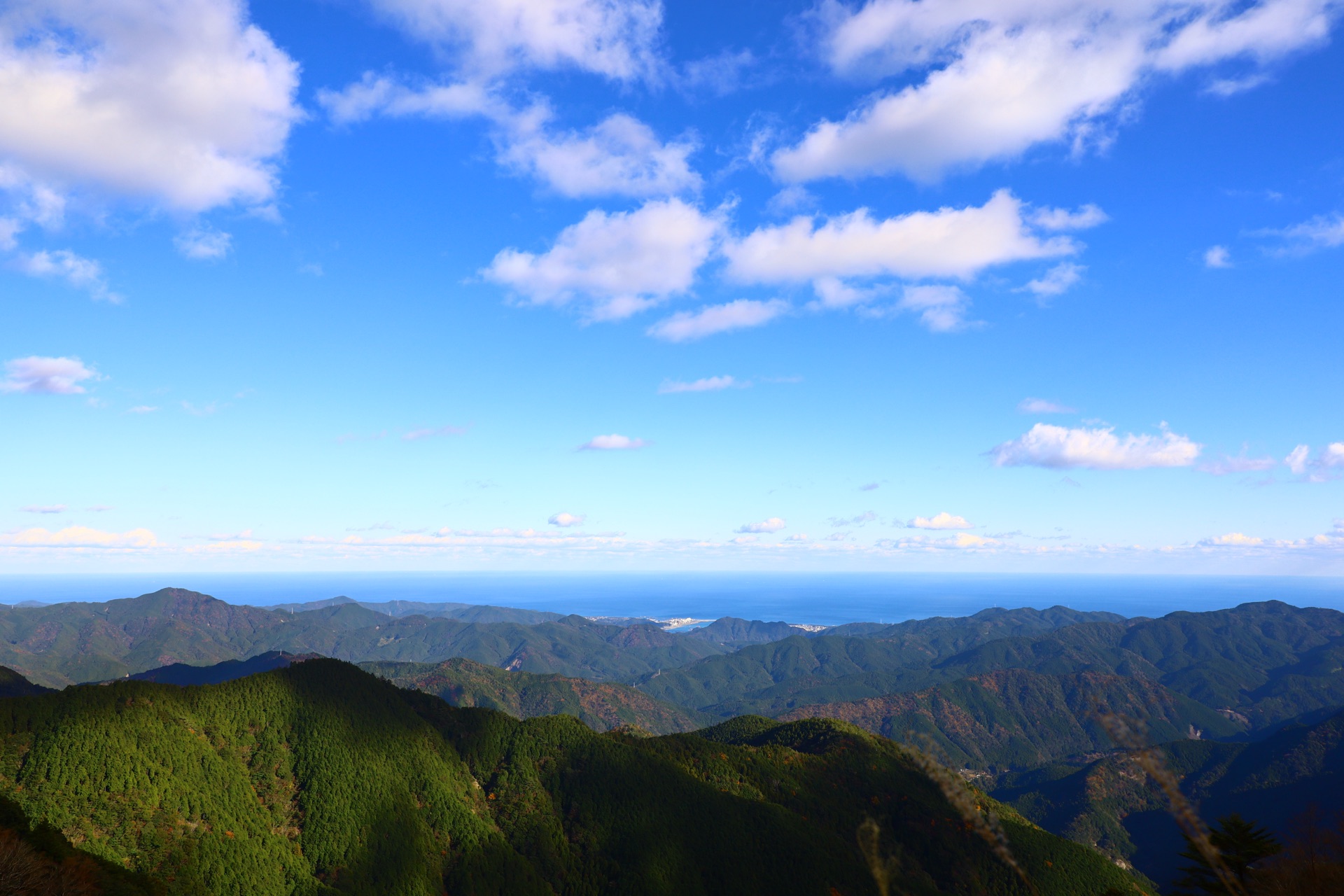
The route is dotted with historic oji shrines such as Mizunomi-oji and Fushiogami-oji. From Fushiogami-oji, you can even enjoy a spectacular distant view of the giant torii standing in Oyunohara, the former site of Kumano Hongu Taisha. Terraced fields, mountain village scenery, and finally the solemn presence of Kumano Hongu Taisha at the finish provide a sense of accomplishment that belies this being just a day trip.
Tracing the Route: A Guide to the Oji Shrines and Scenery
Let’s picture the highlights in the order you’ll actually encounter them.
Hosshinmon-oji
The starting point. Pause here to check your gear and shoelaces and shift your mindset. Keeping in mind that from here on lies Hongu’s sacred ground changes how the same path feels.
Mizunomi-oji
As the name (“drinking water”) suggests, this is said to have been a place where travelers once quenched their thirst. A quiet oji in the hills, perfect for your first short rest. It’s also a good spot to look back and see whether your pace has been too fast.
Fushiogami-oji
The highlight of this course. “Fushiogami” (“prostrating in worship”) is said to come from the fact that pilgrims, finally able to see the direction of Hongu’s main hall from here, would spontaneously prostrate themselves in prayer. The Kumano mountains spread out below, and on clear days you can see the great torii of Oyunohara in the distance.
Fushiogami-oji is also tied to a legend involving the Heian-era poet Izumi Shikibu. Troubled by a physical impurity during her pilgrimage, she is said to have been saved by a message from the Kumano Gongen in a dream — a story passed down as a symbol of Kumano as a place that accepts people “regardless of purity or impurity.”
Sangenjaya-ato (Three Teahouses Ruins)
Said to be the site of former teahouses where travelers rested. From here, the descent increases and the atmosphere of the villages grows stronger.
Haraido-oji
An oji just before Hongu, said to be where pilgrims performed the final purification of body and spirit. Once past here, the goal is close at hand. Even with tired legs, your heart has likely already shifted into prayer mode.
Kumano Hongu Taisha
Climb the stone steps into the precinct, and the roughly 7 km journey comes together as a single path of prayer. First, offer a quiet prayer. We also recommend walking on to the former shrine site at Oyunohara to look up at the great torii from close by.
*Note: The current condition of oji shrines, rest spots, and the passability of the trail may change due to weather or construction. Check the latest information before setting out.*
Understanding the Character of the Trail
Hearing “mostly downhill” sounds easy, but a few things deserve attention.
- Downhills strain the knees and toes: Though less tiring than climbs, prolonged descent puts stress on the knees and toes. Take small steps and land with your whole foot.
- Paved sections feel longer than expected: Easy walking means tired soles, and the scenery can feel monotonous. Keep your spirits up by taking in the surroundings often.
- Stone paths and tree roots are slippery when wet: Mossy stones and fallen leaves can stay damp in shady spots even on sunny days. Be especially careful after rain.
- Don’t miss junctions and signs: The trail is well maintained, but paved roads and old paths alternate, so get into the habit of checking signs.
Tips for Walking the Kumano Kodo as a Day Trip
Access and Timing
The usual way to reach Hosshinmon-oji is by bus from the Kumano Hongu Taisha area. It’s safest to arrive on-site in the morning and start walking before noon. On the way back, dropping into one of the hot springs around Hongu makes the day feel like a full journey.
When planning a day trip, rather than thinking forward from the starting point, we recommend building the plan backward from your return transport and sunset. Keeping these four points in mind reduces mistakes:
1. Decide your return transport first
Start by choosing the bus or train you ultimately want to catch. Local buses in the Kumano area don’t run as frequently as in cities. Since schedules change by season and timetable revisions, confirm both the outbound and return services on official, up-to-date sources. Then set a “target arrival time at the goal” with 30 minutes to an hour of buffer.
2. Add plenty of rest and side-trip time to walking time
The estimated walking time is 2–3 hours, but with photos, hydration, and prayers at oji shrines, it takes longer than you might think. For beginners, allowing 1.3 to 1.5 times the estimate will give you breathing room.
3. Finish while it’s still light
Sunset in the mountains comes earlier than you expect, and the tree-covered trail darkens quickly as the sun dips. Especially in autumn and winter, starting early is essential.
4. Know your “exit points”
Check your map in advance for places where you can turn back or reach a bus stop if your condition or the weather deteriorates. Just knowing there’s an exit greatly reduces anxiety on the trail.
If you’re coming from far away, keep in mind that getting from the Kinan gateway area to Hongu takes a fair amount of time. If fitting it all into one day feels uncertain, staying nearby the previous night and setting off at a leisurely pace the next morning is a strong option.
Clothing and Gear
Even though this is a beginner-friendly trail, it’s still a mountain path. Be sure to bring well-worn sneakers or trekking shoes, rain gear, drinks, and some light food. Add insect repellent in summer and warm clothing in winter. The rule for gear is “light, but never run out.” Buying your drinks and snacks before starting the walk is a safe move.
Here are some other items that help you feel secure:
- Non-slip shoes: Stone paths are especially slippery after rain. Choose shoes you’ve broken in.
- Well-worn socks (ideally synthetic or wool blend): Cotton gets cold once sweaty and tends to cause blisters.
- A small backpack: With your hands free, you can brace yourself more easily if you stumble.
- Rain gear (jacket and pants): Better than an umbrella because it leaves both hands free, which suits uneven ground. Mountain weather changes quickly, so bring it even on sunny forecasts.
- Hat and towel: Useful for both sun protection and wiping sweat.
- Bandages and basic medicine: Blister prevention may sound minor, but it hugely affects your comfort for the day.
- Trash bag: Always take your trash home.
- A paper map or a smartphone with ample battery: Mobile reception is unstable in some mountain areas. A power bank is reassuring in case your battery runs low from photos or map use.
- Cash: Some places in mountain villages may not accept cashless payments.
For more detailed seasonal preparations, see our Kumano Kodo Clothing and Gear Guide: A Seasonal Checklist.
Plan Without Overdoing It
The Kumano Kodo is a path where “the act of walking itself” holds meaning. Take photos, clasp your hands at the oji shrines, and move at your own relaxed pace.
When walking the Kodo, these forms of “courage to turn back” also matter:
- Don’t push through unusual physical sensations — rest early.
- If the weather changes suddenly, calmly decide whether to continue or descend to safety.
- If you’re with others, match the pace of the slowest walker.
- If you start late, shorten your route. Before setting out, decide on a rule like, “If I can’t pass this point by this time, I turn back.”
The goal isn’t only to walk the entire route. The time spent in the Kumano mountains is itself the value of the journey.
Things to Watch Out for in the Mountains
Here’s a general safety checklist:
- Reception is unstable in places: In mountain areas, smartphones may struggle to connect. Review your maps and route in advance, and bring a paper map if needed.
- Hydrate and replenish salts frequently: Drink before you feel thirsty.
- Beware of wildlife: You may encounter bees, snakes, or leeches. In humid seasons, cover exposed skin and use insect repellent.
- Solo hiking within reason: If walking alone, let family or your lodging know your itinerary and expected return.
- Speak up early if you feel unwell: If anything feels off, consult a local tourist information center or your accommodation.
Enjoying the Kodo Through the Seasons
Kumano, nestled in the mountains of the Kii Peninsula, is a land of frequent rain and deep green. The Kodo wears very different faces across the seasons.
Spring: Fresh Greens and Mountain Cherry Blossoms
In the season of budding, the leaves change color by the day. The light tones of mountain cherry and young leaves stand out beautifully against the deep green of cedars. Temperatures are mild and walking is pleasant, but mornings and evenings can be chilly, so dress in layers.
Summer: Early Starts for Greenery and the Sound of Water
It’s a hot and humid season, but the cedar forests are surprisingly cool. The basic rule is to start in the cool early morning and finish by midday. Bring plenty of water, protect yourself from the sun and insects, and keep an eye on forecasts for sudden thunderstorms and evening showers.
Autumn: Clear Air and Mountain Village Scenery
The skies are high and distant views come into sharp focus. Terraced fields and villages take on the colors of harvest, and the view from Fushiogami-oji is even more striking. Because the sun sets earlier, start your walk early. Stone paths beneath fallen leaves can be slippery, so watch your footing.
Winter: Stillness and Crisp Air
With fewer visitors, you can savor the Kodo’s native tranquility. The air is clear and the mountain ridges beautiful, but days are short and shaded areas feel especially cold. A warm coat, gloves, and a neck warmer bring peace of mind. Since the sun sets early, start early in the morning.
The Kumano Kodo in the Rain
Rain in Kumano brings out the deep green of moss. Damp stone paths and mist-wreathed cedars have a mystical atmosphere quite different from sunny days. However, footing becomes slippery, and there’s the risk of flooding and landslides. If heavy rain or warnings are forecast, don’t push through — reconsider your plan. In light rain, rain gear and non-slip shoes let you experience a side of Kumano only the rain can show.
Mindset and Etiquette on the Kumano Kodo
The Kumano Kodo is a World Heritage site and also a path of daily life that local people have preserved for generations. To walk it pleasantly, keep these in mind:
- Carry out your trash: Take all drink containers and food wrappers home with you.
- Stay on the path: Walk only on designated routes to avoid damaging moss, plants, and stones.
- Don’t take plants or stones: Natural objects are part of a complete landscape in that place.
- Exchange greetings: A simple “konnichiwa” to passersby and locals softens the whole journey.
- Be quiet in villages and private land: Some parts of the trail pass close to homes. Avoid loud voices and don’t enter without permission.
- Respect oji shrines and sanctuaries: When taking photos, be mindful not to disturb offerings or prayers.
- Don’t walk while looking at your phone: On uneven paths, it leads to falls.
These aren’t difficult rules so much as expressions of the feeling that “we are being allowed to borrow this land to walk.”
Sample Travel Plans
Here are model plans that don’t pin down every minute, but let you build around the flow. Since bus schedules and facility conditions change, always check the latest information when planning.
Three Types of Course Design
Before specific plans, let’s organize day-trip courses into three broad types. Choose based on your fitness, available time, and the day’s goal.
- Stone-path stroll type: For those without much time or confidence on slopes. Walk a short section of mossy stone paths through cedar forests, combined with shrine visits and meals before or after. By keeping walking short, you create room for side trips — that’s the appeal.
- Reward type: Start early, finish walking by noon, and spend the afternoon unwinding at a hot spring or over a leisurely lunch. The flow of walking, then easing your body before heading home suits day trips, and walking early reduces the risk of weather changes and sunset catching you out.
- Classic section type: For those with a bit more stamina, this type carefully walks a section connecting oji shrines, with rests in between. This type most of all requires backward planning from your return time.
Below are concrete plans based on the Hosshinmon-oji to Kumano Hongu Taisha route.
Plan A: The Classic Day-Trip Course
1. Arrive in the Hongu area (near Kumano Hongu Taisha) in the morning.
2. Take a bus to Hosshinmon-oji.
3. Prepare at the oji and begin walking the Kodo.
4. Take a short rest at Mizunomi-oji, enjoy the view at Fushiogami-oji.
5. Pass through Sangenjaya-ato and Haraido-oji, arriving at Kumano Hongu Taisha.
6. After praying, walk on to Oyunohara.
7. Have lunch or rest, then disperse according to your return transport.
This is the most orthodox flow, simply linking “walking → visiting the shrine → eating.” If it’s your first time on the Kodo, this is a solid baseline.
Plan B: Add a Hot Spring to Soothe Your Body (Reward Type)
Soaking in a hot spring after walking is one of Kumano’s great attractions. Kumano has long-standing waters that eased pilgrims’ weariness, and the hot springs around Hongu are perfect for recovering tired legs.
1. Follow Plan A to arrive at Hongu.
2. Take your time visiting the shrine and exploring Oyunohara.
3. Head to a hot spring area to bathe and eat.
4. Depart with plenty of time to catch your return transport.
Tsuboyu at Yunomine Onsen is famous as a World Heritage–registered hot spring bath. For details, see Making the Most of Yunomine Onsen Tsuboyu on a Day Trip.
Plan C: Stay the Night Before for Extra Room
For those coming from far away or unsure about travel, staying the night before is a great idea.
1. Check into an inn near Hongu the day before and rest well.
2. The next morning, visit Kumano Hongu Taisha first during the quiet hours (see also A Quiet Morning Visit to Kumano Hongu Taisha).
3. Then take the bus to Hosshinmon-oji, walk the Kodo, and return to Hongu.
4. Enjoy the hot springs and a meal unhurriedly before heading home.
Visiting the shrine first makes walking feel like “returning to this place.” Staying the night before also means you don’t have to watch the clock on your way back.
If One Day Isn’t Enough
If you’d like to expand your journey to visit all three grand shrines, see An Efficient Two-Day Itinerary for the Kumano Sanzan. If, after a day trip on the Nakahechi, you find yourself thinking “I want to walk more,” make it your next destination.
Nearby Sights and Places to Stop
The time after you finish walking is also an important part of a Kumano trip.
Kumano Hongu Taisha
The central shrine of the Kumano Sanzan, visited by countless pilgrims over the centuries. The Yatagarasu, a three-legged crow said to be a messenger of the Kumano deities, is known from the legend of guiding Emperor Jimmu on his eastern campaign, and is beloved as a symbol of Kumano. Yatagarasu motifs can be seen within the precinct. Climbing the stone steps with tired legs makes the weight of the journey feel all the more real.
Oyunohara
The former site of Kumano Hongu Taisha’s main hall, located on a sandbank at the confluence of the Kumano, Otonashi, and Iwata rivers. Much of the shrine was washed away in a great flood in the Meiji era, and the main sanctuary was moved to its current location. The great torii standing in the spacious grounds has an awe-inspiring presence that reminds you of your own smallness. Looking up at this torii — the same one you glimpsed from afar at Fushiogami-oji — up close is a fitting conclusion to the course.
Yunomine Onsen and Kawayu Onsen
Several hot spring areas, each with distinct character, lie near Hongu.
- Yunomine Onsen: Long known as a place of “yugori” purification, where pilgrims to Kumano are said to have cleansed their bodies.
- Kawayu Onsen: Famous for its rustic charm, where hot spring water bubbles up when you dig in the gravel of the Oto River.
Consider them both as places to ease legs weary from the Kodo and as places to feel the history of purification along the pilgrim path.
Information Centers Like the Kumano Hongu Heritage Center
Around Hongu are facilities introducing the history, culture, and Kodo information of the region. You can get up-to-the-minute information on the trail and bus services that only on-site centers provide, so stopping by before you walk — not just after — is also a good idea.
The Kumano River and the “River Pilgrimage Route”
In Kumano pilgrimages, rivers as well as mountain trails were important “paths.” The Kumano River is said to have carried pilgrims downstream by boat, and is included as part of the World Heritage property as the “river pilgrimage route.” Looking at the Kumano River flowing serenely after your walk, you can feel how mountains and rivers together form a single world of faith.
Food and Souvenirs to Try in Kumano
Hunger after walking is the best spice for Kumano’s cuisine.
- Mehari-zushi: Rice balls wrapped in pickled takana leaves. Simple and great as mountain fare.
- Umeboshi and plum products: Kishu is a famous plum region, and these are classic souvenirs.
- Kumano river fish: Depending on the season, you can taste sweetfish and others raised in clear mountain streams.
- Local dishes using mountain ingredients: Set meals and simple teahouse menus featuring local produce are appealing too.
- Citrus fruits and local specialties: Regional products are sold in many spots.
For breaks on the trail, having sweet or salty snacks on hand works as a mood lift. Local eateries and teahouses often have variable business days and hours, so check in advance for peace of mind.
Tips for Enjoying Your Walk
Try Slowing Down
A common mistake for beginners is to walk too fast from the start out of enthusiasm. Even on a short day course, getting winded early makes it hard to savor the second half. Keeping a pace at which you can hold a conversation is the secret to walking long and comfortably.
Listen Closely to Sounds
The wind through the cedar forest, bird calls, the sound of your feet on the stones, a distant stream. The Kumano Kodo is a path to enjoy with the ears as well as the eyes. Stop, close your eyes for just a few seconds, and sounds you wouldn’t normally notice come through.
Try Talking with Local Storytellers
In Kumano, there are activities where local “katari-be” (storytellers) guide you through the history and lore of the Kodo. Walking with a guide, the stones and trees by the trailside and the origins of the oji shrines feel much closer. Availability changes with season and conditions, so check the latest information in advance.
Create a “No-Photo Time”
At scenic spots, it’s natural to want to take photos. But try putting down your camera and spending a little time taking in the view with your eyes and body. Memories of the Kodo tend to linger more as the mood of the moment than as photos.
Thinking About the Next Step
After walking from Hosshinmon-oji to Kumano Hongu Taisha, if you find yourself wanting more, think about your next step.
- Longer distances or mountain crossings: The Nakahechi has plenty of more challenging sections. Extend your distance within your fitness and experience.
- Other sections like Takijiri-oji area or Chikatsuyu: Takijiri-oji is considered the gateway to Kumano’s sacred realm, and Chikatsuyu has highlights like the Gyuba-doji statue. Each section has its own atmosphere — comparing maps is part of the fun.
- Other routes: Routes like Iseji and Ohechi offer different sea and mountain-pass expressions.
- Multi-day itineraries: An overnight trip or longer brings room to breathe and lets you taste the quiet of the Kodo at dusk and dawn.
Walking short sections carefully at first and building experience step by step is the shortcut to enjoying the Kodo for a long time.
Frequently Asked Questions
Q. Can I walk even if I’m out of shape?
Since this course is mostly downhill, with some habit of light daily walking, you can likely enjoy it by going slowly. Practicing walking for 1–2 hours near home beforehand gives extra peace of mind. If you have health concerns, don’t push yourself — walking just a short section is a valid choice.
Q. Can I bring children or older family members?
If they’re used to walking and you plan plenty of rests, they can often enjoy it. However, stone paths and descents carry the risk of falls. Plan at the pace of your slowest companion and be ready to turn back partway. Some sections are difficult with strollers, so research in advance is essential.
Q. Can I walk alone?
Many people enjoy solo walking. However, some times and seasons see little foot traffic, so share your itinerary with family or your lodging and keep to early schedules.
Q. Should I cancel if it’s raining?
Light rain can still be enjoyable with rain gear and non-slip shoes, but don’t push through heavy rain, strong winds, or warnings. Having a backup day or alternative plan brings peace of mind.
Q. Are there toilets and rest areas?
Facilities and their availability change by season and management. Go before you start, and check the latest information at an information center.
Q. What should I do with my luggage?
Carrying large bags while walking is a big burden. Check whether your lodging or an information center can hold luggage, and walk with the bare minimum.
Q. Can I get there by public transport only?
Many people visit by bus. However, services are limited, so research round-trip times in advance and consider what to do if you miss a bus.
Q. Where are the best photo spots?
The view from Fushiogami-oji, the stone-paved cedar groves, and the terraced fields in the villages are all popular. Be mindful not to block other walkers or disturb the daily lives of local residents.
Summary
For a day-trip model course on the Kumano Kodo, we especially recommend that beginners first walk the section from Hosshinmon-oji to Kumano Hongu Taisha. It offers just-right walking satisfaction, World Heritage grandeur, and the emotion of the finish all packed into a single day.
The Kumano Kodo is not a path where “you have to walk it all for it to mean anything.” Even a short section lets you fully feel the texture of the stone paths, the silence of the forest, and the history of prayer. Plan backward from your return time, and choose a course with room to breathe — that’s the surest shortcut to making your first day trip a happy memory.
That we, today, can walk a path trodden by people for more than a thousand years, at our own pace, is only possible because Kumano has remained, across the ages, “a place open to anyone.” Prepare carefully, don’t overdo it, clasp your hands at the oji shrines, and slowly savor the air of this land. When you finish walking, a small sense of accomplishment — and a slightly lighter heart — will surely be waiting.
Why not take an easy first step onto Kumano’s path of prayer?
Related Articles
- Kumano Kodo Clothing and Gear Guide: A Seasonal Checklist
- A Quiet Morning Visit to Kumano Hongu Taisha
- Making the Most of Yunomine Onsen Tsuboyu on a Day Trip
- An Efficient Two-Day Itinerary for the Kumano Sanzan
*Content revised and updated on October 12, 2026.*
Image: Kumano Kodo Gyuba-doji / Photo: unknown / Public domain (via Wikimedia Commons)