 LOCAL FIT KUMANOBack to list
Going to the Kumano Kodo by Train? First, Choose Your "Gateway Station"
When you search for "Kumano Kodo access by train," plenty of information comes up about timetables and fares — but the first thing many travelers struggle with is simply, "Which station should I get off at?"
The Kumano Kodo is not a single road, but a general name for several pilgrimage routes. For this reason, the basic principle is that trains don't take you to the old road itself, but only as far as a "gateway station" near it. From the station, you'll transfer to a bus, continue on foot, or sometimes take a taxi.
In this article, we'll organize the four main gateway stations in the Kumano area from the perspective of "which kind of pilgrim route each one suits." Since timetables and fares can change, please check each operator's official information before you set off.
The Four Gateway Stations and the Roads Beyond
Kii-Tanabe Station | Gateway to the Nakahechi Route
If you're heading for the Nakahechi — the route walked by pilgrims coming from Kyoto and Osaka — the town of Tanabe is your starting point. The usual flow is to get off at JR Kii-Tanabe Station and take a bus from there to the trailhead of the old road.
This is the gateway for travelers who want to "walk a mountain path that feels truly like the Kumano Kodo" or "experience the classic World Heritage route." Since the trailhead is some distance from the station, the key is to check bus frequencies and return services in advance.
Shingu Station | Hub for the Kumano Sanzan and Hongu Area
Shingu, where Kumano Hayatama Taisha and Kamikura Shrine sit right in the town, is a place where you feel "I've arrived in Kumano" the moment you step off the train. Many travelers also transfer here to catch buses toward Kumano Hongu Taisha.
For a train-based trip, it's easy to plan a journey where you use Shingu as a base and head out by bus to whichever direction you'd like to visit.
Kii-Katsuura Station | Gateway to Nachisan and Daimonzaka
To reach the Nachisan area — Nachi Falls, Kumano Nachi Taisha, and the Daimonzaka slope — transfer to a bus from Kii-Katsuura Station. As it's also a town of the sea and hot springs, you can enjoy the appeal of returning to town after your walk and soaking in an onsen to wrap up the day.
Kumanoshi Station | Gateway to the Iseji Route
The area around Kumanoshi Station, on the Mie Prefecture side, is the gateway to the Iseji — a route that winds along the coast and over mountain passes. There are sections where you can enjoy stone-paved paths and ocean views in a single stretch, and some trailheads are within walking distance of the station. However, distances and walking times vary by section, so check a map before heading out.
Three Mindsets to Avoid Mistakes on a Train Journey
1. Don't Plan Assuming "Trains Alone" Will Get You There
Buses or taxis are often needed to get from the station to the trailhead. Rather than planning your day around train arrival times, build it around the connecting bus schedules — this will keep you from feeling rushed.
2. Work Backwards from the Last Service Home
Daylight fades quickly in the mountains, and bus services are limited. Don't try to squeeze in too much walking; plan to catch the last train or bus with plenty of time to spare.
3. Keep Your Walking Section Short
After spending energy on train travel, walking the old road can take more out of your legs than you expect. For first-timers, something as casual as walking just one section between oji shrines is more than enough to savor the atmosphere of Kumano.
In Summary | Choosing a Station Shapes the Outline of Your Journey
A train trip to the Kumano Kodo is halfway planned the moment you choose your gateway station. For mountain trails, Kii-Tanabe; for linking the Kumano Sanzan, Shingu; for Nachi scenery, Kii-Katsuura; and for seaside stone paths, Kumanoshi. Let yourself ease into Kumano through the station that best matches the mood of your journey.
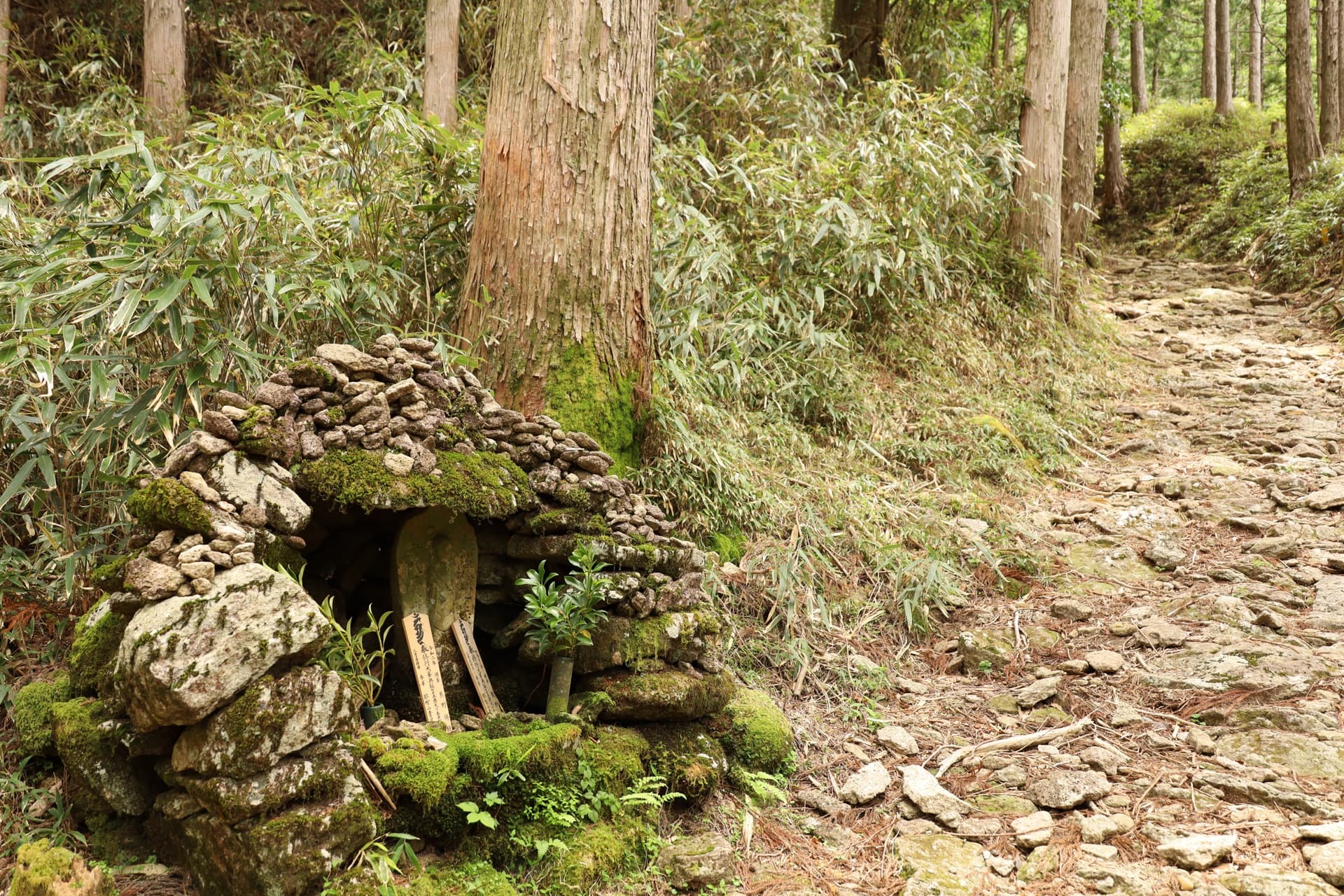
Image: 熊野古道中辺路 亡者の出会い付近 (via (公社)和歌山県観光連盟)


