 LOCAL FIT KUMANOBack to list
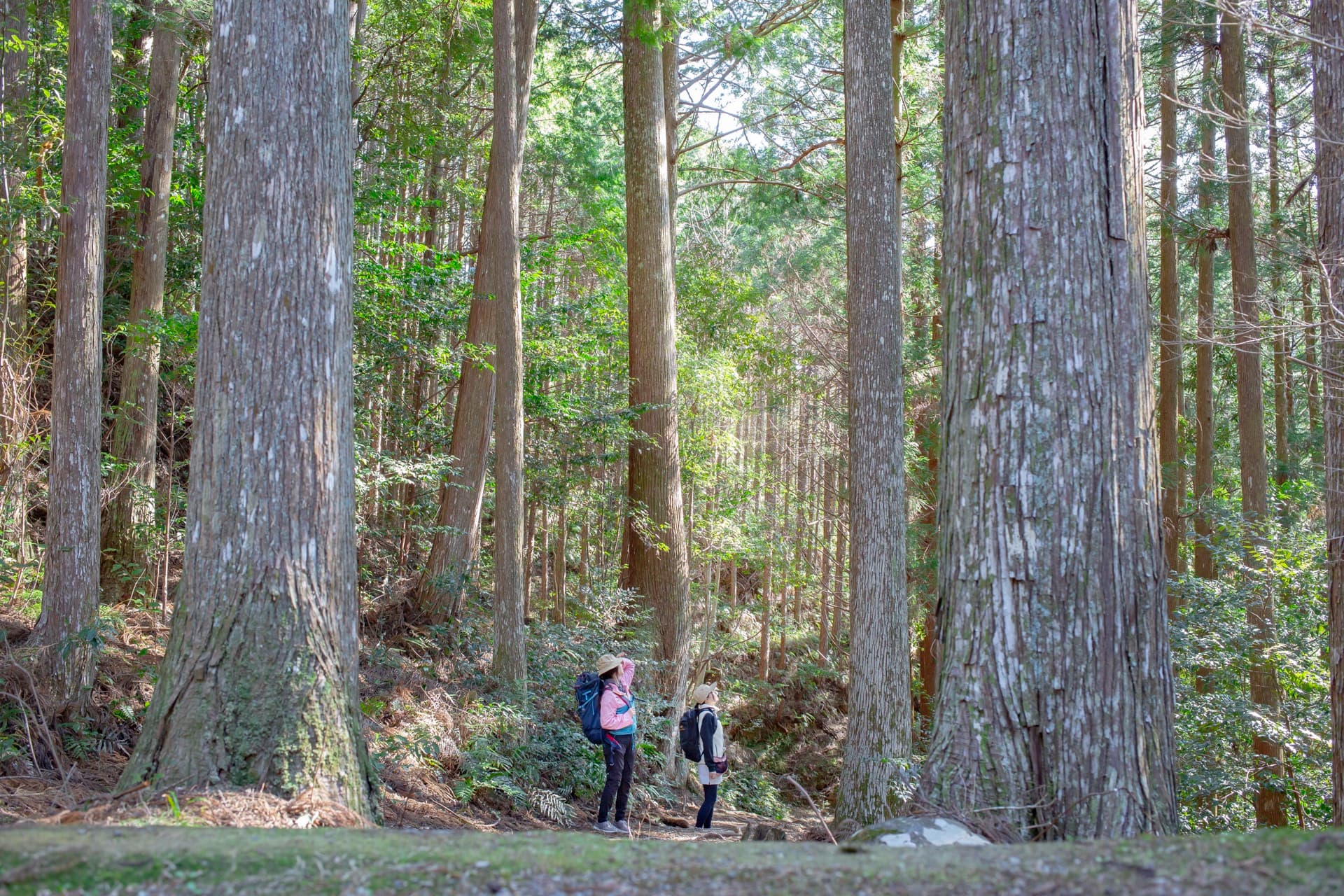
When people ask us, "How do I get to the Kumano Kodo from Nagoya or Kyoto?" locals here usually start with this answer: the station you get off at depends on which section of the Kumano Kodo you want to walk.
Nagoya is the eastern gateway to the Kumano region. From Nagoya, you head south along the Mie coast to reach Kumano. From Kyoto, the basic route is to go via Osaka and approach the Kii Peninsula from the west. Grasping whether you're "entering from the east" or "entering from the west" makes planning much easier.
Two Gateways from Nagoya
Gateway ①: Start Walking from the "Iseji" Route on the Mie Side
The section of the Kumano Kodo within Mie Prefecture is called the "Iseji," where stone-paved mountain passes wind between the sea and the mountains. From Nagoya, the appeal is that you can reach the trail without too much travel time. Around Kumano City and Owase City, there are walkable sections at each pass, and many routes can be enjoyed in half a day.
This gateway suits those who think, "I just want to get a feel for the old trail first," or "I'd rather avoid spending a whole day on the train."
Gateway ②: Ride All the Way to Shingu, Heading for Hongu and Nachi
If your goal is the heart of the traditional "Kumano pilgrimage"—Kumano Hongu Taisha, the Nakahechi route, or the Daimonzaka stone steps at Nachi—then Shingu or Kii-Katsuura will be your base. From there, you take buses deeper into the mountains. When traveling from Nagoya, it helps to think of Shingu as the "relay point" for Kumano.
From Kyoto, "Untangle Things in Osaka"
Many people searching for "Kumano Kodo access Kyoto" are puzzled to find no direct connections. From Kyoto to Kumano, the basic approach is to first head toward Osaka, then travel south down the Kii Peninsula.
Kyoto and Kumano have been deeply connected since ancient times. In the Heian period, retired emperors and aristocrats would leave the capital and spend many days journeying to Kumano. The pilgrims are said to have descended the Yodo River toward Osaka, then walked south along the Kii Peninsula from there. Heading south from Kyoto via Osaka—this flow overlaps with modern-day access. If you picture that historic journey as you travel, even the hassle of transfers becomes part of the trip.
The Train Flow from Kyoto
- Travel from Kyoto Station toward Shin-Osaka or Osaka
- Transfer to a limited express on the Kisei Main Line
- Get off at the station nearest to where you want to start walking
If you work backward from your goal, choosing a station is simple.
- If you want to walk stone paths and mountain trails: For the Nakahechi route toward Hongu, Kii-Tanabe is your gateway. From the station, a bus takes you to the trailhead in the mountains.
- If you want to focus on shrine visits and town walking: Shingu is convenient if you want to center your trip on Kumano Hayatama Taisha and Kamikura Shrine; Kii-Katsuura is best for Nachi Falls and the Daimonzaka steps.
Even leaving Kyoto in the morning, the transfers add to your travel time. On your arrival day, don't try to walk too far—make simply reaching your lodging the goal of day one, and the next day's walk on the old trail will feel much easier.
Thinking About the Train Route
From Nagoya, limited express trains run toward the Kisei Main Line. The small number of transfers and the scenery that shifts from Ise Bay to the Kumano Sea through your window are special pleasures of this route.
- To walk the Iseji, get off at a station close to your target pass
- To head toward Hongu, ride all the way to Shingu Station or Kii-Katsuura Station, then transfer to a bus
Train frequencies, travel times, transfers, and bus connections change seasonally. Always check the latest information from the railway and bus companies before you depart. In particular, mountain buses may run only a few times a day, so working backward from your return trip gives you peace of mind.
Thinking About Driving
From Nagoya, the basic route is to head via Ise and down the eastern side of the Kii Peninsula. From Kyoto, the typical flow is to take the Meishin Expressway toward Osaka, then proceed via the Hanwa Expressway toward the Kisei area. The closer you get to Kumano, the more mountain roads you'll encounter, and your pace will slow.
The freedom to stop wherever you like is appealing, but many sections of the old trail have different entry and exit points, requiring you to arrange getting back to your car after walking.
- If you have companions, split up—some walk, others move the car
- If you're alone, choose a loop section where you can return to your starting point
- Decide your rest stops in advance at service areas, and allow plenty of time for driving
- Fill up on gas and drinks before entering mountain roads
- If the entrance and exit are far apart, decide before leaving whether you'll walk back round-trip or return by bus or taxi
Day Trip or Overnight Stay?
A day trip from Nagoya to walk the old trail isn't impossible, but much of your day will be spent traveling. If you only walk one short Iseji section, a day trip is realistic. From Kyoto, the extra transfers also stretch out your travel time, so planning for an overnight stay is more comfortable.
If you're heading all the way to Hongu or Nachi, we recommend staying one night in Shingu or Katsuura and starting your walk the next morning. Being able to rest your feet in a hot spring is one of Kumano's special rewards. If you arrive in Kii-Katsuura, enjoying tuna cuisine in the port town for lunch is a lovely option. Thinking about meal times before and after your walk raises the satisfaction of your whole trip.
Things to Check Before Departure
- The latest train and bus schedules (including transfer stations and the last limited express home)
- Operating days of buses to the trailhead (service may be limited)
- The entrance and exit of your walking section, and how you'll get back
- Weather and sunset time (mountain trails get dark early)
- Basic gear—shoes, rain gear, drinks (matched to your walking distance)
Summary
From Nagoya, the Kumano Kodo starts with a choice between "experiencing the nearby Iseji" or "continuing all the way to Shingu to reach the heart of Kumano." From Kyoto, it helps to think in this order: untangle your transfers in Osaka, choose the station nearest your desired trailhead, and give yourself breathing room on day one.
We also recommend visiting in stages—casually this time, more seriously next time. This is a road that people from the old capital once took great time to travel. Savor the journey itself, and look forward to your first step on the stone-paved path.
*Updated with additional content on October 19, 2026.*
Image: 熊野古道 (via (公社)和歌山県観光連盟)


