LOCAL FIT KUMANOBack to list

The Key to a Kumano Model Course Is the Order You Visit
Kumano is a larger region than many travelers expect. The main sights of Hongu, Shingu, and Nachi are spread out, and getting between them takes a fair amount of time. In this guide, we introduce a 2-day itinerary that starts from the Shirahama and Tanabe side, then moves on to Hongu, Shingu, and Nachi. It's an easy-to-follow model course, even for first-time visitors to Kumano.
We've also included a half-day walking tour of Tanabe, the gateway town to the ancient Kumano Kodo trails. Feel free to add it before or after your pilgrimage walk for a relaxed change of pace.
Day 1: From Tanabe and the Nakahechi Route to Kumano Hongu
Warming Up in Shirahama and Tanabe
We recommend easing into your journey in the Shirahama area, where you can enjoy ocean views. Tanabe is known as the gateway to the Kumano Kodo, and as you head into the mountain roads from here, the atmosphere gradually shifts into "Kumano mode."
Tanabe is a town that's often passed through as just a train or bus transfer point, but walking around reveals a place packed with history, notable figures, the sea, and local food. If you have time, try this walking-focused mini course to soak up the town's atmosphere.
Exploring Tanabe on Foot: A Half-Day Walk from Kii-Tanabe Station
1. Get in Travel Mode at Kii-Tanabe Station
Start by getting a feel for the town around the station. If there's a tourist information counter, it's a good idea to pick up the latest maps and event info. Opening days and hours can change, so be sure to check official sources in advance.
2. Learn About the "Connection to Kumano" at Toukei Shrine
Toukei Shrine, within walking distance of the station, is deeply connected to the Kumano Sanzan (the three grand shrines of Kumano). Its quiet precincts are the perfect place to center yourself before starting your journey along the ancient trails. It's also known as a site tied to legends of Benkei, and many visitors may have heard the story that "Benkei was born in Tanabe." Enjoying these stories as legends makes the town feel all the more approachable.
3. Discover Tanabe's Intellectual Side at Sites Linked to Minakata Kumagusu
Tanabe was also home for many years to the naturalist Minakata Kumagusu. Tracing the footsteps of a man captivated by Kumano's forests and slime molds offers a fresh angle on the question: "Why does Kumano's nature draw people in so deeply?" Exhibitions and public access may vary by season, so check before visiting.
4. A Stroll Through Town and Lunch
Walking through the shopping streets and back alleys, peeking into shops that catch your eye, is one of Tanabe's pleasures. There are plenty of lunch options, from Kishu-style seafood to dishes made with ume (Japanese plum). For tips on choosing lunch, see our "Tanabe Lunch Guide" article.
5. Head to the Coast and End with a Sunset View
In the afternoon, venture a little farther to enjoy the coastal scenery. Spots like Tenjinzaki, where you can enjoy rocky shores and sea views, are a bit of a distance from the station, so consider using a bus, car, or taxi. The footing can be slippery at low tide, so wear comfortable shoes and don't push yourself too hard.
You don't need to fit everything into your 2-day trip. If you're short on time, just three stops — Toukei Shrine, a walk through town, and lunch — will give you plenty of Tanabe's character.
A Short Walk on the Kumano Kodo Nakahechi Route
Walking the ancient trails for a full day is demanding, but even a short section is enough to feel their atmosphere. As you walk among mossy stone paving and cedar groves, it's remarkable how naturally you forget to check your phone. Be sure to bring comfortable walking shoes and rain gear.
An Overnight Stay at Kumano Hongu Taisha and the Hot Springs
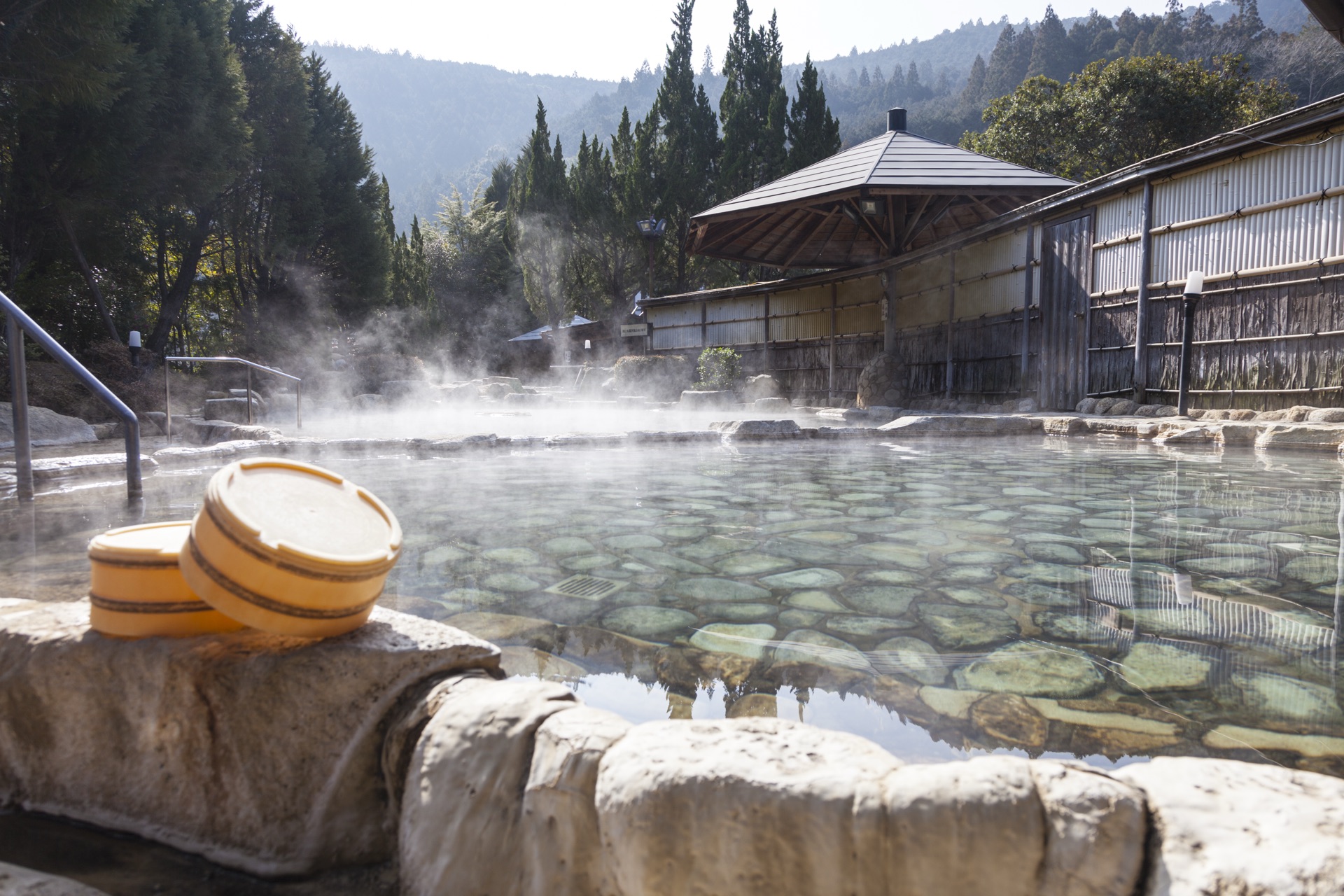
At Hongu, along with visiting Kumano Hongu Taisha, be sure to visit Oyunohara, the great torii gate marking the site where the shrine buildings once stood. For the night, staying at a nearby hot spring town such as Yunomine or Kawayu is a classic choice. Soaking in the hot waters amid the mountain stillness is deeply restorative after a day of walking.
Day 2: From Shingu to Nachi
Feeling Shingu's Atmosphere at Kumano Hayatama Taisha
On day 2, follow the river to Shingu. Kumano Hayatama Taisha, located near the mouth of the Kumano River, has an open, bright atmosphere that's quite different from Hongu.
Nachi Falls and the Daimonzaka Slope
The highlight of any Kumano trip is undoubtedly Nachi. Climb the stone steps of Daimonzaka to reach Kumano Nachi Taisha and Seiganto-ji Temple; the view of Nachi Falls from there is breathtaking. If you have time, we recommend walking up Daimonzaka on foot rather than driving.
Kumano Foods Worth Trying
Along the way, you'll encounter local specialties such as mehari-zushi (rice balls wrapped in pickled takana leaves), Kumano beef, and sanma-zushi (Pacific saury sushi) around Shingu. Each shop has its own character, so part of the fun is wandering in wherever catches your eye.
Three Tips for Enjoying This Model Course
- A car is the best option for getting around: If using public transportation, check schedules and connections carefully in advance. Even for walking around Tanabe, it's reassuring to confirm return times beforehand.
- Don't overpack your schedule: Limiting yourself to 2–3 stops per day lets you enjoy the scenery and hot springs at a leisurely pace.
- Stay flexible with the weather: Mountain weather can change quickly, so on rainy days it's wise to focus on hot springs and meals. In Tanabe, a "take it slow" plan built around shrine visits, indoor spots in town, and enjoying a relaxed meal works well.
A Little Preparation Before You Walk
- Comfortable walking shoes and a seasonally appropriate layer
- A hat or umbrella for sun and rain
- If using public transportation, confirm return times in advance
Kumano is a place where "the less you hurry, the more its charm reveals itself." Tanabe is perfectly located to visit both before and after the ancient trails. By walking from the station to tie together a shrine, a historical figure, and the sea, then heading on to Hongu, Shingu, and Nachi, your Kumano journey will feel that much richer. Use this model course as a foundation and arrange your own ideal Kumano trip.
*Please note that facility hours, fees, and access may change. Check official sources for the latest information before your trip.*
*Content revised and updated on November 4, 2026.*
Image: Kumano Kodo Kumano Hongu Taisha World heritage 熊野本宮大社16 / Photo: Nekosuki / CC BY-SA 4.0 (via Wikimedia Commons)