 LOCAL FIT KUMANOBack to list
Visiting Kumano Hongu Taisha begins before the stone steps
When you search for "how to visit Kumano Hongu Taisha," you'll find plenty of explanations of formal etiquette — like two bows, two claps, and one bow. These are of course important, but when you actually walk the approach to Hongu, you'll feel that preparing for worship doesn't begin in front of the main shrine, but a little before you pass through the torii gate.
Rather than focusing on minute rules, here we introduce a flow that helps first-time visitors worship comfortably, without getting lost or feeling rushed.
Three things to prepare before worship
1. Clothing and footwear
A shrine is a place of prayer, so it's best to avoid overly revealing clothing or keeping your hat on during worship. If you've been walking the Kumano Kodo, wiping off sweat and tidying your jacket or hat before entering the precincts will help you shift your mindset. There are long stone steps within the grounds, so comfortable walking shoes are reassuring.
2. Organize your luggage
Trekking poles and backpacks can get in the way of other visitors on the stone steps and approach. Keeping your hands free makes it easier to join your palms in prayer with a relaxed gesture.
3. Allow a little extra time
Worship itself may be brief, but climbing the steps, the flow of other visitors, and waiting for a goshuin (shrine seal) can easily throw off your schedule. Allowing some buffer time lets you join your hands in prayer calmly, without rushing.
The flow from the torii to the main shrine
Bow once before the torii
Before passing through the entrance torii, give a slight bow. The center of the approach is said to be the path of the deities, so it's customary to walk slightly to one side.
Climb the stone steps to the shinmon (sacred gate)
Climb the stone steps through the cedar grove, listening to the sounds around you. If you get out of breath, don't push yourself — it's perfectly fine to pause along the way.
Purify yourself at the temizu basin
If a temizuya (purification pavilion) is set up, follow the guidance to purify your hands and mouth. The procedure is usually posted on signs, so you can check as you go — there's no need to worry.
Worship at the main shrine
Kumano Hongu Taisha's main shrine has a distinctive structure that enshrines several deities. Generally, worship is done with two bows, two claps, and one bow, but the surest approach is to follow the guidance and signs posted within the precincts. Quietly offer your coin, then silently convey your address, name, and feelings of gratitude in your heart — this naturally leads to a calm, composed prayer. Be sure to check the posted notices regarding photography around the shrine buildings.
What to do after worship
Receive your goshuin *after* worship
The basic principle is to receive a goshuin after completing your worship. Follow the guidance at the reception desk, and think of the time spent waiting your turn as part of the journey.
Look for the Yatagarasu around the grounds
The Yatagarasu (three-legged crow), a symbol of guidance in Kumano, can be found in various spots around the precincts. Searching for them leisurely after worship is a fun way to spend time.
Walk out to Oyunohara, the former shrine site
If you have time, we recommend walking to Oyunohara, where the main shrine of Hongu once stood. Standing in the open space beyond the giant torii, the history of the Kumano pilgrimage will feel much more immediate.
Finally: Spirit matters more than etiquette
Knowing the proper way to worship is a reassuring guidepost. But even if you make small mistakes, what matters most is the sincere spirit with which you join your hands. Take a deep breath before the stone steps, and give yourself over to the quiet of the sacred grove. Worship at Hongu has already begun from that moment.
*Please note that signage within the precincts and reception at the shrine office are subject to change. Be sure to check the latest official information before your visit.
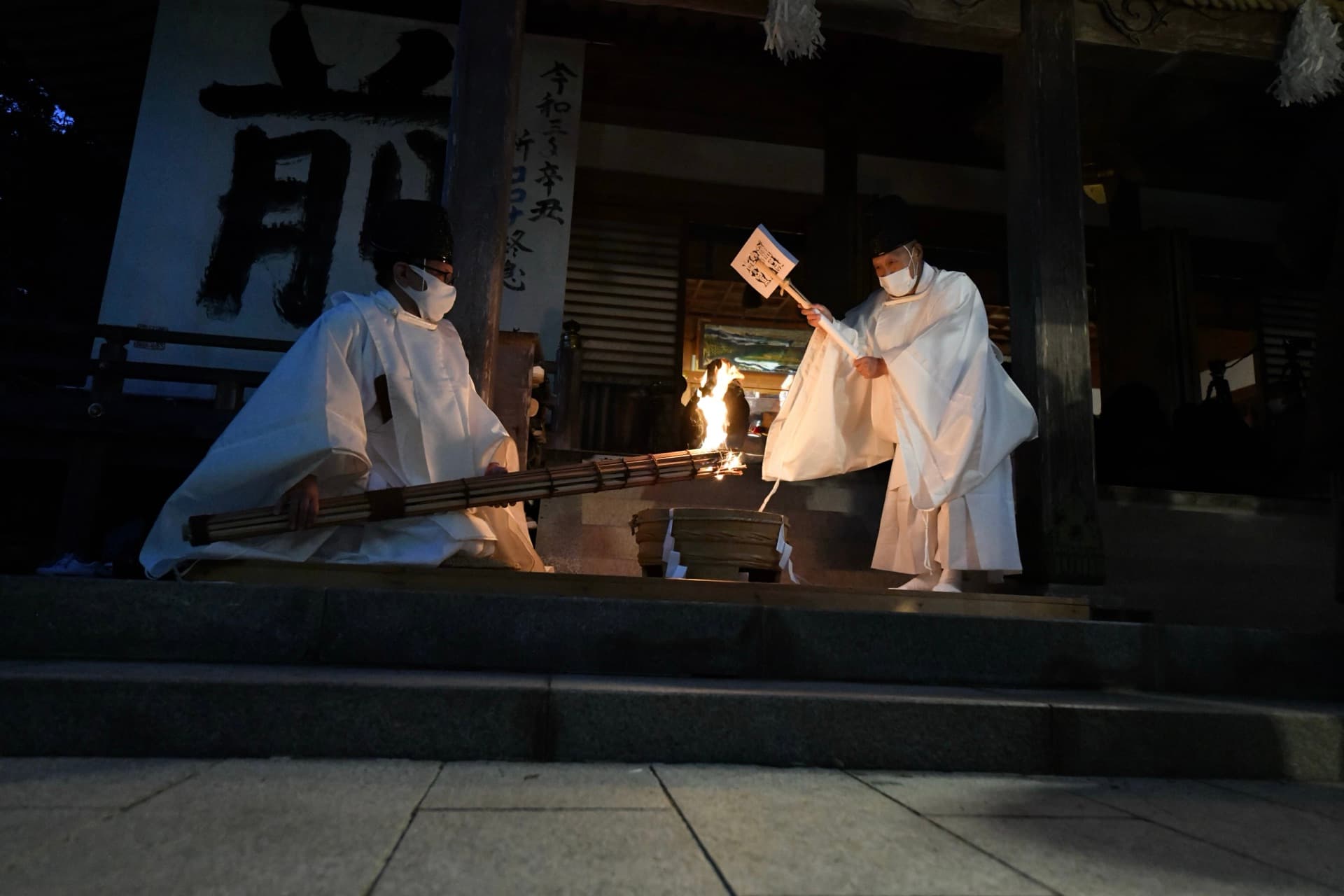
Image: 熊野本宮大社 八咫烏神事 (via (公社)和歌山県観光連盟)