 LOCAL FIT KUMANOBack to list
For Kumano Hongu Taisha's Goshuin, 'Order' Matters More Than 'Time'
When you search for 'Kumano Hongu Taisha goshuin hours,' the first thing you probably want to know is when the reception closes. However, the specific times can change depending on the season, events, or how crowded it is. Rather than committing to exact numbers, this article shares a way of thinking that lets you receive your goshuin comfortably, without feeling rushed.
The basic flow is simple. Since a goshuin is received as proof of your visit, it's natural to pay your respects first, and then head to the goshuin desk afterward. Deciding on this order in advance makes it easier to plan your time, too.
Check the Hours Twice: 'Before You Leave' and 'On the Day'
Before leaving, check the official information
For the latest on reception hours or how things are handled on busy days, please check the shrine's official website or notices. During New Year's, long holidays, or festival periods, things may run differently than usual.
On the day, check the notices on the grounds
As you walk up the approach, you'll see notices posted around the shrine office. A quick glance at the signs before you pay your respects gives you some breathing room for what comes next. If you're running late, it's also fine to check the goshuin desk situation first before visiting.
How to Spend Your Time: Morning vs. Daytime
In the morning, savor the quiet
Early in the day, the air among the cedar groves is clear, and the visit itself unfolds at a leisurely pace. Even heading to the goshuin desk afterward, your sense of calm stays with you.
In the daytime, expect some waiting
During busy hours, you may have to wait for your goshuin. In that case, we recommend leaving your goshuin book and taking a stroll around the grounds while you wait.
- Take another loop around the shrine buildings and admire the architecture
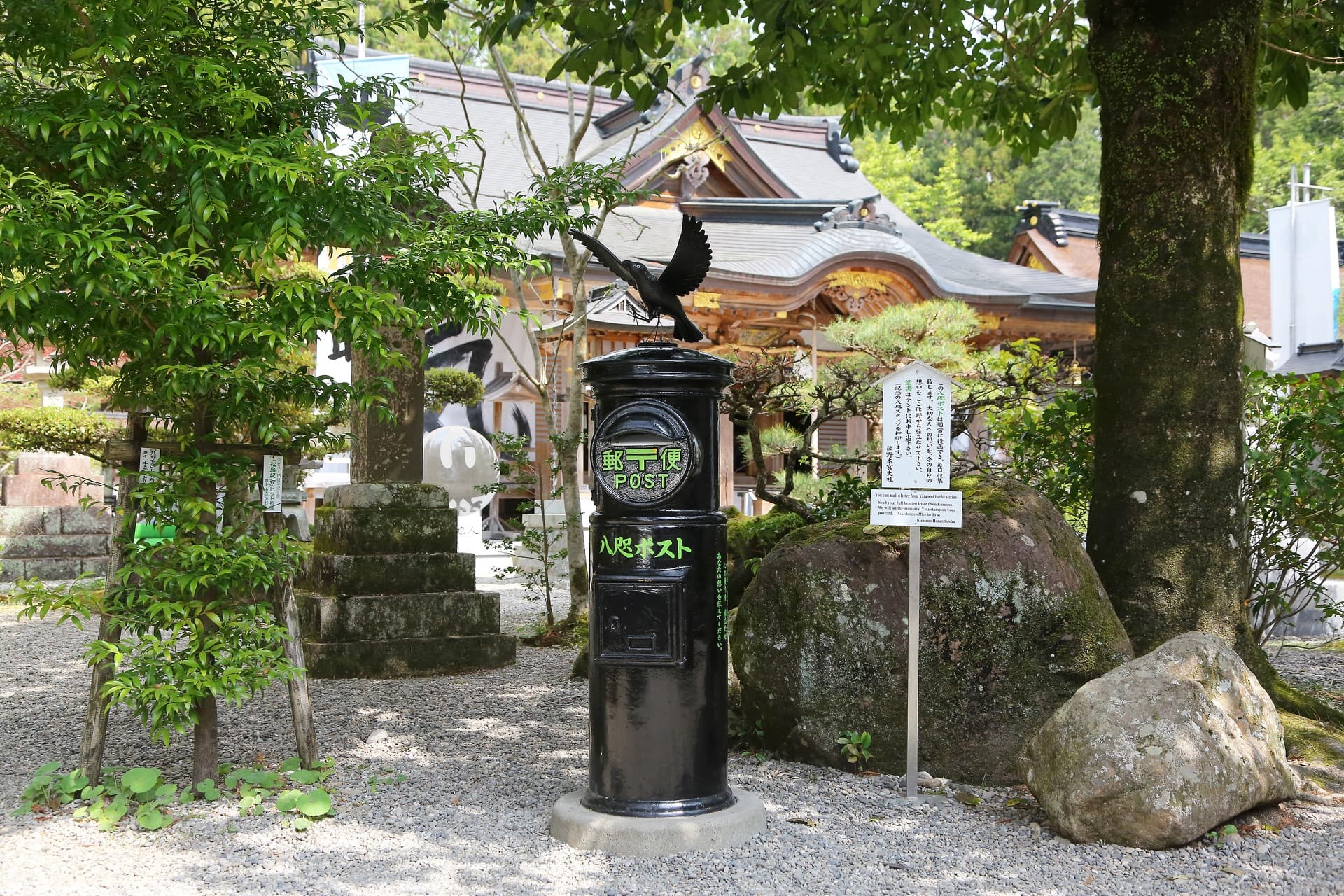
- Look for motifs related to the three-legged crow Yatagarasu
- Stay within earshot so you don't miss being called to pick up your book
If you turn waiting time into time to enjoy the shrine rather than 'doing nothing,' you won't feel rushed.
A Note for Days When You've Walked the Kumano Kodo
On days when you arrive at Hongu as the endpoint of the Kodo, there's fatigue and some uncertainty about arrival time. On walking days, it's reassuring to not save the goshuin for last—pay your respects as soon as you arrive, then check the goshuin desk right away. If you're watching the bus schedule, work backwards from your return bus and decide in advance how much time to allot for your visit and the goshuin.
Etiquette When Receiving a Goshuin
- Complete your visit first, then receive it
- Open your book to the page you'd like them to write on
- Having small change ready makes things smoother
- Be mindful of others when taking photos or chatting
- If you receive a pre-written sheet (kakioki), a bag or folder to carry it home prevents it from getting creased
After the Goshuin, Head to Oyunohara
Once you've received your goshuin, extending your walk a little to Oyunohara makes for a lovely finish. This is where Hongu's shrine buildings once stood, and a massive torii gate rises amid the quiet expanse. Even on days when the wait at the goshuin desk was long, your mind will unwind here. It's within walking distance, so if time permits, do visit.
Summary: Build in Some Breathing Room
At Kumano Hongu Taisha, your goshuin experience will go much more peacefully if you follow these three principles: check the hours, visit first, and spend waiting time on the grounds. Always confirm the latest reception hours on the official site, and leave a little margin in your itinerary. That margin is what creates the quiet, Kumano-like time of worship.
Image: 熊野本宮大社 (via (公社)和歌山県観光連盟)


