 LOCAL FIT KUMANOBack to list
A Goshuin Is "a Record Received After Worship"
Many people visit Kumano Hongu Taisha with the goshuin as their main goal, but from a local perspective, the goshuin is a record of your visit, received after you have finished worshipping. Rather than heading to the reception counter first as if collecting stamps, bring your hands together before the deities first. Simply following that order gives your trip a much calmer rhythm.
Kumano Hongu Taisha is a shrine that has long welcomed travelers as the end point of the Kumano Kodo pilgrimage trails. The single brushstroke you receive after making your way through deep mountain country carries the power to bring the entire journey back to mind.
Three Things to Prepare Before Receiving Your Goshuin
1. Keep Your Goshuincho Easy to Reach
Digging it out from the bottom of your backpack can feel hurried in the quiet of the shrine grounds. It's reassuring to move it to an easy-to-reach spot before you worship. On days when you've walked the Kumano Kodo, wrap it in a plastic bag or pouch to protect it from sweat or rain.
2. Check the Day's Guidance on How Goshuin Are Issued
Whether the goshuin is written on the spot or given pre-written, and how reception is handled, can change with the season or crowd levels. This article won't make definitive claims about the details — we recommend following the notices posted on the grounds and the guidance at the shrine office. For the latest information, please check official announcements.
3. Prepare Small Change "with Room to Spare"
So you won't be flustered when making your offering, gather small change in an easy-to-reach spot in your wallet. This also lets you graciously make way for those waiting behind you.
How to Spend the Wait | Quiet Time Is Also Part of Worship
After requesting your goshuin, there may be a short wait. Rather than looking at your smartphone, try turning your eyes to the cedar groves and the quiet presence of the shrine buildings. The air that drifts between the trees on the grounds of Kumano Hongu Taisha is gentle, and simply pausing there lets the fatigue of travel ease away.
Within the shrine precincts, there are places where photography is permitted and places where it is not. Around the reception area, take care not to disturb other worshippers.
After Receiving It | Handling Your Book and Small Points of Etiquette
- Don't close the book right away — wait until the ink and vermilion are dry
- Don't forget to say a word of thanks when you receive it
- When putting it in your bag, make sure it doesn't rub against other belongings
These small considerations transform your goshuin from a mere "souvenir" into a true "testament" of your journey.
The Pleasure After Returning Home | Revisiting the Pages of Your Journey
In truth, the best way to enjoy a goshuin may be after you return home. Each time you open the book, the feel of the Kodo's stone paving, the river breeze, and the scent of cedar come back to you. Adding a single line in the margin — the date, or a note on the path you walked — becomes a clue when you look back years later. When writing around the goshuin, though, choose a pen that won't bleed, and keep it minimal.
After Worship, Walk to Oyunohara
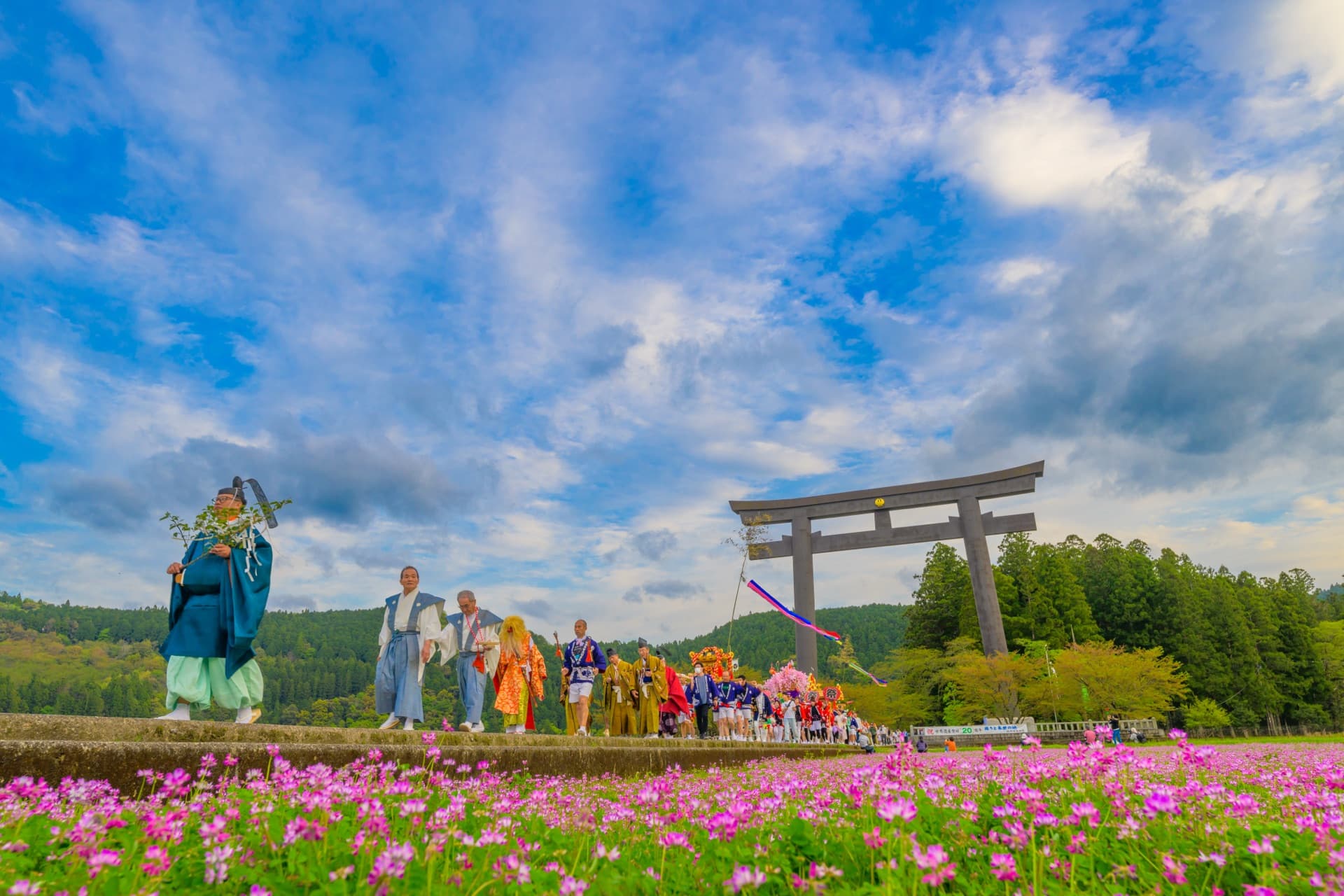
Once you've received your goshuin, it would be a shame to head straight home. Oyunohara, the original site of the Hongu shrine, is within walking distance. Standing beneath the great torii gate, you'll be wrapped in an open, airy atmosphere quite different from the shrine buildings you just visited. Tuck your goshuincho gently into your bag and walk there at a leisurely pace. Closing your pilgrimage this way is another moment that feels distinctly Kumano.
In Closing
The goshuin at Kumano Hongu Taisha is something to receive by first joining your hands in prayer, waiting quietly, and accepting it with care. Don't rush — take your time, and receive it in the rhythm of your journey.
Image: 熊野本宮大社 例大祭 (via (公社)和歌山県観光連盟)


