 LOCAL FIT KUMANOBack to list
Why the Blessing of Kumano Hongu Taisha Is Called 'the Power to Start Over'
Search for "Kumano Hongu Taisha blessings" and you'll find all sorts of phrases: matchmaking, warding off misfortune, prayers for good health. But what has long been spoken of at the heart of Kumano is a little different. It is the faith of yomigaeri — rebirth, or renewal.
Rather than having something added to you, the idea is to take a self that has grown tired or stuck, reset it to zero, and start over. The blessing of Kumano Hongu Taisha has long been received as this kind of quiet power.
How Kumano Came to Be Called 'the Land of Rebirth'
Deep mountains and rivers create a sense of 'coming to an end'
Kumano is a land surrounded by layered mountains and rivers. Pilgrims of old walked long mountain trails for days on end to reach Hongu. Days spent far from the life of the capital, focused on nothing but walking, must have been in themselves an experience of "bringing daily life to a close for a while."
Kumano, revered as a gateway to the Pure Land
In the era of Shinto-Buddhist syncretism, Kumano was regarded as a sacred land connected to the Pure Land, and the deity of Hongu was understood to have Amida Nyorai (Amitabha Buddha) as its original Buddhist form. The idea of "being reborn once here" is said to have spread hand in hand with the pilgrim's journey.
'The Ant Pilgrimage to Kumano,' welcoming all regardless of status
From nobles to commoners, the sight of people lining up to reach Kumano was likened to a procession of ants — the so-called "Ant Pilgrimage to Kumano." This generous embrace, accepting everyone regardless of status or circumstance, also helped shape the image of Kumano as a place of rebirth.
From Oyunohara to the Current Shrine Buildings | A Story of 'Continuing Even When Swept Away'
Kumano Hongu Taisha originally stood at Oyunohara, a sandbar in the middle of the Kumano River. The shrine buildings were washed away in a great flood during the Meiji era, and later the shrine was moved to its present location on higher ground.
Though it suffered devastating damage once, it has been carried on as a place of faith. This history naturally overlaps with the theme of rebirth — "even when broken, it rises again." Walking both the current shrine grounds and Oyunohara together makes this overlap easier to feel.
A Mindset for Receiving the Blessing
Before making a wish, honor the self that made it here
In Kumano, the very journey you worked hard to complete has long been considered part of the prayer. Before the shrine, rather than lining up requests, first turn your heart toward gratitude for "having been able to come this far." Once your feelings are settled, the words you offer in prayer will naturally become shorter and more honest.
Decide on one thing to let go of
If you want to be mindful of the blessing of rebirth, it's a good idea to think of one thing you'd like to let go of, alongside what you'd like to gain anew. Hesitation, impatience, fatigue — small things are fine.
Return slowly after your visit
After leaving the shrine grounds, rather than rushing to your next plan, take time to walk around Oyunohara or the surrounding paths. Giving yourself a moment to ease back into daily life will deepen the lingering impression.
In Closing
The blessing of Kumano Hongu Taisha has been spoken of not so much as "granting wishes" but as a power to "start over once more." The land surrounded by mountains and rivers, the long pilgrim's road, the history that has endured through floods — all of these together shape the story of rebirth.
When you are weary of something, when you want to draw a line and begin again — Kumano Hongu Taisha is a place that will quietly give you a push from behind.
For goshuin, highlights and parking, see our complete Kumano Hongu Taisha guide.
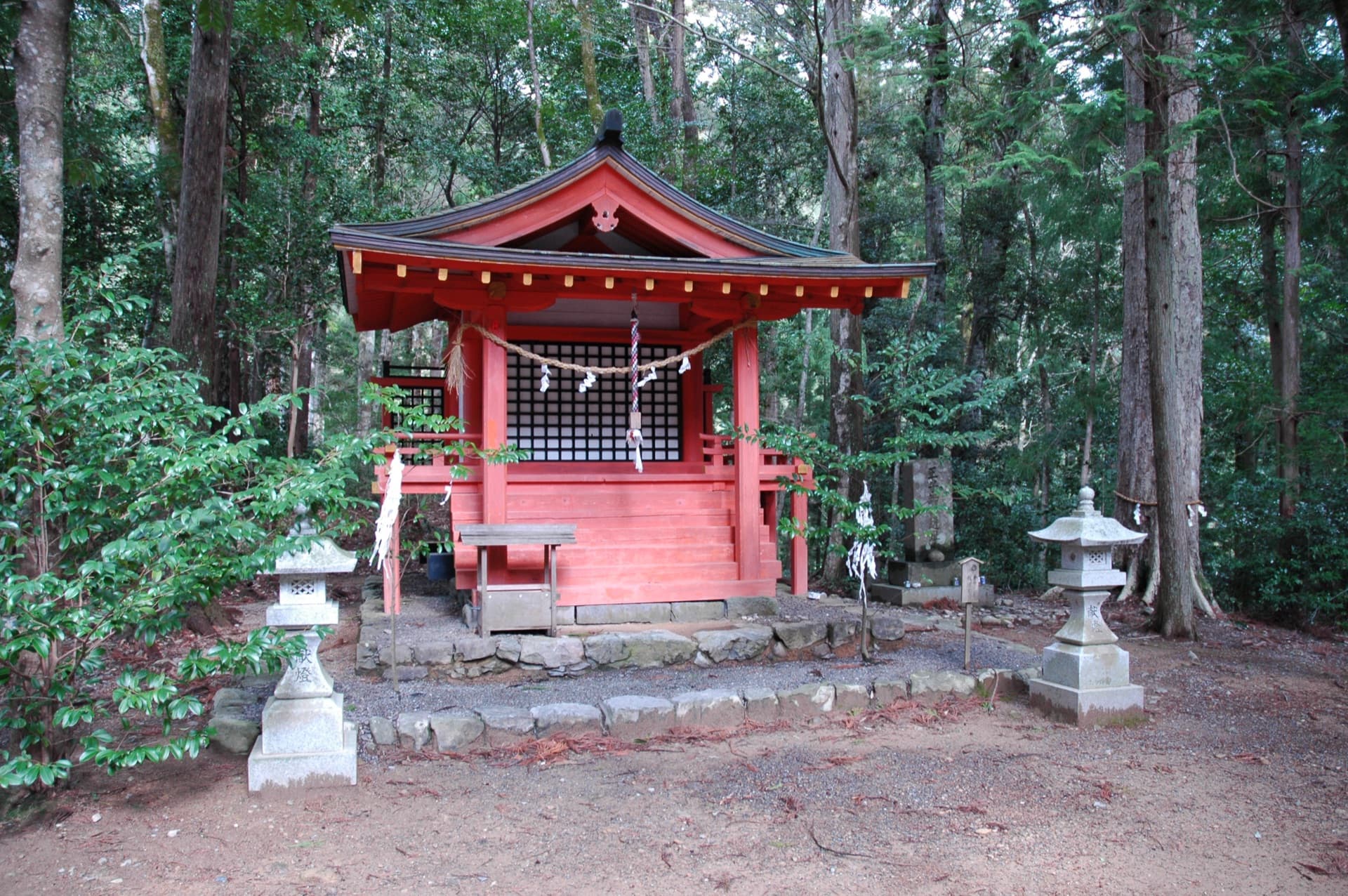
Image: 熊野古道中辺路 発心門王子 (via (公社)和歌山県観光連盟)


