 LOCAL FIT KUMANOBack to list
How Should You Estimate Your Time at Kumano Hayatama Taisha?
Kumano Hayatama Taisha, in the heart of Shingu town, has one of the flattest, easiest-to-walk precincts among the three Kumano grand shrines. Since you don't need to climb hundreds of stone steps, your time depends less on walking distance and more on how often you stop.
To put it simply: about 30 minutes for the visit itself, 60 minutes to savor it, and 90 minutes or more if you include the surroundings. Let's break it down as a bit of addition.
Adding Up Your Time: 30, 60, or 90 Minutes
30 Minutes: The Basic Visit
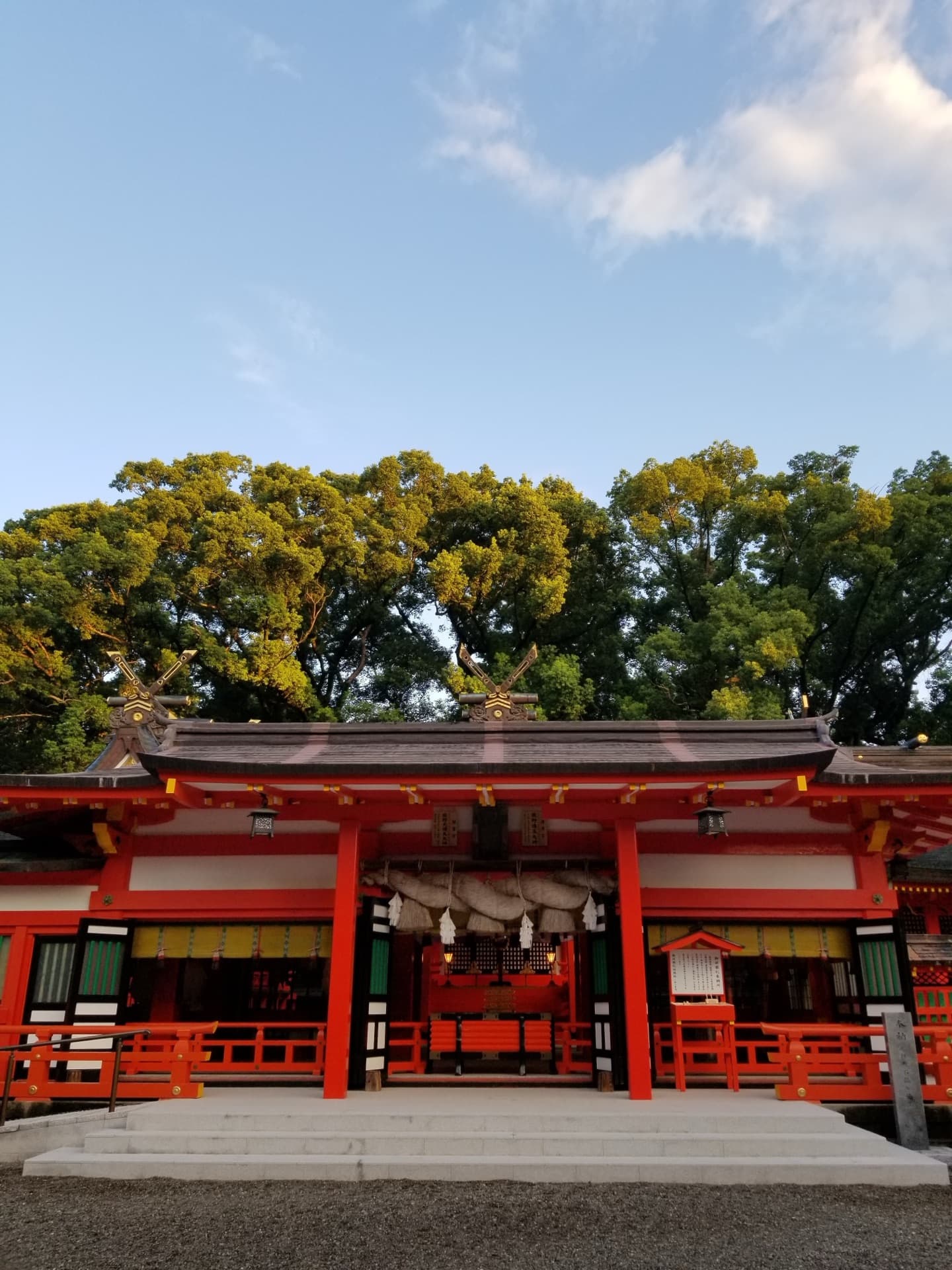
Pass through the torii gate, purify yourself at the chozuya, pay your respects at the vermilion shrine buildings in order, and head back. Even with a few photos, most people can fit the visit into this time. It suits travelers stopping by while strolling around Shingu Station, or squeezing in a visit between train connections.
60 Minutes: Taking Your Time Around the Precinct
Add the following to the basic visit:
- Time to walk around the shrine buildings and take in the contrast between vermilion and the green of the trees
- Time to pay your respects at the nagi tree and other trees and auxiliary shrines in the precinct
- Time to request a goshuin (shrine stamp) and take another loop around the precinct while you wait
An unhurried hour leaves you with the feeling of having "spent time" at the shrine, not just "seen" it.
90 Minutes or More: Adding the Treasure Hall or a Walk Around the Area
The precinct also has a facility that preserves treasures connected to the shrine's deities and Buddhist heritage. If you plan to view them, add about 30 minutes here. Opening hours and viewing availability can change, so it's wise to check the official information in advance.
How to Walk the Precinct: An Order That Won't Get You Lost
1. Bow at the torii at the entrance: Shift from the air of the town to the air of the shrine.
2. Purify yourself at the chozuya: Catching your breath here naturally slows your pace for what follows.
3. Pay respects at the shrine buildings in order: Start from the front, then let your eyes follow the row of buildings to grasp the overall layout.
4. Walk around the trees and auxiliary shrines: This is the quiet margin of time after your main visit.
5. Save the goshuin for last: Requesting it after you've finished your visit lets you settle into a calmer frame of mind.
Points Where Your Time Tends to Stretch
- Waiting for a goshuin: During busy periods when visitors overlap, wait times become harder to predict.
- Taking photos: The vermilion buildings change expression with the light, and it's easy to linger.
- Resting in the shade of the precinct's trees: The flat grounds are also a nice place to rest tired feet.
If You're Adding Kamikura-jinja, Treat It as a Separate Slot
Kamikura-jinja, the original shrine (motomiya) of Hayatama Taisha, is a separate itinerary involving a climb up stone steps. Rather than tacking it on to your Hayatama Taisha visit, it's more realistic to budget it as another half-day slot. On the day you climb, check your stamina and the weather, and give yourself plenty of time.
In Closing: Time Spent Together with the Town of Shingu
Kumano Hayatama Taisha welcomes you whether your visit is short or long. On a tight day, 30 minutes is enough to offer a sincere prayer; on an unhurried day, try spending 60 minutes just being in the precinct. After your visit, a casual stroll through Shingu deepens the lingering mood of your journey.
For highlights, goshuin and Kamikura Shrine, see our Kumano Hayatama Taisha basic guide.
Image: 熊野速玉大社 (via (公社)和歌山県観光連盟)


