 LOCAL FIT KUMANOBack to list

What is Kumano Hayatama Taisha? | A Key Stop on the Kumano Sanzan Pilgrimage
Located in Shingu City, Wakayama Prefecture, Kumano Hayatama Taisha is one of the three grand shrines known as the "Kumano Sanzan," together with Hongu Taisha and Nachi Taisha. Registered as part of the UNESCO World Heritage Site "Sacred Sites and Pilgrimage Routes in the Kii Mountain Range," it is a venerable shrine that has welcomed pilgrims since ancient times. Though located right in the town of Shingu, the atmosphere shifts the moment you step inside its grounds—another part of this shrine's appeal.
The enshrined deities are Kumano Hayatama no Okami and Kumano Fusumi no Okami. Because this married pair of deities is enshrined as the main kami, the shrine has long attracted people who pray for matchmaking, family harmony, and new beginnings. It is also conveniently located within walking distance of JR Shingu Station, making it easy to visit.
This article walks you through the highlights of the precincts in the natural order of a shrine visit—from the torii gate to the purification fountain, the main halls, the Nagi tree, and the Sacred Treasure Hall. We also cover the background of Kumano faith, seasonal pleasures, nearby spots, and model itineraries. The vermilion halls are so striking that it is easy to pass through quickly, but with just a little background knowledge, the same precincts begin to look completely different. Whether you are wondering where to start, visiting Kumano for the first time, or returning again and again, you will surely find new discoveries here.
The Meaning Behind the Place Name "Shingu"
The town where the shrine stands is called "Shingu," meaning "new shrine." This comes from the tradition that Kumano Hayatama Taisha was established when the deities, originally enshrined on nearby Mount Kamikura, were welcomed to their present location. It also carries the sense of being the "new shrine" in contrast to Kumano Hongu Taisha deep in the mountains, and locally Hayatama Taisha itself has long been known simply as "Shingu."
The ancient sacred site on Mount Kamikura corresponds to Kamikura-jinja, the "original shrine." The new shrine moved from there came to be called "Shingu," and eventually the name spread to the entire town. The place name itself tells the history of Kumano faith.
The Kumano deities, it is said, first descended upon a great rock in the mountains and were later welcomed down to the flatlands along the river. Keeping this "from mountain to village" flow in mind will give the atmosphere of the precincts a different feel. No specialized knowledge is required. Simply thinking, "I have come to meet the deities who descended from the mountain to the village," is enough to deepen your visit.
There are various theories about the origin of the name "Hayatama." Some say it refers to the swift (haya) flow of the Kumano River, or to a sacred power as precious as a jewel (tama). Considering the shrine was built near the mouth of the Kumano River, the name seems to express reverence for the blessings and power of water.
Understanding the Character of Each of the Three Shrines
The Kumano Sanzan is often described in terms of each shrine's distinct character:
- Kumano Hongu Taisha: Enveloped in the deep green of the mountains, the central presence of Kumano faith
- Kumano Nachi Taisha: A place of worship overlooking the Nachi Falls, with views of both mountain and sea
- Kumano Hayatama Taisha: Set in the town near the mouth of the Kumano River, with its vividly vermilion halls
The three shrines originally developed as separate faiths and later came together to be worshipped as a unified entity, the "Kumano Sanjo Gongen." Visiting all three reveals layered prayers to different aspects of nature—mountain, waterfall, and river. Among them, Hayatama Taisha, close to the town and easy to visit, serves as a kind of "gateway from the village."
The History of Kumano Faith | Why People Journeyed to Kumano
To appreciate Hayatama Taisha more deeply, it helps to know a little about the history this land has carried.
The Original Faith: Nature Itself as the Divine
At the root of Kumano faith is reverence for natural objects—great rocks, giant trees, waterfalls, and rivers. Long before buildings were erected, the deities of Kumano were felt to dwell in nature itself, as seen in the Gotobiki Rock of Kamikura-jinja, the Nachi Falls, and the flow of the Kumano River.
The southern Kii Peninsula is blessed with deep mountains and abundant rainfall, with thick forests, large rivers, and a long coastline. This environment nurtured the sense that "the gods dwell here." In the myths, Kumano is also portrayed as a stage in Emperor Jimmu's eastern expedition, showing the sacred aura of this land.
Shinbutsu-Shugo and Kumano as a "Pure Land"
In the Heian period, shinbutsu-shugo—the fusion of Shinto and Buddhism—spread, and the Kumano deities came to be identified with Buddhist figures (honji-butsu). Generally, Hayatama no Okami is linked to Yakushi Nyorai (the Medicine Buddha), Fusumi no Okami to Senju Kannon (the Thousand-Armed Kannon), and the main deity of Hongu to Amida Nyorai.
Thus Kumano came to be seen not only as a place offering worldly blessings but also as a Pure Land where one could pray for salvation in the next life. The very roads leading to Kumano were considered journeys toward rebirth.
From Retired Emperors to Commoners | The Age of the "Kumano Pilgrimage of Ants"
From the late Heian period through the medieval age, "Kumano Gokō"—pilgrimages by retired emperors and nobles—flourished, with some making the journey many times. From the capital to Kumano was a long, arduous trek crossing mountains and rivers. Yet pilgrims never ceased, and eventually warriors and commoners joined in as well.
The lines of pilgrims walking in procession were likened to a trail of ants, giving rise to the phrase "the Kumano pilgrimage of ants." One of Kumano's great characteristics is said to be its openness to all, regardless of status, gender, or belief. We can walk the same paths today only thanks to the long accumulation of this faith.
Kumano Today, as a World Heritage Site
The sacred sites including the Kumano Sanzan and their pilgrimage routes are registered as the World Heritage Site "Sacred Sites and Pilgrimage Routes in the Kii Mountain Range." A distinctive feature of the registration is that not only shrines and temples but also the roads leading to them are recognized as cultural heritage. The site was evaluated as a "cultural landscape" where nature, faith, and human activity have been passed down as one.
To visit Hayatama Taisha is not merely to see beautiful shrine buildings, but also to touch a part of a pilgrimage culture that has endured for over a thousand years.
Walking Kumano Hayatama Taisha in Order | From Torii to Purification and Prayer
The appeal of Kumano Hayatama Taisha lies not in flashy spectacle but in the quiet flow of passing through the torii, purifying your hands, praying before the halls, and encountering the Nagi tree. Your visit begins at the entrance. Here, let's walk through the basic etiquette in the order you'll move through the precincts.
A Bow Before the Torii
Before entering, give a small bow in front of the torii. Imagine you are stepping into the home of the gods, and perhaps slow your pace just a bit. The center of the path (seichū) is considered the gods' passage, so it feels right to walk slightly to the side.
Purifying Your Mind at the Temizuya
At the purification fountain, use the ladle to rinse your left hand first, then your right, and finally rinse your mouth. If you are unsure of the exact form, simply follow the signs. More important than the form is approaching with a calm heart.
Praying with Two Bows, Two Claps, One Bow
In front of the main hall, after making your offering, bow deeply twice, clap twice, and finish with one more deep bow. Before voicing a wish, it helps to silently convey your address, your name, and daily gratitude.
Since several halls stand side by side, follow the signs and offer prayers in order.
Highlights of Kumano Hayatama Taisha
The Beautiful Vermilion Halls
The first thing to catch your eye is the vividly vermilion halls. Against Kumano's lush green backdrop, the vermilion buildings stand out brilliantly. They are popular as photogenic spots, and walking through the quiet precincts offers a refreshing sense of inner cleansing.
#### The Meaning Behind the Vermilion Color
In Japanese shrine architecture, vermilion (ni) has long been seen as a symbol of warding off evil and of life force. Vermilion coating also serves the practical purpose of protecting wooden buildings from rain, wind, and decay. In rainy Kumano, it is a sensible color for preserving wooden architecture over the long term.
The vermilion of Hayatama Taisha is especially striking against the surrounding deep green. On sunny days, it combines with the blue sky; on rainy days, with the moist green, offering different expressions depending on the weather.
Compared to Hongu and Nachi, which blend into the deep greenery, Hayatama Taisha is open and strongly colored. The brightness that comes from being set in a riverside town is part of its distinctive character among the three shrines.
#### Tips for Admiring the Halls
Rather than one large building, the shrine consists of several halls standing side by side, each enshrining different deities. The Kumano tradition is not to worship a single deity but to enshrine multiple gods together as "gongen," so when you visit, pay attention not only to the main hall in front of you but also to the arrangement of surrounding halls.
The current structures were rebuilt in the modern era. While not the original ancient architecture, they faithfully carry on the tradition of Kumano shrine building. Taking time to observe the roof shapes, the vermilion of pillars and beams, and the details beneath the eaves reveals discoveries that photos alone cannot convey.
#### For Photography
To capture the vermilion halls, consider the following timing and compositions:
- Morning on a sunny day, when the vermilion contrasts with the blue sky and green trees
- Close-up compositions of pillars, ornamental metalwork, or the curves of the roof
- Overall views of the precincts during less crowded hours
For etiquette when taking photos, please also see the "Photography Etiquette" section below.
The Sacred Nagi Tree
Not to be missed is the giant Nagi tree, said to be a thousand years old. Designated a Natural Monument of Japan, this giant is said to have been planted by Taira no Shigemori in the late Heian period. Long tied to Kumano faith, Nagi leaves—whose name suggests "nagi" (calm)—have been cherished as talismans for safe travel and good matches.
#### The Mystery of the Nagi Tree
Nagi is an evergreen of the Podocarpaceae family. Unlike typical conifers such as cedar or cypress, it bears broad leaves resembling bamboo grass. The leaves have fine veins running parallel lengthwise and are said to be very difficult to tear sideways.
From this came the symbolism of a "leaf that cannot be torn," expressing the wish that marital bonds and connections between people will not be severed. The name "Nagi" also evokes "nagi-harau" (to sweep away misfortune), an auspicious sound, and it is said that pilgrims to Kumano would carry Nagi leaves to pray for safe travel.
#### Nagi Leaf Amulets
At Hayatama Taisha, amulets inspired by Nagi leaves are beloved. Many visitors tuck them behind a mirror or inside a wallet to pray for safe travels or good relationships. Details of amulets may change, so please check at the shrine's amulet counter during your visit.
In front of the great tree, take a moment to pause and look up. The thickness of the trunk, the spread of the branches, and the stillness of the surrounding air convey the presence of a being that has lived through long ages.
The Sacred Treasure Hall and Precious Cultural Properties
The Sacred Treasure Hall (Shinpokan) on the precincts houses ancient sacred treasures at the level of National Treasures and Important Cultural Properties passed down at Kumano Hayatama Taisha. Vestments and furnishings offered by successive imperial courts and nobles convey the depth of faith and the high level of craftsmanship of their time. Stopping by after your prayers, you can feel that this is not only a place of worship but also a site of long cultural heritage. Opening hours and viewing conditions may vary, so it is best to check the official information before your visit.
#### What Are "Sacred Treasures"?
Sacred treasures (shinpo) refer collectively to vestments, furnishings, weaponry, musical instruments, and cosmetic implements prepared for the gods. Because the gods were believed to live daily lives much like humans, clothes, combs, mirrors, and small boxes were carefully crafted and offered.
Kumano's ancient sacred treasures are valuable as records of pre-medieval craftsmanship. Works of maki-e lacquer, weaving, and metalwork by the finest artisans of their day embody respect for the divine.
#### Enjoying Your Visit
Since many exhibits are made of delicate materials, items on display may change by season. Even without prior knowledge, simply observing each piece carefully is rewarding. Imagining "who offered this, and with what wish?" brings the displays closer to you.
When viewing the exhibits, please check the rules of the hall and whether photography is permitted.
Pair Your Visit with Kamikura-jinja
Considered the original shrine of Hayatama Taisha, Kamikura-jinja is a place to visit together. Mythology tells that the gods were welcomed from Mount Kamikura to their present site, so visiting both brings the "from mountain to village" origin story into vivid relief. Its sacred object is a huge boulder known as Gotobiki Rock, and the shrine stands at the top of 538 steep stone steps. Visiting here lets you touch the roots of Kumano faith even more deeply.
#### The Name "Gotobiki Rock"
"Gotobiki" is said to mean toad in the local dialect. The rock reportedly earned its name because its hunched shape resembles a crouching toad.
Near the summit, the rock rests as if about to tumble at any moment. Standing before it, you are overwhelmed by the sheer power of nature itself, utterly unlike any human-made structure.
#### Walking the Stone Steps
The stone steps are built from old natural stones, and the heights are uneven in places. They are especially slippery after rain, so wear sturdy, well-worn walking shoes and allow plenty of time and energy. Rather than hurrying up, pause now and then to look back over the view of the town and sea below.
#### The Early Spring Fire Festival
Kamikura-jinja is also known for the Otō Matsuri, a fire festival held in early spring. White-robed men race down the stone steps carrying torches in this spirited event—one of Kumano's representative festivals. Viewing requires attention to crowds and safety, so if you plan to attend, be sure to check the latest information.
Visiting Tips and Suggested Order
The precincts are relatively compact, so even a leisurely visit takes about an hour. Many visitors come at the start or end of a Kumano Sanzan pilgrimage, and collecting goshuin (shrine stamps) is another enjoyable aspect.
Combined with a stroll through central Shingu and nearby spots like Ukishima no Mori or Jofuku Park, you can enjoy a full day of Kumano's history and nature. Through your visit, why not surrender yourself to the long, flowing time of Kumano?
A Recommended Order for Walking the Precincts
For a first visit, the following flow is smooth:
1. Bow at the torii before entering
2. Purify your hands and mouth at the temizuya
3. Approach the main hall and pray with two bows, two claps, one bow
4. Look up at the great Nagi tree
5. View ancient sacred treasures at the Shinpokan
6. Receive amulets or goshuin at the amulet counter
7. Stroll the grounds leisurely on your way out to savor the lingering atmosphere
The basic idea is to pray first, then take in the highlights. Afterward, with a calmer heart, you can view the Nagi tree and the halls' details more quietly.
Leave Some "Breathing Room" Even for a Short Visit
The compact precincts of Hayatama Taisha can be covered in a short time—which is precisely why it's good to deliberately slow down.
1. First, take in the overall vermilion impression of the halls
2. Pause for a breath before the Nagi tree
3. After praying, take a short walk toward the Kumano River
Rather than rushing through like a stamp rally, settling into one shrine for a little longer leaves a deeper memory of your Kumano journey. A quick look-up beforehand into which deities are enshrined will also transform how the precincts appear to you.
Receiving a Goshuin: Points of Etiquette
A goshuin is not a stamp-rally memento but a token received as proof of worship. Etiquette calls for praying at the main hall first, then heading to the amulet counter.
- Open your goshuin book in advance
- Wait quietly while it is written
- Convey gratitude when you receive it
Many people make a pilgrimage of all three Kumano Sanzan, collecting a goshuin from each. Preparing a dedicated goshuin book as a memento of visiting all three is a lovely idea.
Choosing a Quiet Time to Visit
Crowds vary by season and day. If you want to enjoy a quiet atmosphere, consider the early morning hours. The vermilion halls and tree shadows in the clear morning air have a different feel from daytime. Conversely, days with large tour groups or ceremonies can be busy, so check in advance if you wish to avoid crowds.
Exploring the Kumano Sanzan | Where Does Hayatama Taisha Fit?
Each of the three shrines differs in distance and atmosphere. When planning your trip, it helps to understand where Hayatama Taisha stands.
Hayatama Taisha as the Town-side "Gateway"
Being within walking distance of JR Shingu Station, Hayatama Taisha is easy to visit even on a public-transport journey. Compared with deep-mountain Hongu or the dramatic stone-step-and-waterfall scene of Nachi, it offers a more town-centered experience.
It is thus a versatile shrine that works well either as the first stop for a greeting at the start of a Kumano trip, or as the last stop to give thanks for a safe pilgrimage.
The River Route and the Kumano River
Kumano pilgrimages were not only overland. The Kumano River is included in the World Heritage Site as a "river pilgrimage route" connecting Hongu and Shingu. Pilgrims once traveled by riverboat down the river to reach Shingu.
The path downstream from Hongu to Shingu was, for pilgrims, also a journey of "approaching the end." Hayatama Taisha, near the river's mouth, thus took on the character of a shrine marking the journey's end. After praying, strolling toward the river and feeling its presence is a special way to enjoy this particular shrine.
Visiting on Foot vs. by Car
Since the three shrines are a fair distance apart, how to visit depends on your travel style.
- By car: Flexible and allows visiting multiple shrines in a day. However, with many mountain roads, allow extra travel time.
- By public transport: Buses and trains run infrequently on some sections. Check timetables and routes in advance, and allow buffer time for transfers.
- On foot: If walking parts of the Kumano Kodo, choose sections that match your schedule and fitness.
Enjoying Each Season
Kumano is a land of rich expressions throughout the year. You can enjoy it any time, but knowing the character of each season helps with planning.
Spring | Fresh Greenery and Soft Light
In spring, the trees in the precincts bud, and the combination with the vermilion halls looks especially refreshing. The mild weather also makes climbing the stone steps of Kamikura-jinja comparatively easy. If you are praying for a new chapter in life or for good matches, spring brings special meaning to a visit.
Summer | Deep Green and Strong Sunlight
Summer is hot and humid with intense sun. Bring a hat, drinks, and a towel. The abundant shade in the precincts helps you walk while avoiding direct sun. Planning around the cooler morning and evening hours reduces strain on your body. Also watch for sudden rain and seasonal typhoons.
Autumn | Grand Festivals and the Harvest Season
In autumn, the air clears and comfortable days increase. Hayatama Taisha holds its grand festival, the "Kumano Hayatama Matsuri," and the famed Mifune Matsuri (boat festival) takes place on the Kumano River. The sight of boats crossing the river is a signature Kumano festival scene, and the whole town is enveloped in a festive air during this time.
Festival schedules, programs, and viewing arrangements may vary by year. If you plan to attend, please confirm the latest details through official sources.
Winter | Crisp Air and Stillness
Kumano has a mild image, but mornings and nights in winter are cold. With fewer visitors, you can walk the quiet precincts at your leisure—a charm of this season. The vermilion halls stand out crisply in the clear air. If climbing the steps of Kamikura-jinja, remember non-slip shoes and warm clothing.
Rainy Days in Kumano Are Also Wonderful
Kumano is known for high rainfall. On rainy days, the wet greenery deepens and the vermilion stands out all the more. You will need umbrellas and rain gear, but visiting in the moist, settled atmosphere is a pleasure unique to the rain. Footing becomes slippery, so take extra care on stone steps and paved paths.
Kumano Hayatama Taisha and the Yatagarasu
No discussion of Kumano is complete without the Yatagarasu, the three-legged crow. In myth, when Emperor Jimmu lost his way in the Kumano mountains, a three-legged crow sent from heaven guided his party to Yamato.
The Yatagarasu has been revered as the messenger of the Kumano gods and is widely known today as a symbol of "guidance." At the three Kumano shrines, amulets and offerings featuring the Yatagarasu motif have long been popular.
When visiting, enjoy searching for the Yatagarasu in the halls, amulets, and decorative details throughout the grounds. You may feel, in a small way, how Kumano's myths connect to our own modern journeys.
Matchmaking and the Faith of the Married Deities
The Meaning of Enshrining Married Deities
Hayatama Taisha enshrines Kumano Hayatama no Okami and Kumano Fusumi no Okami—a married pair of deities as its main kami. For this reason, the shrine has long been beloved by those praying for matchmaking, marital harmony, and family well-being.
However, "matchmaking" (en-musubi) does not refer only to romance or marriage. It includes encounters with people, connections through work, and ties with new places and environments—all kinds of life's "bonds." Visitors come with their own hopes in heart.
How to Convey Your Wishes
A shrine visit is thought of less as a place to make requests and more as a place to express daily gratitude and renew one's resolve. When voicing a wish, silently convey your address and name, then state your specific wish and how you intend to work toward it. In front of the main hall, it is recommended to focus mainly on gratitude.
Before the Nagi leaf amulets or the ancient trees of the precincts, take time to quietly face your own heart.
Nearby Highlights | Walking the Town and Nature of Shingu
Using Hayatama Taisha as a base, Shingu offers many spots steeped in history and nature. Here are some representative places.
Asuka-jinja | Another Ancient Sacred Site
Near Hayatama Taisha stands Asuka-jinja. It is said that even before Kumano Hayatama no Okami was moved to Shingu, this area had been a site of worship, and the whole area including Mount Horai behind it is considered an ancient place of ritual. Old archaeological remains have also been found here, making it an intriguing place for learning Shingu's roots.
Ukishima no Mori | A Strange Landscape Born of Nature
Ukishima no Mori ("the floating forest") is known for its unique landscape of trees growing on an island formed by plant matter accumulating in a wetland. Designated a National Natural Monument, the floating topography formed by layers of peat is considered rare even nationwide.
Simply gazing from the walking path, you can feel the distinctive stillness. It makes for a valuable experience of Kumano's diverse nature.
Jofuku Park | A Legend of Eternal Youth from China
Jofuku Park is named after the legend of Xu Fu (Jofuku), who served Emperor Qin Shi Huang and is said to have come to Kumano in search of the elixir of eternal life. Whether he was a real person and whether he actually came to Kumano is debated, but in Shingu this tradition has long been passed down as part of the local culture.
Considering that Kumano's warm climate and rich nature gave rise to the legend of "a land where the elixir of immortality can be found," we can sense how strongly this land has been admired since ancient times.
Shingu Castle Ruins (Tankaku Castle Ruins) | A Hilltop with a Town View
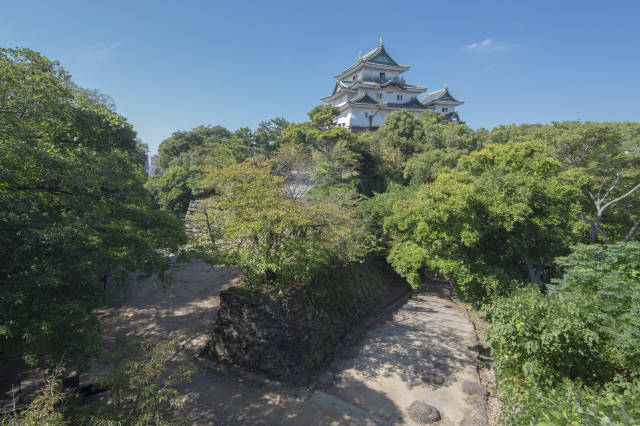
In the center of town are the ruins of Tankaku Castle (Shingu Castle), now maintained as a park. The stone walls preserve its old form, and from the hilltop you can enjoy views of the town and the Kumano River. It is a comfortable distance for a stroll between shrine visits.
Sato Haruo Memorial Museum | A Town of Literature
Shingu is also known as the hometown of the poet and author Sato Haruo. The town has a memorial museum dedicated to him, where you can touch Shingu's history and culture from a literary perspective. It makes a nice stop when you want quiet time after a shrine visit.
Views of the Kumano River
Flowing along the edge of the town, the Kumano River is one of the great rivers of the Kii Peninsula. Walking along its banks, you can take in sweeping views of the wide riverbed and mountain ridges. It is a perfect place to reflect on the history of faith while admiring Kumano's scenery. Be mindful of rising water and weather changes, and view from safe spots.
Local Foods to Try in Shingu
After your visit, round out your trip with local flavors. Here are a few representative dishes of Kumano and Shingu.
Sanma-zushi (Mackerel Pike Sushi)
In the Shingu area facing the Kumano Sea, sanma-zushi is a beloved regional dish. Pacific saury is split open, cured with salt and vinegar, then pressed onto vinegared rice—a dish rooted in traditions of preserved foods. Flavors differ by shop and household, so comparing them is part of the fun.
Mehari-zushi
Mehari-zushi is a rice ball-shaped regional dish wrapped in pickled takana (mustard greens) leaves. The name is said to come from needing to "open your eyes wide" to take a big bite. Originally eaten as portable food during mountain work and farming, it is also perfect for a Kumano Kodo hike.
Blessings from the River and Sea
Freshwater fish from the Kumano River and seafood from the Kumano Sea are other delights. Seasonal fish, citrus fruits, and mountain produce—savoring the local seasons is a highlight of a Kumano trip. Since menus and availability vary by shop, check ahead or ask locals as part of your travel fun.
Thinking About Access
By Train
Hayatama Taisha is within walking distance of JR Shingu Station. From Osaka or Nagoya, the common route is to take a limited express train on the Kisei Main Line, which runs around the Kii Peninsula. However, train frequency and journey times vary with the schedule, so always check the latest timetable.
By Car
By car, you can flexibly visit the surrounding Kumano Kodo and the three shrines. The Kii Peninsula has many winding roads, so note that travel times are often longer than the map distance suggests. Avoid overpacking your plans and allow extra time. Confirm parking locations and usage in advance for peace of mind.
By Air
From the Kansai area or the Tokyo region, you can enter via a nearby airport and continue by train, bus, or rental car. Connections and travel times vary by season, so plan carefully before departure.
Tips for Getting Around Locally
The area around Shingu Station is well suited to visiting highlights on foot or by bicycle. Hayatama Taisha, Asuka-jinja, and the Tankaku Castle ruins are gathered within a compact area. For Ukishima no Mori or the Nachi/Hongu directions, however, you may need a bus or car.
Model Itineraries
Plan 1 | Half-Day Shingu Town Walk
For those who want to enjoy a shrine visit and casual town walk
1. Walk from JR Shingu Station to Kumano Hayatama Taisha
2. After praying, take time to view the Nagi tree and Sacred Treasure Hall
3. Head to Asuka-jinja to enjoy the atmosphere of an ancient sacred site
4. Lunch of sanma-zushi or mehari-zushi
5. If time allows, visit the Tankaku Castle ruins or Sato Haruo Memorial Museum
A relaxed half-day plan within walking distance of the station.
Plan 2 | A Day Trip Combining Hayatama Taisha and Kamikura-jinja
For those who want to touch the roots of Kumano faith
1. Morning: visit Kamikura-jinja, climbing the stone steps to see Gotobiki Rock
2. Return to town and visit Kumano Hayatama Taisha
3. After lunch, view ancient sacred treasures at the Shinpokan
4. In the afternoon, visit Ukishima no Mori or Jofuku Park
5. In the evening, stroll along the Kumano River to end the day
Moving from the "original shrine" to the "new shrine"—from mountain to village—this plan lets you experience the history of Kumano faith as a single flow.
Plan 3 | A Two-Day Pilgrimage of the Kumano Sanzan
For those who want to visit all three shrines
- Day 1: Visit Hayatama Taisha and Kamikura-jinja in Shingu. Then move toward Nachi, visit the Nachi Taisha area, and stay overnight
- Day 2: Move to Kumano Hongu Taisha and pray. If time and energy allow, walk a section of the nearby Kumano Kodo
Since the three shrines are a fair distance apart, be sure to account for travel time. If using public transportation, check timetables well in advance and build in plenty of margin.
Manners and What to Wear
Basic Manners
For bowing at the torii, how to walk the approach, purification, and prayer etiquette, please refer to the earlier "Walking Kumano Hayatama Taisha in Order" section. In addition, keep the following in mind:
- Pray quietly in front of the halls
- Do not touch the trees or buildings in the precincts
- Do not take photos where photography is prohibited
Clothing and What to Bring
The precincts are mostly gravel and stone paving. Choose comfortable walking shoes. If you plan to climb the steps of Kamikura-jinja, add non-slip shoes plus rain gear, drinks, and a towel appropriate to the season.
In summer, don't forget a hat and sunscreen; in winter, warm clothing. Kumano's weather changes easily, so an umbrella or raincoat is useful in any season.
Photography Etiquette
The vermilion halls make a wonderful photo subject, but please be considerate of other visitors. Don't stop in the middle of the approach, confirm in advance whether tripods are allowed, and don't get too close to sacred trees.
Frequently Asked Questions
Q. How much time do I need for a visit?
The precincts are relatively compact; about an hour at a leisurely pace is a good guide. You can also do it in less time, but adding the Sacred Treasure Hall, receiving a goshuin, time by the Nagi tree, and a stroll toward the Kumano River gives you a more relaxed experience.
Q. Can first-time visitors to Kumano enjoy it?
Yes. Hayatama Taisha is within walking distance of the station, so it is easy on first-time visitors. A light preview of the shrine's history and background will deepen your appreciation of the highlights. If you are unsure of the etiquette, simply follow the signage.
Q. Are the stone steps at Kamikura-jinja tough?
They are steep and require some level of fitness. Don't push yourself—take breaks and judge by the weather and your condition. The steps are especially slippery when wet, so caution is essential.
Q. How many days do I need to visit all three shrines?
It depends on your transportation and how you stay. For a comfortable pace, two days with one overnight or more is recommended. A day trip means long travel times, so plan carefully to avoid overexertion.
Q. Can I always receive a goshuin?
Availability and reception hours may change due to ceremonies or circumstances. Check official information in advance or ask at the shrine for peace of mind.
Q. Can I enjoy a visit on a rainy day?
Of course. Rainy Kumano has a special beauty—greens deepen and vermilion stands out. Bring proper footwear and rain gear, and enjoy the atmosphere that only rain can bring.
Q. I'd like to visit during festival season.
The autumn grand festival and the early-spring Kamikura-jinja festival are among Kumano's representative events. However, there may be crowds, traffic regulations, and safety restrictions. Check the latest information and plan with plenty of margin.
Conclusion | What the Vermilion Shrine Teaches Us About "Pilgrimage"
Kumano Hayatama Taisha is a World Heritage shrine, yet it sits right beside everyday town life. You pass through the torii, purify your hands, pray before the vermilion halls, meet the thousand-year-old Nagi tree, and gaze upon ancient treasures offered in reverence to the gods. Then there is the road leading on to the original shrine, Kamikura-jinja. Within a single visit are layered reverence for nature, imagination of history, and the overlapping prayers of countless people.
Whether you come as a traveler or to pray as a believer, there is a quality of "time to slowly face oneself" here. Even without specialized knowledge, walking carefully is enough for the visit to stay with you. The story of gods welcomed from a great rock in the mountains to the riverbank, the wish embedded in the Nagi leaf that bonds will not be severed, and the pilgrimage that has continued alongside the flow of the Kumano River—feeling these things as you walk makes every step within the precincts more meaningful.
As the entry to a Kumano journey, or as its closing chapter—let yourself surrender to the long flow of time at this World Heritage shrine of brilliant vermilion, at your own pace.
*Content updated on October 12, 2026.*
*Content updated on October 12, 2026.*
Image: Kumano-hayatama-taisha Shrine - Sanshû-den / Photo: Yanajin33 / CC BY-SA 3.0 (via Wikimedia Commons)