 LOCAL FIT KUMANOBack to list
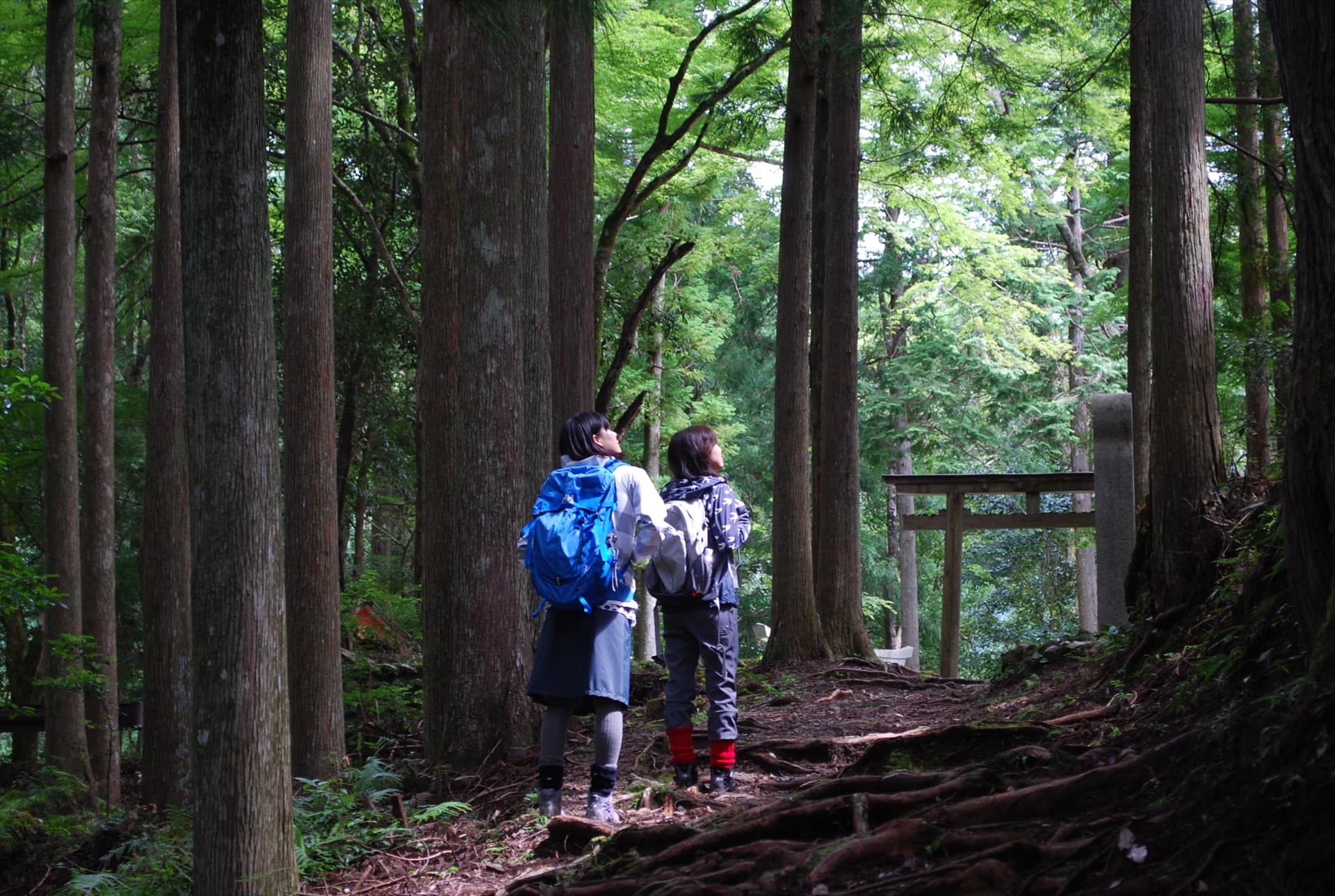
Knowing the Place Names Makes the Same Path Look Different
If you search for information on walking from Hosshinmon-oji to Kumano Hongu Taisha, you'll find plenty on distances and times. This article takes a different angle, introducing the joy of the walk through the meanings of the place names you'll encounter along the way.
The place names of the Kumano Kodo are themselves traces of the prayers and daily lives of people from long ago. Knowing just a little about the origins of these names transforms what might seem like an ordinary mountain path into a "pilgrimage road with a story."
The Meaning Behind the Starting Point, "Hosshinmon-oji"
Hosshinmon means something like "the gate where one awakens the heart." It is said to mark the entrance to the sacred precinct of Kumano Hongu Taisha, and pilgrims of old are said to have renewed their spirits here before heading onward to the main shrine.
It may be a small oji tucked into the mountains, but when you set off thinking, "From here on, I'm within the realm of Hongu," your posture naturally straightens.
The Names You'll Meet Along the Way
Mizunomi-oji | The Resting Spot Where Pilgrims Quenched Their Thirst
As the name suggests ("mizunomi" means "drinking water"), this is believed to be a place where pilgrims paused to drink and catch their breath. Even today, it appears as a landmark right about when walkers feel ready for a rest. Try following the old pilgrims' lead and being mindful of when to hydrate.
Fushiogami-oji | The Place Where Pilgrims Bowed Down Toward Hongu
The name Fushiogami is said to come from pilgrims who, catching their first distant glimpse of the Hongu shrine buildings, prostrated themselves in worship. With its sweeping views, this is a highlight of the journey — a place where the satisfaction of how far you've come meets the relief of knowing the end is near. Nearby, there is also a tradition handed down regarding the Heian-era poet Izumi Shikibu.
Haraedo-oji | Purifying Yourself Before Reaching Hongu
Haraedo-oji, located just before Hongu, is said to be the place where pilgrims purified themselves before worship. Once you pass through here, the main shrine is finally in sight. Rather than hurrying by, pause for a moment, offer a small bow, and compose yourself.
"Another Hongu" Beyond the End of the Walk
Near Kumano Hongu Taisha lies Oyunohara, the expansive site where the shrine buildings of Hongu once stood. After paying your respects at the current shrine, if you still have time and energy, a short walk here lets you feel the "continuation" of the pilgrimage route.
A Few Tips for Following the Place Names
- Note the names of the oji and rest stops in advance on a map app or from signage
- When you find explanatory signs about a name's origin, stop and read them (it doubles as a rest)
- Allow plenty of time. At the sights along the way, prioritize "time to pause" over taking photos
- Trail conditions change with the season and weather, so check the latest information from local sources
In Summary
The path from Hosshinmon-oji to Kumano Hongu Taisha is a route where simply following the place names lets you relive the spirit of pilgrimage. Mizunomi, Fushiogami, Haraedo. Walk with these three names in mind, and the Hongu that awaits at the end will feel just a little more special.
Image: 熊野古道中辺路 発心門王子 (via (公社)和歌山県観光連盟)


