 LOCAL FIT KUMANOBack to list
When planning a model course in the Hongu area, many travelers wonder in what order to visit the shrine, Oyunohara, and the hot springs. Our recommendation is this flow: from Oyunohara (the old shrine site) to Kumano Hongu Taisha (the current shrine site), and then on to the hot spring villages. Because it traces the history of Kumano Hongu, even the same scenery starts to reveal 'why it is here.'
First, the story of Hongu's 'relocation'
The present-day Kumano Hongu Taisha was originally located at Oyunohara, a sandbar at the confluence of the Kumano and Otonashi rivers. It is said that in 1889 (Meiji 22), a massive flood swept away many of the shrine buildings, and the shrine was later moved to its current location on higher ground.
In other words, sightseeing in Hongu is a journey where in a single day you can compare 'the old form that stood by the river' with 'the current form that moved up toward the mountains.' Knowing this background makes the course feel much more three-dimensional.
1. Stand in the open emptiness of Oyunohara
Your first stop is Oyunohara. The great torii gate at the entrance is known as one of the largest in Japan, and its contrast with the surrounding fields and forest makes it stand out even from a distance.
As you walk into the grounds, small stone shrines are quietly enshrined where the main shrine buildings once stood in a row. Without the buildings, you can better feel the wide sky, the trees, and the presence of the river. Rather than taking photos here, pause for a moment and try to imagine, 'So the great shrine halls once stood right here.'
2. Climb the stone steps to Hongu Taisha and visit the 'present' shrine
After touching the old form at Oyunohara, head to Hongu Taisha. Simply moving from flat land by the river up the stone steps into the forested shrine grounds is itself a kind of experience.
After paying your respects, look up at the row of shrine halls and the cypress-bark roofs, and recall the distance from the old shrine site you just visited. We've covered the shrine layout and etiquette in other articles, so please refer to those for details on how to walk through the precincts.
3. End at Hongu Onsen Village to relax your tired body
Finish with a hot spring. Around Hongu, hot spring areas such as Yunomine, Kawayu, and Watarase are scattered about and collectively known as 'Hongu Onsen Village.' Each has a different atmosphere, so choosing based on the guide below makes the decision easier.
- Yunomine Onsen: A historic hot spring town where steam rises in a valley
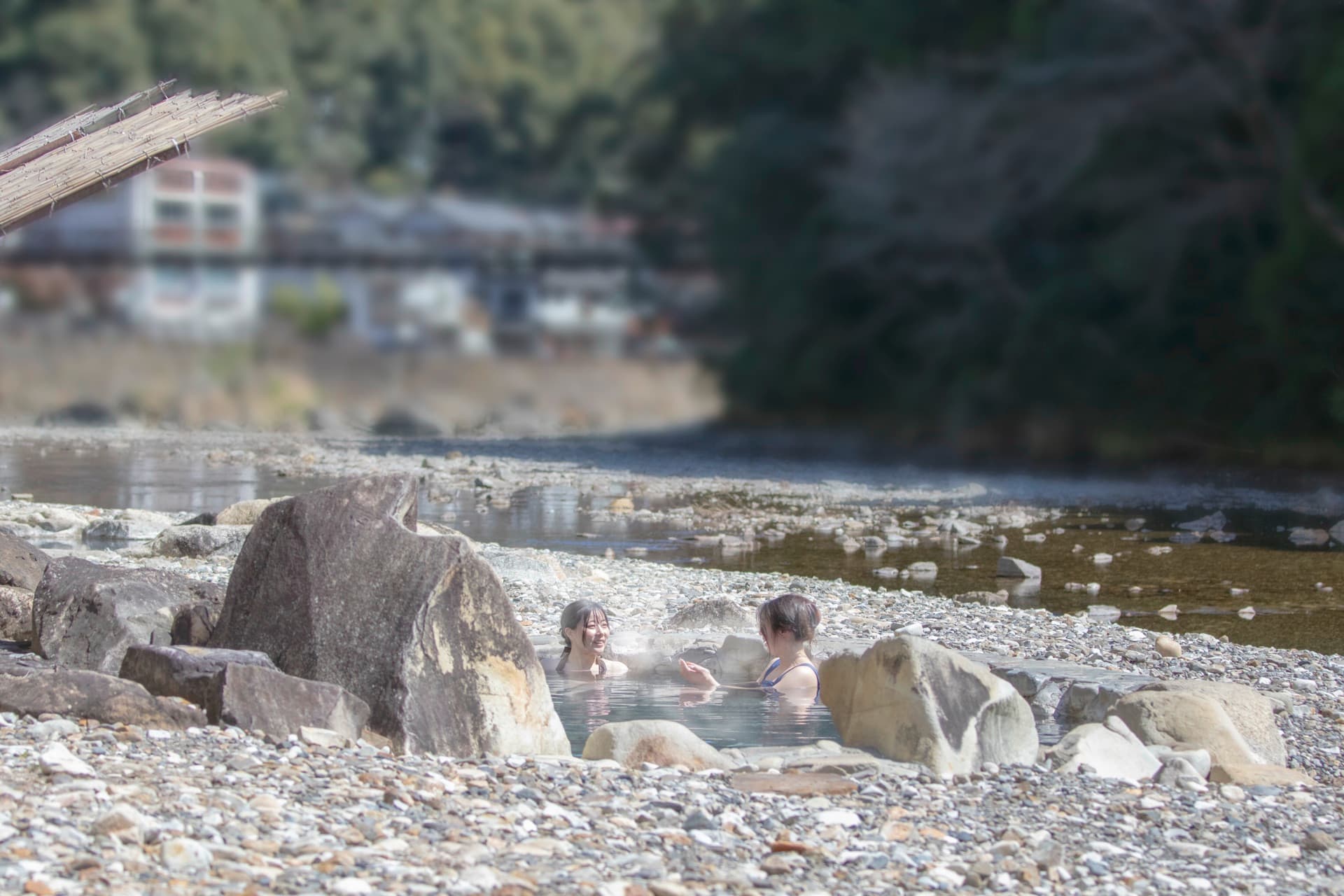
- Kawayu Onsen: Known for its open riverbed along the Otonashi River
- Watarase Onsen: A calm option when you want to spend time quietly
From Hongu Taisha to the hot spring areas, you'll need to travel a short distance by car or bus. Be sure to check return transportation times in advance.
A rough guide to planning your time
- Half-day course: Oyunohara (take your time) → Hongu Taisha → one hot spring area
- Full-day course: Oyunohara and Hongu Taisha in the morning, lunch in between, then either visit two hot spring areas in the afternoon or spend a leisurely time at just one
In either case, the key is to place the hot spring at the end of your plan. You can soak away the fatigue of walking and sightseeing before heading home.
A few small tips for the day
- Oyunohara is wide and has little shade, so bring a hat or jacket depending on the season.
- Watch your step on the stone staircase at Hongu Taisha, and wear comfortable walking shoes.
- Pack your onsen towel and change of clothes in a small bag to make moving around easier.
- Opening hours and closed days at each facility can change, so please check official information before heading out.
Reflect on the past at Oyunohara, offer your prayers at Hongu Taisha in the present, and close the day with a hot spring. Rather than simply hopping between famous spots, try spending a day in Hongu that follows the 'story' of each place.
Image: 川湯温泉 (via 熊野本宮温泉郷)((公社)和歌山県観光連盟)


