 LOCAL FIT KUMANOBack to list
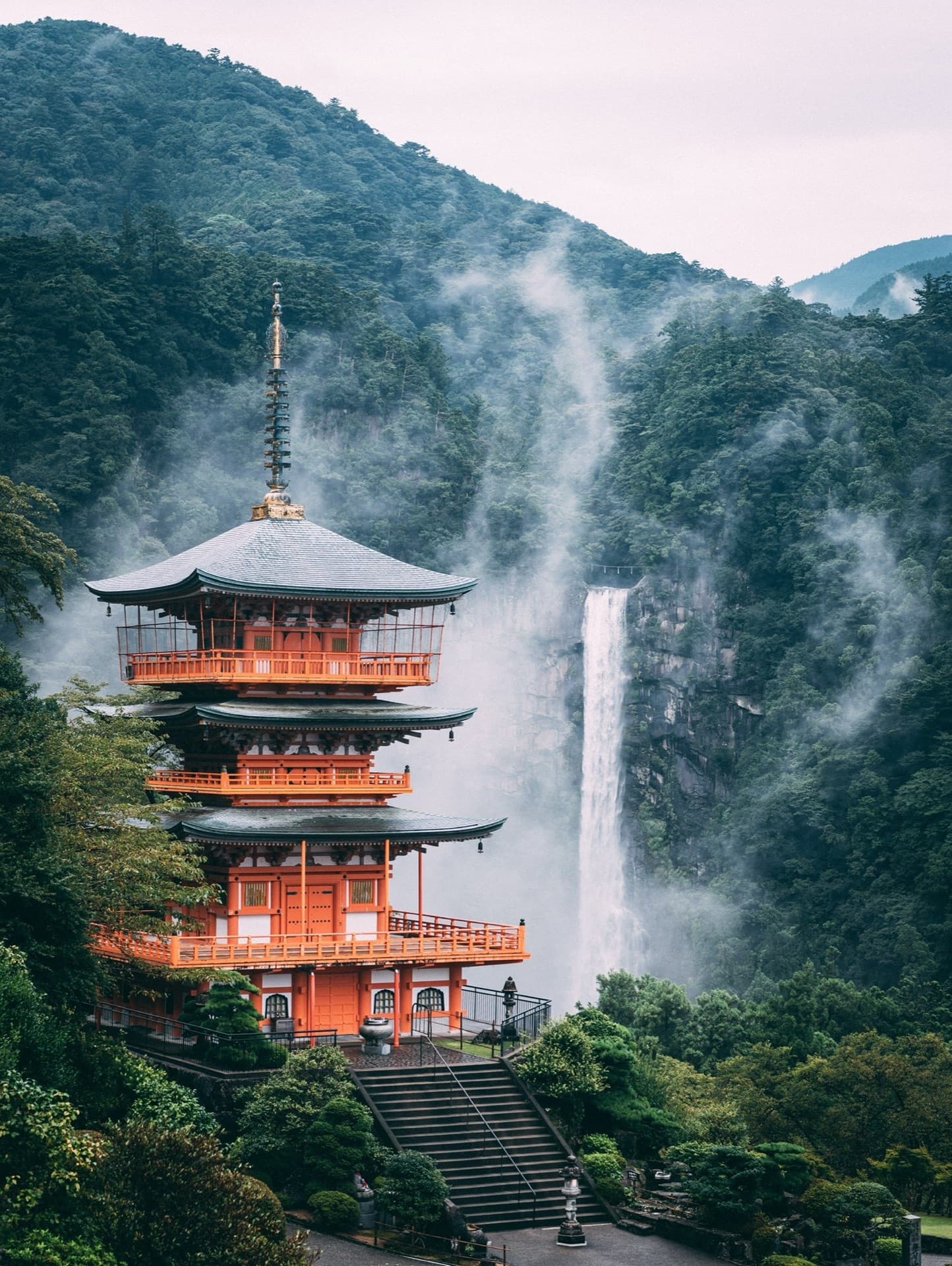
Hiro Shrine: A Shrine Where the Waterfall Itself Is the Deity
Most visitors to Nachi Falls first look up and think, "What an enormous waterfall." But before being scenery, this waterfall has long been revered as a deity. That shrine is Hiro Shrine (Hiro Jinja).
Its most striking feature is that it has no main hall (honden) like a typical shrine. The waterfall itself is the enshrined deity, and worshippers face the falls directly to offer their prayers. Positioned as a sub-shrine (bekku) of Kumano Nachi Taisha, it lives on within the same faith tradition of Mount Nachi.
Shifting your frame of mind from "sightseeing at a waterfall" to "worshipping at a waterfall" — just that one small change makes the same view feel completely different.
Settling Your Mind as You Walk Down the Approach
Pass Through the Torii and into the Trees
A visit to Hiro Shrine begins by passing through the torii gate and descending the stone steps. The approach is surrounded by towering cedars, and the air grows cooler with every step. Little by little, the sound of the falls grows louder.
This "time as the sound draws closer" is really the best run-up to your visit. Set aside the urge to take photos for a moment, and bring your awareness to your footing and to the sound. The stone steps can be slippery when wet, so comfortable walking shoes are recommended.
What Goes Down Must Come Back Up
Going down is easy, but you'll climb the same path on the way back. If you're unsure about your stamina, plan to rest along the way and give yourself plenty of time, so you can return without feeling rushed.
What to Savor at the Otaki Haisho
Less "Looking Up," More "Receiving"
The Otaki Haisho is a place where you can worship the sacred waterfall up close. Unlike viewing it from a distant lookout, here the sound of the water, the moisture in the air, and even the mist that drifts your way reach your body directly.
You don't need to force yourself to linger. First, quietly offer your prayer with hands pressed together, then simply gaze at the falls and take one deep breath. That alone deepens the feeling of having truly made a visit.
Check the Rules for Using the Worship Point
The Otaki Haisho has set rules regarding reception and use. Fees, reception hours, and procedures during inclement weather can change, so check the official information or on-site signs before you visit — you'll avoid any confusion.
Sacred Water Is Also Part of the Connection
The water of the falls has long been treasured as having miraculous powers. Follow the on-site guidance regarding where and how you may receive it, and be mindful of other visitors around you.
Before Receiving a Goshuin at Hiro Shrine
First, Confirm Where to Receive It
The goshuin for Hiro Shrine isn't necessarily something you can receive right along the approach path. Because of its close connection with Kumano Nachi Taisha, the place and manner of issuance may differ from other shrines. Checking the on-site signage or official information in advance to confirm where the goshuin is available will give you peace of mind.
Open Your Goshuin Book After You Worship
A goshuin is received as proof of your visit. If you first offer your prayers at the falls and let your mind settle before receiving it, the brushed characters will stay with you more deeply. Later, when you look back at it, you may find yourself remembering even the sound of the falls and the coolness of the trees.
Its Place Within a Journey Around Mount Nachi
Visiting Hiro Shrine together with Kumano Nachi Taisha and Seiganto-ji Temple reveals the full breadth of faith on Mount Nachi. The shrine buildings on the mountain above, and the shrine at the foot where the waterfall is worshipped. Within the same land, the heart that "worships nature itself" and the heart that "prays within a shrine building" stand side by side — and that is quintessentially Kumano.
If time permits, build a little pause into your itinerary — a moment to stand still before the falls. A few quiet minutes listening to the sound of the water often turns out to be the most memorable part of the entire journey.
Image: 那智の滝と三重塔 (via (公社)和歌山県観光連盟)


