 LOCAL FIT KUMANOBack to list
"It's a Short Trail, So Anything Goes" Isn't Quite True for Daimon-zaka
Daimon-zaka, at the entrance to Nachisan, is one of the more accessible sections of the Kumano Kodo and a popular choice for first-time walkers. But because it's short, it's easy to let your guard down and assume any pair of shoes will do.
This article is for anyone searching "Daimon-zaka shoes" and wondering what to wear. Rather than asking whether you need to buy proper hiking boots, we'll help you decide whether the shoes you already own will work.
The Footing on Daimon-zaka Is Nothing Like a City Sidewalk
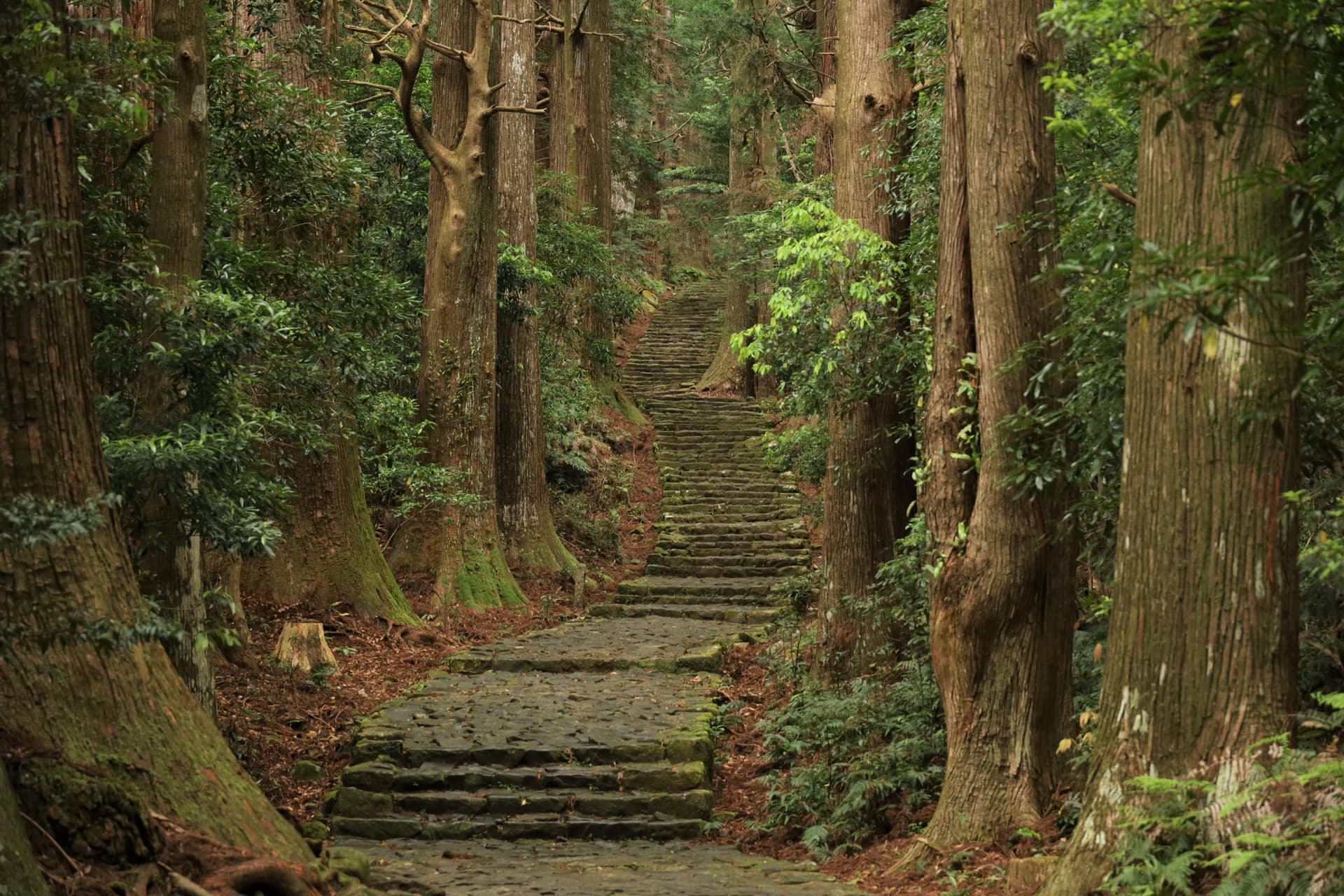
Daimon-zaka is a path of mossy stone steps and stone paving winding through a grove of towering cedars. Much of it lies in shade even on sunny days, so the stones don't always dry out completely. After rain, they stay damp even longer.
There are three things to watch out for:
- Wet stones get slippery: Moss and fallen leaves cause your feet to slide more than you'd expect.
- Step heights and widths vary: These are old stone steps, so your stride won't always fall into a comfortable rhythm.
- The descent puts pressure on your toes: Walking back toward the bus stop, your feet tend to slide forward and your toes press against the front of your shoes.
Guidelines by Shoe Type
Everyday Sneakers: Check the Soles
If the soles still have plenty of tread and the shoes fit well, your usual sneakers will handle Daimon-zaka fine on a clear day. Two things to confirm:
- The soles aren't worn smooth
- You can lace them up snugly (a loose fit lets your foot slide forward on the descent)
Soft, thin-soled running shoes can let the edges of the stone steps dig into your soles, so plan on walking slowly if that's what you're wearing.
Trekking or Walking Shoes: The Safer Choice When in Doubt
On rainy days, after rain, or if you plan to walk further sections of the Kumano Kodo, shoes with strong grip really pay off. They stabilize your ankles and give you a firm footing on the way down. Avoid breaking in a brand-new pair on the day itself—wear them a few times around home beforehand to prevent blisters.
Sandals, Heels, and Flat-Soled Shoes: Not Recommended
Sandals make it easy to twist your ankle on uneven steps or gaps between stones, and they're especially unstable on wet surfaces. Heels, pumps, and thin, hard-soled leather shoes bring the same issues of slipping and fatigue. We understand the appeal of dressing up for a shrine visit, but on the day you walk Daimon-zaka, keeping your footwear practical will leave you with the energy to enjoy taking photos.
Socks and a Spare Pair Are Part of the Equation
Your socks matter almost as much as your shoes. 100% cotton socks absorb sweat and moisture, chilling your feet and causing friction inside your shoes. Thin to medium-weight quick-dry socks work best for walking on stone paths.
After Daimon-zaka, more stone steps await at Nachi Falls and the Nachisan temple grounds. In case your shoes get wet in the rain, tucking a spare pair of socks into your bag will make the rest of your visit much more comfortable.
Three Checks When You're Unsure
1. Do the soles still have visible tread?
2. Can you fasten the shoes securely with laces or straps?
3. On a rainy day, do you feel confident walking on wet stone?
If you can answer "yes" to all three, you'll enjoy walking the stone steps of Daimon-zaka.
The Right Shoes Change How You See the Trail
When you're worried about your footing, your eyes tend to stay fixed on the ground. In shoes you can trust, you'll find it easier to look up at the soaring cedars, notice the light filtering onto the moss, and hear your own footsteps on the stones.
Daimon-zaka may be short, but it holds the essence of the Kumano Kodo in a concentrated form. Choose a pair of shoes you know well, and take your time to savor the walk.
*Trail conditions change with weather and season. Please also check local signage and the latest information for conditions on the day of your visit.*
Image: 熊野古道中辺路 大門坂 (via (公社)和歌山県観光連盟)