 LOCAL FIT KUMANOBack to list
Cruise to Kumano | Arriving by Sea Is Closer to the Region's "Origin" Than You Might Think
When people hear "Kumano," many picture moss-covered stone paths and deep stands of cedar. Yet Kumano also has a profound connection with the sea. That is why a "cruise to Kumano"—a journey arriving by ship—is more than just a means of sightseeing. It is a way of entering that follows the very origins of this land.
Rather than covering time management at port or what to pack, this article focuses on the background of "maritime Kumano" that, once known, changes how the scenery looks from the deck before you even set sail.
What the People of Kumano Saw "Beyond the Sea"
The Fudaraku Faith
Along Kumano's coast, there has long been a belief that the Pure Land of Kannon lay far across the southern sea. The practice of setting sail toward it—known as *Fudaraku tokai*—took root here. Fudarakusan-ji Temple in Nachikatsuura is well known as the stage for this tradition.
The cruise ships we board today are, of course, something entirely different. Even so, the feeling of looking toward something beyond the horizon may be shared between past and present.
A Sacred Land Where Mountain and Sea Are One
Kumano's faith cannot be told through "mountains alone" or "the sea alone." Sacred waters like Nachi Falls, the flow of the Kumano River, and the coastline washed by the Kuroshio Current have all been received as parts of a single sacred landscape. Looking up at the mountain ridges from aboard a ship, you can begin to feel this continuity for yourself.
Views of the Kumano-nada Sea to Watch for from the Deck
A Coastline Where Mountains Drop Straight into the Sea
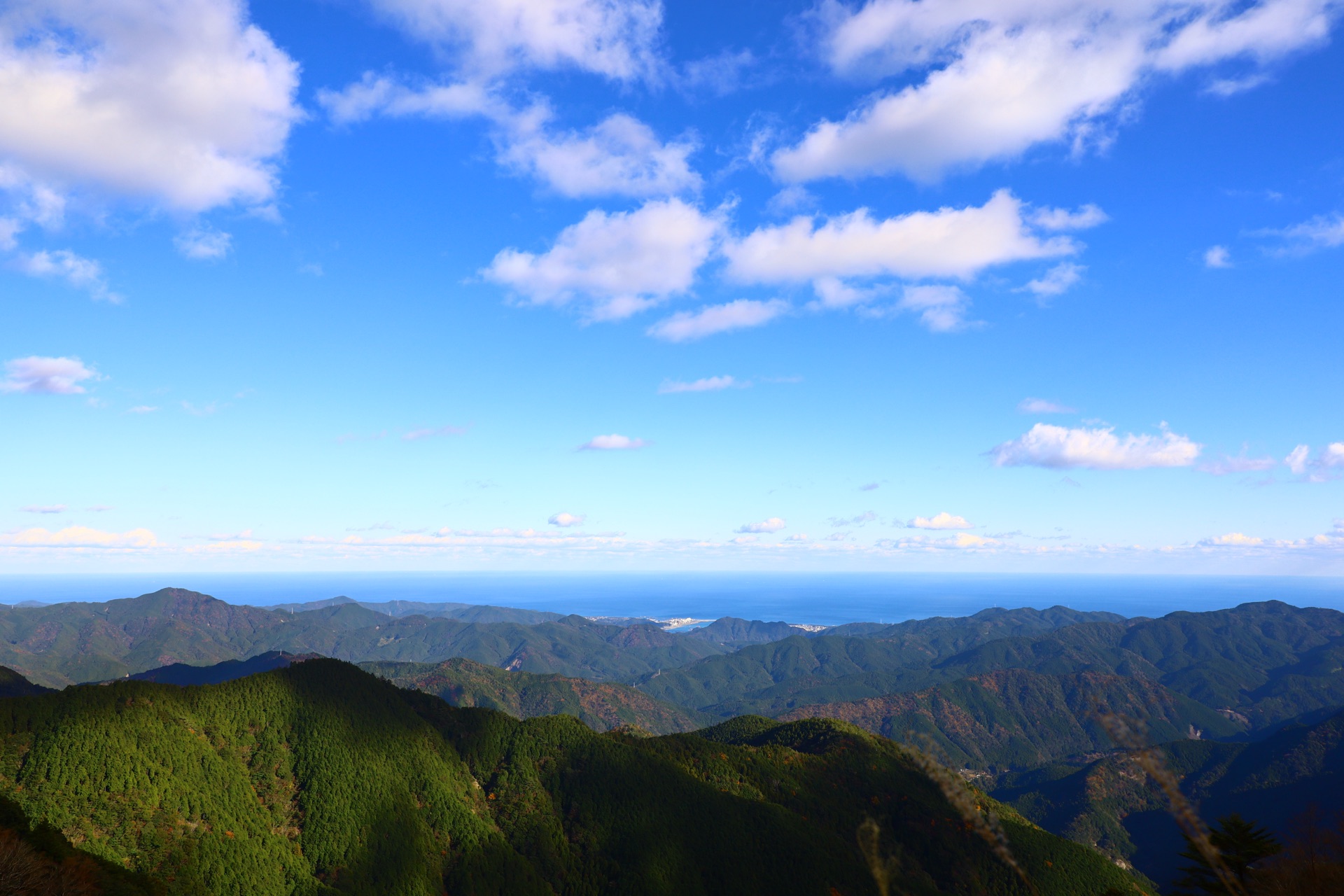
Along the Kumano-nada Sea on the eastern side of the Kii Peninsula, the terrain of mountains plunging toward the water continues for a long stretch. Overland, this ruggedness is often hidden by trees; from the sea, it unfolds as a single sweeping view. That is one of the pleasures of traveling by ship.
Notice the Different Faces of Beaches and Rocks
Long arcing gravel beaches, rocky shores carved by waves—each stretch of coast has its own character. The Iseji route of the Kumano Kodo includes sections that pass along the shore, so you can enjoy the experience of later walking a beach you first glimpsed from the ship.
Once Ashore: Sea or Mountain?
On a day when you arrive by sea, we recommend choosing just one destination that has a connection with the water.
- If you want to focus on town-based shrine visits: Head toward Kumano Hayatama Taisha in Shingu, where you can feel the atmosphere of a town where river and sea meet.
- If you want to touch maritime faith: The area around Fudarakusan-ji in Nachikatsuura offers quiet, seaside hours.
- If you want to venture to mountain sanctuaries: Head toward Kumano Hongu Taisha or Mt. Nachi. Travel takes time, however, so plan with a comfortable margin.
Port calls and boarding conditions vary by operator and season, so please confirm actual schedules and onward transport options with the latest official information.
Walking Kumano Again After Your Voyage
The Kumano you see from the sea is only an "entrance." Once you grasp the overall terrain from the deck, the next time you walk the Kumano Kodo you will think, "Ah, this is just beyond that mountain," and the geography will fall into place. Let your cruise visit be the start, and come back next time to savor Kumano from its overland paths.
Borrowing just a little from the gaze of those who once looked toward the far side of the sea, take your time and quietly watch the waters of Kumano.
Image: 熊野灘 (via (公社)和歌山県観光連盟)