 LOCAL FIT KUMANOBack to list
Chikatsuyu-oji to Tsugizakura-oji: A Section Connected by "Water"
The Nakahechi route of the Kumano Kodo is dotted with oji shrines, but the section from Chikatsuyu-oji to Tsugizakura-oji is especially memorable when walked as a route that follows the presence of water. The starting point, Chikatsuyu, is a mountain village opening up along a river, while Nonaka on the goal side is a hamlet long known for its clear spring water and towering cedars.
There are no dramatic highlights like a mountain pass crossing. Instead, this is a section where you can take your time to savor how the old road blends into the daily life of a mountain village.
Getting a General Sense of the Route
Start: Chikatsuyu-oji and the Village of Chikatsuyu
Chikatsuyu is a village that still carries traces of the post town where pilgrims once came and went. Chikatsuyu-oji stands quietly at its edge. Before setting out, take a moment to feel the sound of the river and the atmosphere of the village — it will change how you see the path ahead.
Along the Way: Paved Roads and Mountain Trails Alternate
In this section, village roads, cedar-forest mountain paths, and paved country lanes appear in turn. There are other oji and tea house ruins along the way, so reading the information signs as you go makes it easier to imagine "this was once a resting place." The distance is often cited as roughly 5–6 km as a guideline, but it can vary due to route changes and detours, so please check the latest information.
Goal: Tsugizakura-oji and the Nonaka Spring
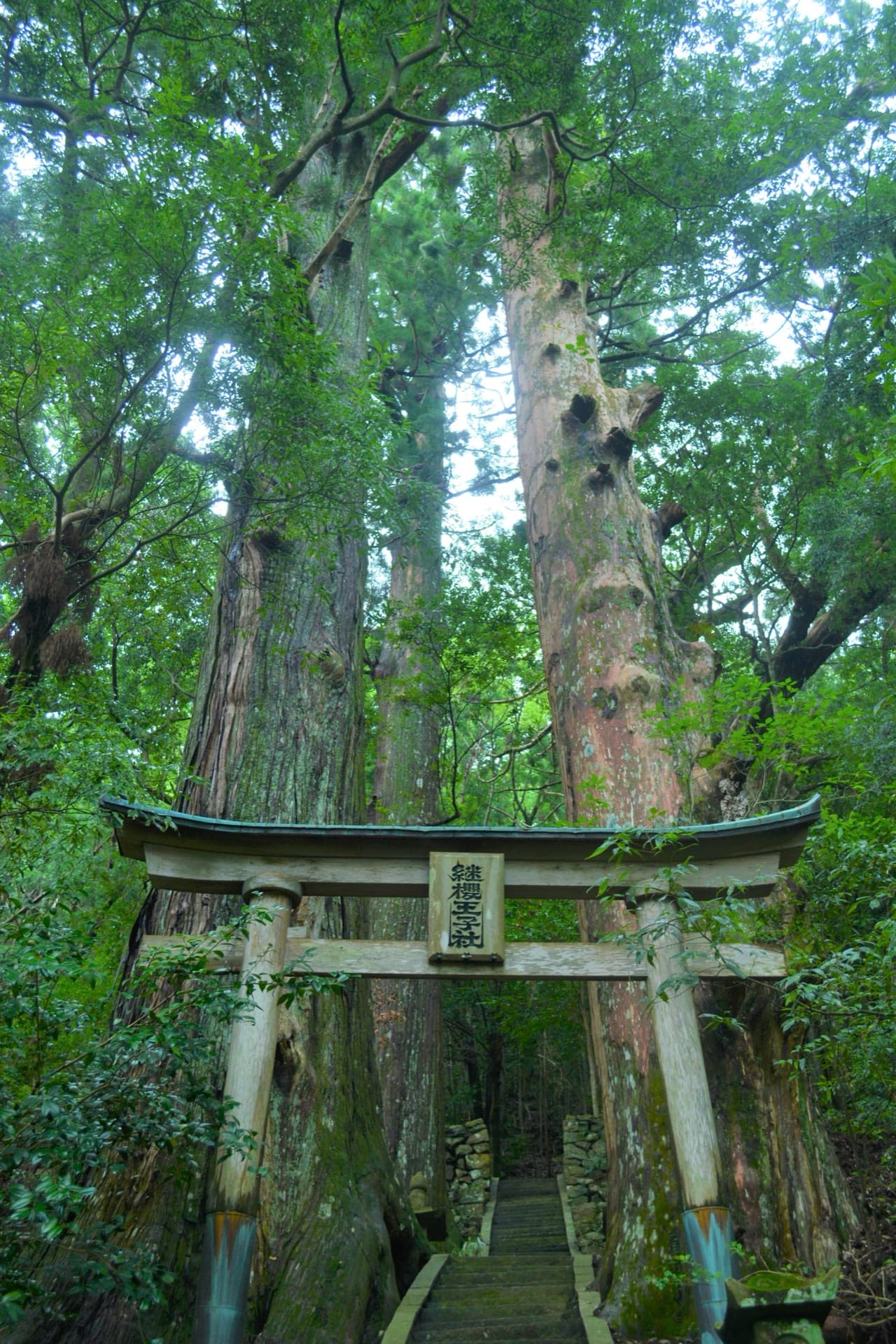
The area around Tsugizakura-oji, with its row of massive cedars (known as Ippo-sugi), is a symbolic spot of the Nonaka hamlet. Nearby is the Nonaka no Shimizu spring, long cherished as one of Japan's famous waters. After walking, the presence of water here feels especially welcome.
The area around Toganoki Chaya, next to the oji, serves as a convenient resting spot. Opening days and offerings may change by season, so if you plan to stop by, check in advance, and bring a little drink of your own just in case.
Three Things to Keep in Mind When Walking This Section
1. Decide Your Direction in Advance
Walking from Chikatsuyu toward Tsugizakura is, in terms of the Nakahechi pilgrimage flow, heading back toward the Takijiri side. Signposts are well maintained in either direction. What matters is planning your walk so that you can rest while viewing the spring water and cedars at the goal. Whether the starting or ending point has better transportation access should be decided together with checking the bus schedule mentioned below.
2. Don't Rush Through "Places You Pass"
Rather than counting highlights as individual points, this is a section to enjoy the transitions of the path — the village, the cedar forest, the country scenery, the water. Build in time for photos and for reading information signs as part of your plan from the start.
3. Confirm Your Return Transportation First
Bus service is infrequent in this area. Since schedules change by season and day of the week, be sure to check the latest information for the bus stop and departure time you plan to use before you set out. The trick to finishing the walk comfortably is not to shorten your breaks too much, assuming you must catch the bus.
The Afterglow of the Walk
Standing beneath the cedars of Tsugizakura-oji, recalling the coolness of the Nonaka spring, and looking back on the path you walked, the flow "from a riverside village to a hamlet of water" feels like a single story. This section is recommended for those who want to savor stillness over spectacle.
Even for first-time Nakahechi walkers, adding just this one section between other segments offers a glimpse of the mountain village side of the Kumano Kodo.
Image: 熊野古道中辺路 継桜王子 (via (公社)和歌山県観光連盟)


