 LOCAL FIT KUMANOBack to list
Where steam drifting through the valley makes you pause
Tucked into the mountains just a short drive from Kumano Hongu Taisha, Yunomine Onsen stretches along a narrow valley lined with inns and guesthouses. White plumes of steam rise here and there, creating the nostalgic scenery of an old-fashioned healing hot spring town.
Beside the small stream running through the heart of the hot spring village stands a particularly small wooden bathhouse. This is 'Tsubo-yu.' It has long been treasured as a place where pilgrims walking the Kumano Kodo could purify themselves before or after their visit to Hongu.
What kind of bath is Tsubo-yu?
A tiny tub that looks carved from stone
Tsubo-yu is a private-rental hot spring: a small tub that looks hollowed out of a boulder, sheltered by a little bathhouse. Only a few people can bathe at a time, and once inside you're free from anyone else's presence. The hut fills with nothing but the faint scent of wood and the gentle sound of water.
Why the water is said to change color
People often say Tsubo-yu's waters 'change color several times a day'—turning milky white, taking on a bluish hue, and so on. Since how it looks depends on the weather and time of day, it's best to approach it lightheartedly, wondering, 'What color will it be today?'
A World Heritage site
Tsubo-yu is known as part of the 'Sacred Sites and Pilgrimage Routes in the Kii Mountain Range,' which includes the Kumano Kodo, and is often introduced as 'the only hot spring registered as a World Heritage Site.' It's a place where the age-old pilgrimage custom of bathing along a sacred route lives on today.
A hot spring linked to the tale of Oguri Hangan
Yunomine is one of the settings of the medieval legend of Oguri Hangan. It's said that Oguri, afflicted with a grave illness, soaked in this very spring and was restored to his former self. The nickname 'the hot spring of resurrection' comes from this story.
Easing a body weary from walking while letting your thoughts drift to Oguri in the tale is a way of enjoying this bath that's all its own.
Another pleasure, right by the Yu-zutsu
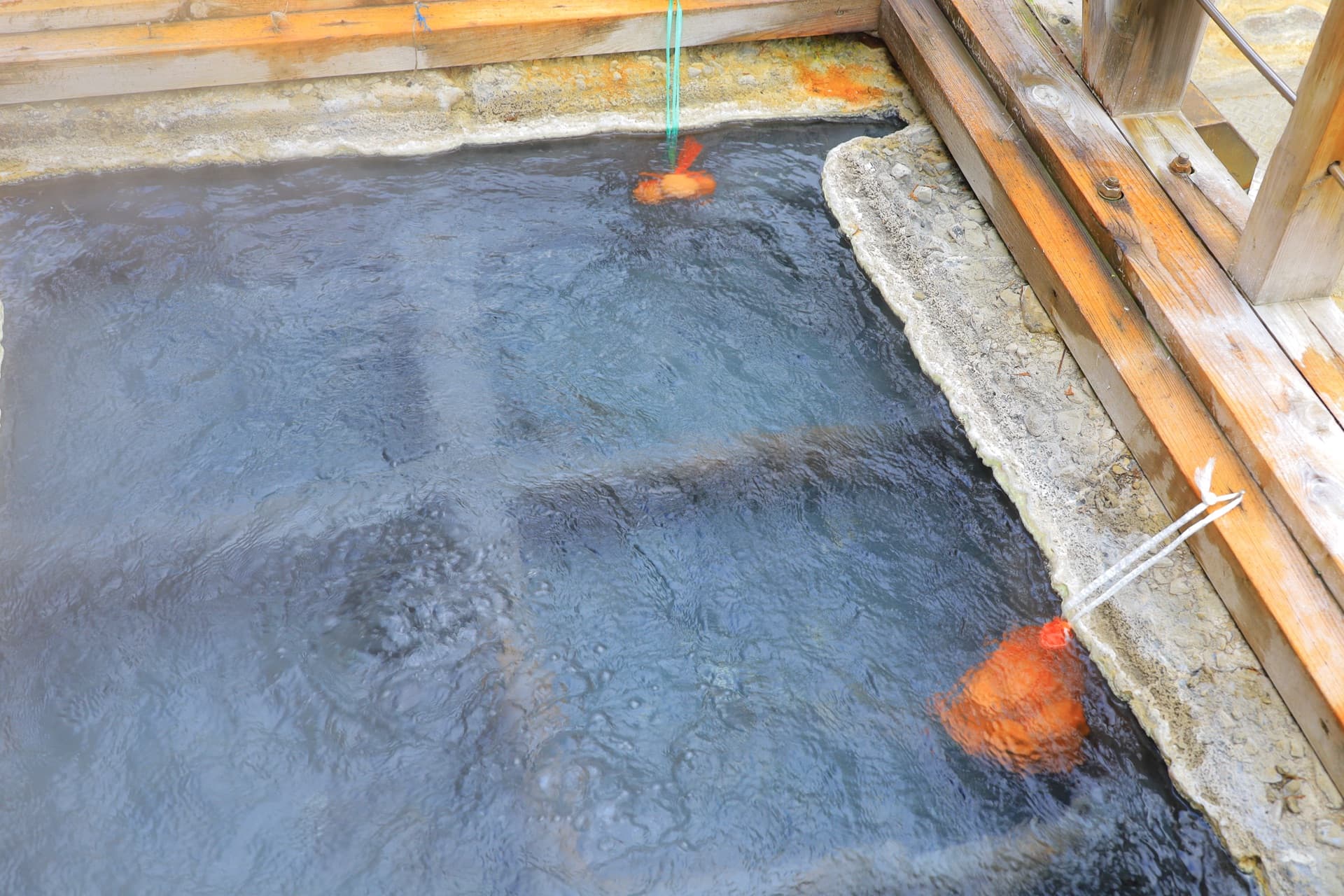
Just beside Tsubo-yu is the 'Yu-zutsu,' where the source water bubbles up. In the old days, visitors who came for hot spring cures would boil vegetables and eggs here. Even today, locals and visitors alike enjoy boiling ingredients in the spring while watching the steam rise. Since the water is very hot, be careful of your footing and the steam when you approach.
A few things to prepare before you bathe
- Give yourself plenty of time: Because it's a private-rental system, you may have to wait depending on how busy it is. It's safer to avoid cutting things close to bus or limited express departure times.
- Check the latest information in advance: Opening hours, fees, and reception procedures can change. Before heading out, confirm with the local tourism association or official sources.
- Travel light with a towel: The bathhouse is compact. Keep your change of clothes and towel bundled together so you can move quickly and smoothly.
- Don't soak too long: Some find the waters quite potent. Keep your soak short and listen to your body.
A single soak after a day of walking
After climbing the stone steps at Hongu or walking the old pilgrimage trails, catch your breath in this tiny bathhouse. Yunomine is best enjoyed less as a sightseeing destination and more as 'a place to rest your body mid-journey.' Wrapped in the steam drifting through the valley, let it be the quiet close to a day in Kumano.
Image: 湯の峰温泉 湯筒 (via (公社)和歌山県観光連盟)


