 LOCAL FIT KUMANOBack to list
A tiny hot spring town where steam rises through the valley
Tucked a little way into the mountains from Kumano Hongu Taisha lies Yunomine Onsen. Inns and public bathhouses nestle together along a narrow river valley, and steam drifts up from here and there throughout town — a hot spring village small enough to fit in the palm of your hand.
This is a place said to have one of the oldest histories of hot spring use in Japan, and it has long been known as a site of *yugori* — the ritual purification in hot water performed by pilgrims on their way to Kumano. As a spring whose story overlaps with themes of 'rebirth,' it remains cherished today.
In this article, rather than focusing on detailed bathing information, we'll introduce ways to enjoy Yunomine by walking its alleys and savoring it with all five senses.
Begin your walk with 'sound and scent'
Mingled with the murmur of the river, a faint sulfur scent drifts through the air. That smell is your signal that you've arrived in Yunomine.
Pause at the Yuzutsu
In the middle of the hot spring town is a spot where the source water bubbles up. Locally it's called the *Yuzutsu*, and it stands as a symbol of how people have long woven the power of the hot spring into daily life.
Just watching the steam rise is enough to make you feel, 'This really is a land where hot springs well up from the earth.' The water is very hot, so when you approach, follow the signs around your feet and the surroundings, and don't try to touch it.
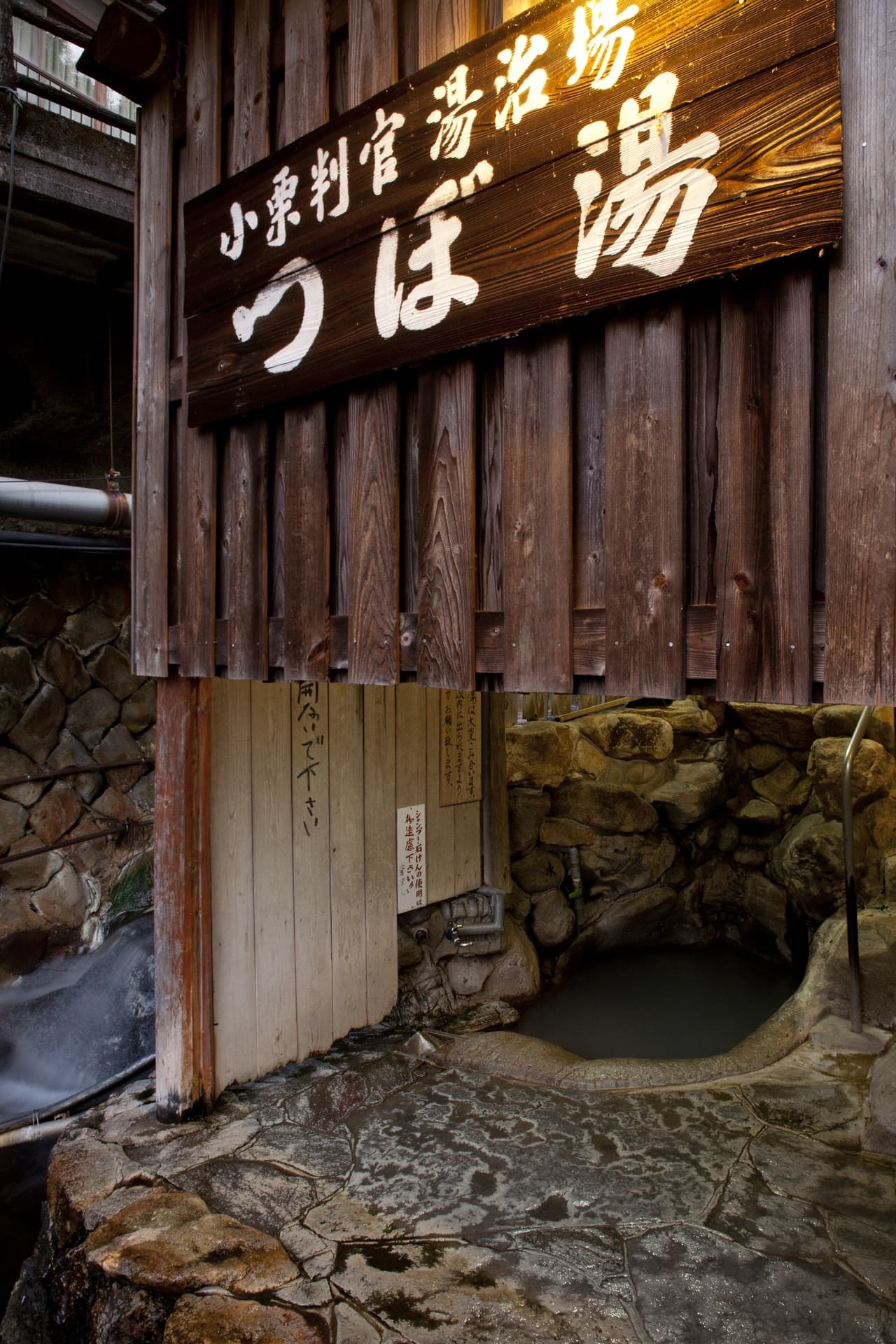
View the Tsuboyu hut from outside
The small stone-bath hut standing on the riverbank is *Tsuboyu*. It is known as an exceptionally rare hot spring included among the properties registered as a World Heritage site.
Whether or not you bathe there, the sight of this little hut melting into the scenery of river and rising steam is a view unique to Yunomine. Since usage rules and crowding vary by season, please check the latest information before visiting.
Hot spring flowers and the changing colors of the water
It is said that the waters of Yunomine change their appearance with the time of day and the weather. Near the bathhouses, you may also spot deposits of *yunohana* (hot spring flowers) that have gathered on the surfaces. Walking while searching for these subtle changes, you'll find that the same alley reveals more and more as you look.
To connect with the old pilgrimage route: 'walk first, then warm up'
Yunomine is linked to the paths of the Kumano Kodo Nakahechi route. There is a trail that leads in on foot from the Hongu area, and the flow of walking first, then descending into the hot spring town is a reward unique to the pilgrimage road.
- Bring a towel and a light change of clothes so you don't get chilled before your body has warmed up
- In seasons when dusk comes early, make a loop through the alleys while it's still light
- Stone pavements and slopes become slippery when wet, so pay attention to the soles of your shoes
A few small courtesies for walking the alleys
A hot spring town is also a place where people live their daily lives. Don't raise your voice, don't step onto private land or inn property, and don't get too close to places where steam is rising. Keep these three things in mind, and this little town will welcome you warmly.
A word from the editors
Yunomine is less a place you go to 'see something' and more a place to walk through the drifting steam and let your heart unwind. Set aside a half-day of margin before or after your visit to Kumano Hongu or your walk along the old pilgrimage road. Your tired feet, and a slightly weary heart, will quietly soften here.
*Opening hours, fees, and bathing rules may change. Please check the latest information from each facility or the local tourism association before visiting.
Image: 湯の峰温泉 つぼ湯 (via (公社)和歌山県観光連盟)


