 LOCAL FIT KUMANOBack to list
As you visit the shrines and temples of Kumano, you'll encounter the image of a black crow on banners, charms, and information boards. Look closely, and you'll notice it has three legs. Many visitors find themselves wondering, "Why does the Yatagarasu have three legs?"
This article explains what the Yatagarasu is, the theories behind its three legs, and how to spot it as you explore Kumano—all from a local's perspective.
What Is the Yatagarasu? The Divine Messenger Who Guided the Way from Kumano to Yamato
The Yatagarasu is a large crow that appears in the Kojiki and Nihon Shoki, Japan's oldest chronicles. During Emperor Jimmu's eastward campaign (the Jimmu Expedition), the imperial party lost their way in the rugged mountains of Kumano. According to legend, the Yatagarasu was sent from the heavens to guide them toward Yamato.
The "yata" in the name comes from an ancient unit of measurement based on the width of an outstretched hand, and is generally understood to convey the meaning of "very large." The deep mountains of Kumano and a divine messenger who opens the way—it's a story that mysteriously resonates with the experience of walking the Kumano Kodo.
Why Does the Yatagarasu Have Three Legs? The Main Theories
To get straight to the point: there is no single definitive answer for why the Yatagarasu has three legs. Instead, several theories have been passed down.
Theory 1: Influence from China's "Three-Legged Crow"
Ancient China has a legend of a three-legged crow living within the sun. One view is that this image of the solar crow was transmitted to Japan and became associated with the Yatagarasu. However, whether old Japanese texts clearly describe the bird as "three-legged" is another matter—many say the three-legged image took hold through artwork in later eras.
Theory 2: Symbolizing Heaven, Earth, and Humanity
Another interpretation sees the three legs as representing "heaven, earth, and humanity," with the Yatagarasu as the being that connects them all. This reading fits well with its role as a guide for people.
Theory 3: A Connection to the Three Kumano Shrines
Some associate the three legs with the Kumano Sanzan—the three grand shrines of Kumano Hongu Taisha, Kumano Hayatama Taisha, and Kumano Nachi Taisha. Rather than being an official religious definition, this is best understood as one of the cherished interpretations handed down over time.
Each theory offers a way to enjoy the story more deeply. On-site, storytellers and locals may share these interpretations with you, so take a moment to listen.
The Yatagarasu as a Soccer Symbol
The Yatagarasu also appears on the emblem of the Japan Football Association. It's said to honor Kakunosuke Nakamura, a pioneer who introduced soccer to Japan and hailed from Nachikatsuura in Kumano. The image of "guiding the way" is said to resonate with the sport's drive toward the goal—a fun fact that connects Kumano to the whole country.
How to Spot the Yatagarasu in Kumano
At the shrines and temples of the Kumano Sanzan, you'll come across crow motifs on banners, offerings, and signage. What you can see varies depending on the time and place, so I recommend taking it easy—just count the legs whenever you spot one.
- Brush up on the myth before you visit
- As you walk the old roads, imagine the scene of the lost imperial party being guided
- Choose souvenirs and charms slowly, after your visit to the shrine
Summary: Enjoy the Three Legs as a Symbol of "Guidance"
So, why does the Yatagarasu have three legs? There isn't a single answer. The image we know today seems to have formed through a blend of perspectives—the influence of China's three-legged crow, the heaven-earth-humanity interpretation, and the connection to the Kumano Sanzan.
Walking Kumano's mountain paths while reflecting on the divine messenger who once showed the way, the stone-paved trails and cedar groves take on a slightly different feel. On your next trip to Kumano, be sure to look out for those three legs.
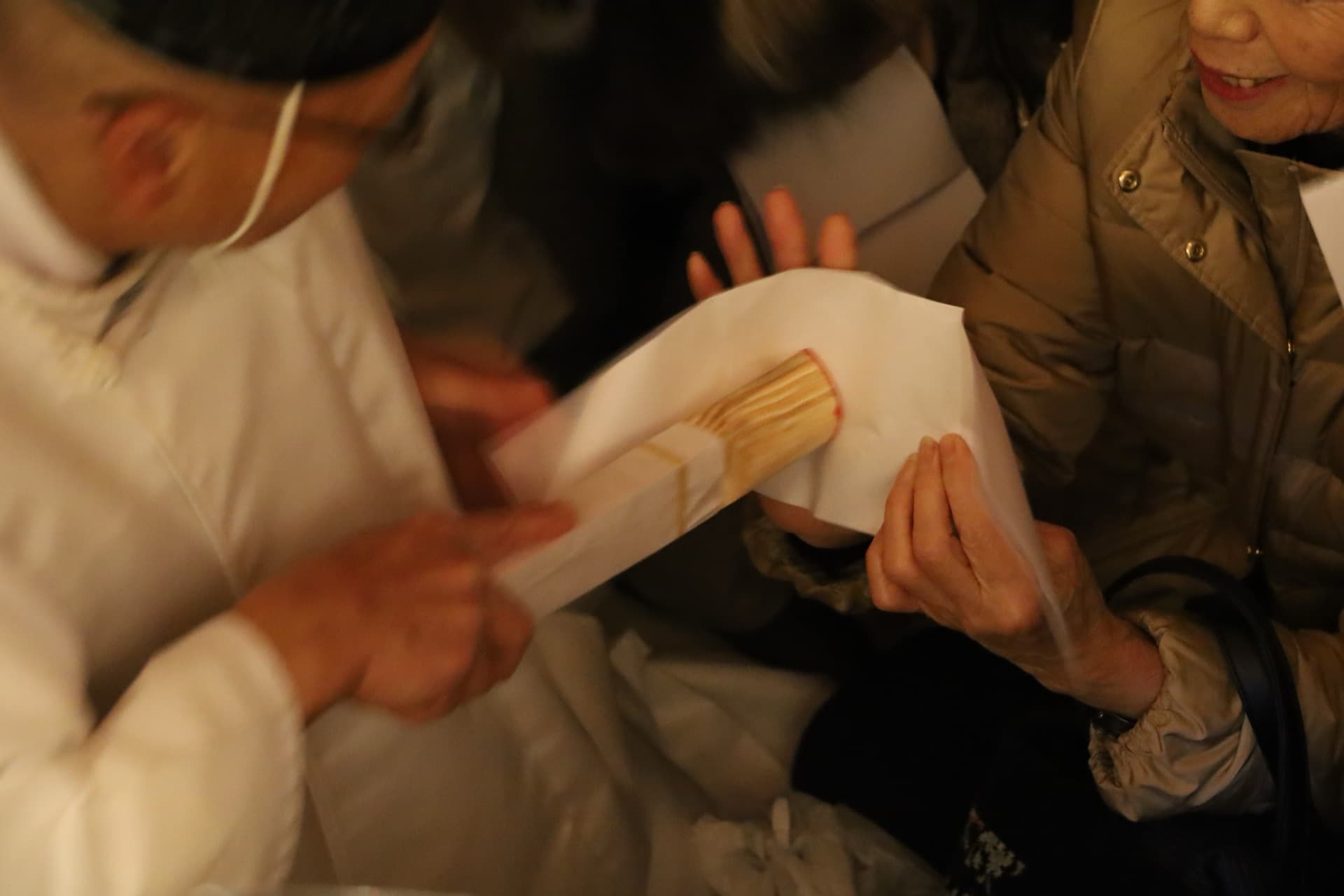
Image: 熊野本宮大社 八咫烏神事 (via (公社)和歌山県観光連盟)


