 LOCAL FIT KUMANOBack to list
As you walk among Kumano's shrines, temples, and souvenir shops, you'll often see the image of a three-legged crow. This is the Yatagarasu. In this article, we'll unpack the meaning of Yatagarasu from four angles: the myth, the name, the three legs, and its connection to Kumano. Walking with this knowledge in mind, the same scenery takes on a much richer dimension.
In a Word, Yatagarasu Means 'A Divine Messenger Who Shows the Way'
Yatagarasu is a great crow that appears in the Kojiki and Nihon Shoki, known as Japan's oldest historical chronicles. To sum it up in one phrase, the meaning widely cherished in Kumano is a divine messenger who guides lost travelers in the right direction.
Yatagarasu in Myth: Guiding Emperor Jimmu Through Kumano's Mountain Paths
In the myth, the party of Emperor Jimmu—later regarded as Japan's first emperor—enters the rugged mountains of Kumano on his eastward journey. When their way was blocked by deep forest and they were struggling, Yatagarasu, dispatched by the heavenly gods, is said to have flown ahead and shown them the path to Yamato.
The deeper you know Kumano's mountains, the more this story resonates. On the Kii Peninsula, where ridges and valleys fold over one another in countless layers, a guide was quite literally a lifeline. It is thought that Yatagarasu became a symbol of 'guidance' precisely because the memory is tied to the land itself.
Unpacking 'Yata' and 'Three Legs'
Yata = Very Large
'Ata' is said to be an old unit of measurement representing the span between the thumb and middle finger. 'Yata' carries the nuance of 'very large,' making the name a reference to a crow of great size.
There Are Various Theories About the Three Legs
There is no single accepted reason for the three legs; several theories exist. One view holds that they represent the connection between heaven, earth, and humanity; another links it to the Chinese legend of the three-legged crow said to live in the sun. Rather than insisting on one 'correct' answer, knowing a few theories is just about the right way to enjoy it.
Kumano and Yatagarasu: Encounters at Shrines and in Souvenirs
Starting with Kumano Hongu Taisha, Yatagarasu is cherished throughout Kumano as a 'goshinshi' (divine messenger). You'll find the motif on shrine offerings, souvenir goods, and signboards. Kumano's traditional protective talisman, the 'Goōfu,' is also known for featuring the image of a crow.
Since specific offerings and their availability vary by season and by shrine, please check with local information if you're interested.
A Surprising Connection: The Emblem of Japan's National Soccer Team
Many people might first think of Yatagarasu as the symbol of the Japan Football Association. Kakunosuke Nakamura, who contributed to Japanese soccer in its early days, hailed from Nachikatsuura, and it's said that Kumano's Yatagarasu was chosen because of that connection. It's heartening to think that a Kumano myth is now cheering on so many people in the world of sports.
How to Make the Most of It on Your Walking Journey
- Before walking the old roads: Yatagarasu is a symbol of 'guidance.' Use the thought as a signal to center yourself before setting off.
- Look for the three legs: Spotting crows on signboards, offerings, and souvenirs is a small pleasure in itself.
- Share it with your companions: Adding a line about the myth along the way makes for lively conversation.
Of course, when it comes to actually avoiding getting lost, your map and gear are what you can rely on. Let Yatagarasu be a support for your spirit, and set out with your practical preparations firmly in place.
Summary
The meaning of Yatagarasu is a 'divine guide' who led Emperor Jimmu through Kumano's mountains. Once you know the name's reference to a great crow, the various theories about the three legs, and even the soccer connection, your journey through Kumano gains considerable depth. Next time you visit Kumano, be sure to look out for the crow.
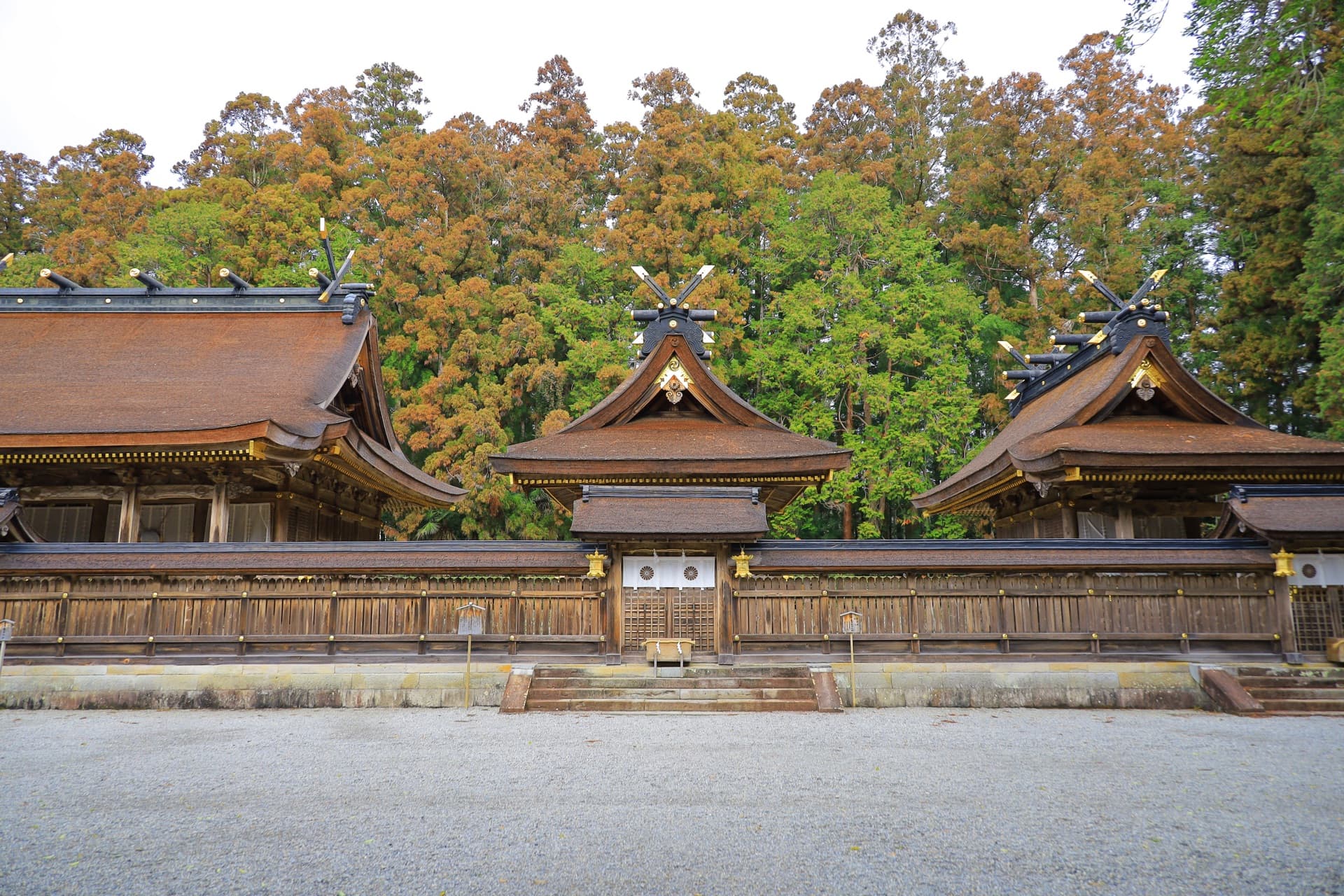
Image: 熊野本宮大社 (via (公社)和歌山県観光連盟)


