 LOCAL FIT KUMANOBack to list
The 'three-legged crow' you catch sight of on a Kumano journey
As you walk around Kumano, you'll notice images of a crow with three legs on shrine banners, votive goods, and in corners of information boards. This is the 'Yatagarasu.'
Even if the name is unfamiliar, many people will recognize it from the emblem of Japan's national soccer team. That crow, in fact, has a deep connection with Kumano. This note isn't about the scale of shrine halls or popular spots — it's a guide to walking Kumano through the small lens of 'searching for the crow.'
Who is the Yatagarasu?
The Yatagarasu is a large crow that appears in Japanese mythology. It is said that when Emperor Jimmu lost his way deep in the mountains of Kumano during his eastward campaign, this crow was sent from heaven to guide him.
The mountains of Kumano remain deep today, with layer upon layer of cedar groves and ridge paths. The story of 'a being that shows the way' overlaps curiously with the feeling of walking the old roads.
Why three legs?
There are various interpretations of the three legs — one view holds that they represent heaven, earth, and humanity. Rather than fixing on a single meaning, keep in mind that 'there are many ways to read it,' and your imagination will expand when you encounter the image on site.
Three places worth searching
1. Around Kumano Hongu Taisha
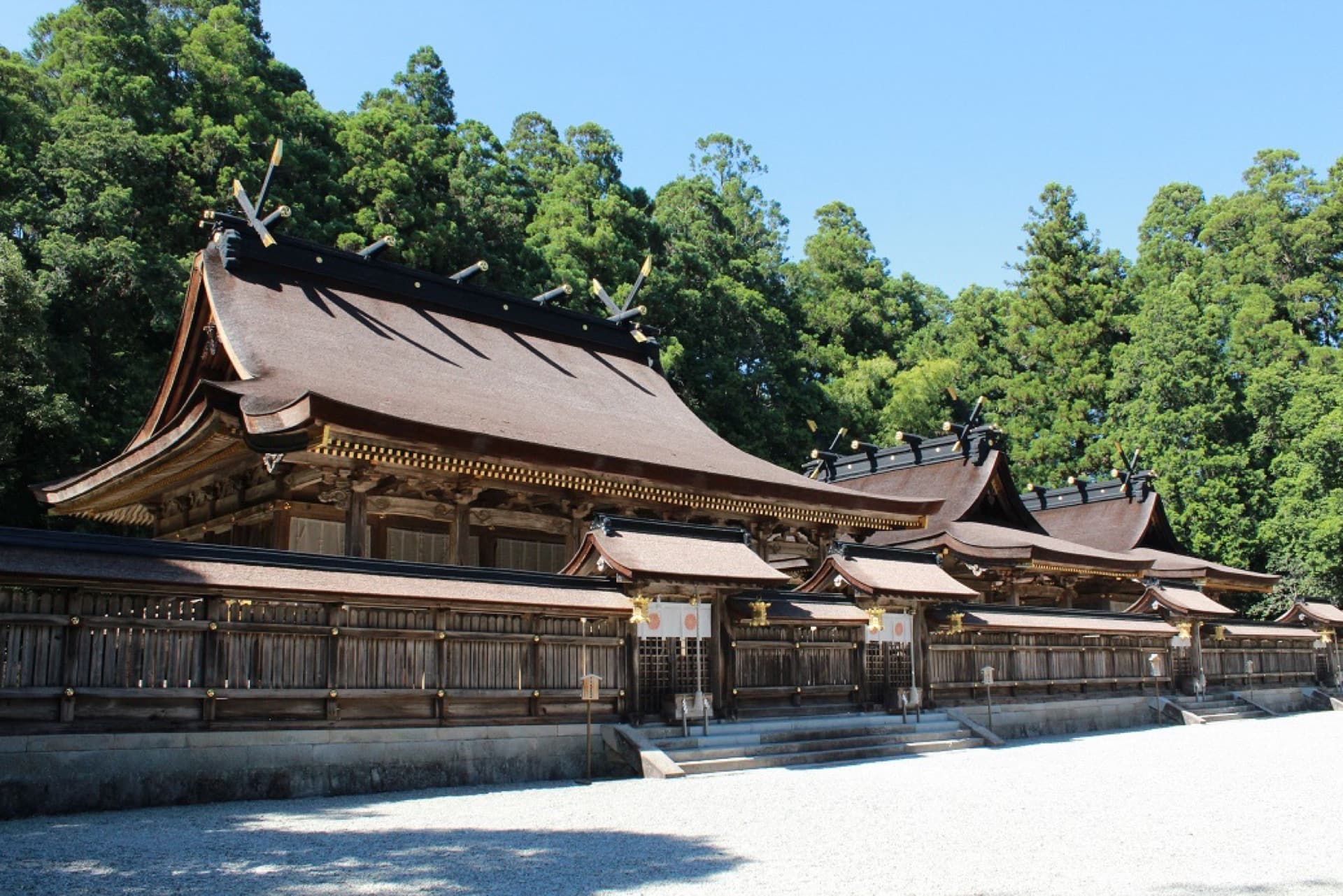
Among the three Kumano shrines, the area around Hongu is where you're most likely to encounter the Yatagarasu motif. As you walk the approach and grounds, take a look at the banners, amulets, and designs. Before climbing the stone steps, try deciding, 'How many crows can I find today?' — it makes for good conversation with travel companions too.
2. The Kumano Goōfu talisman
Among the protective talismans granted at the three Kumano shrines is the 'Goōfu.' It features a distinctive design with crows drawn in a pattern-like fashion, and is said to have once been used as paper for writing oaths (kishōmon). The sense that 'you cannot lie before the gods of Kumano' must have been part of everyday life for people long ago. Availability and types of talismans may change, so if you're interested, it's best to check with each shrine in advance.
3. 'Familiar marks' encountered along the way
Even outside Kumano, the Yatagarasu shows up in unexpected places. The symbol of the Japan Football Association is a famous example. After returning from your trip, when you spot the crow in news or sports broadcasts, the air of Kumano's mountains may suddenly come back to you.
Small ways to enjoy it while walking
- Record the crows you find in a notebook or on your phone: the designs look slightly different from place to place.
- Listen for real crows too: the calls heard in the forest let you feel the backdrop of the myth.
- On the old roads, watch your feet first: don't walk while looking up — stop first, then look.
A word from the editors
Kumano is vast, and rushing through the three shrines can easily end with just 'I saw them.' When you chase a single motif, your walking pace naturally slows, and you begin to notice the stones of the approach, the scent of the trees, and even the small exchanges between people.
Why not search for the crow — the guide of myth — and find your own 'signpost of Kumano' along the way?
Image: 熊野本宮大社 (via (公社)和歌山県観光連盟)


