 LOCAL FIT KUMANOBack to list
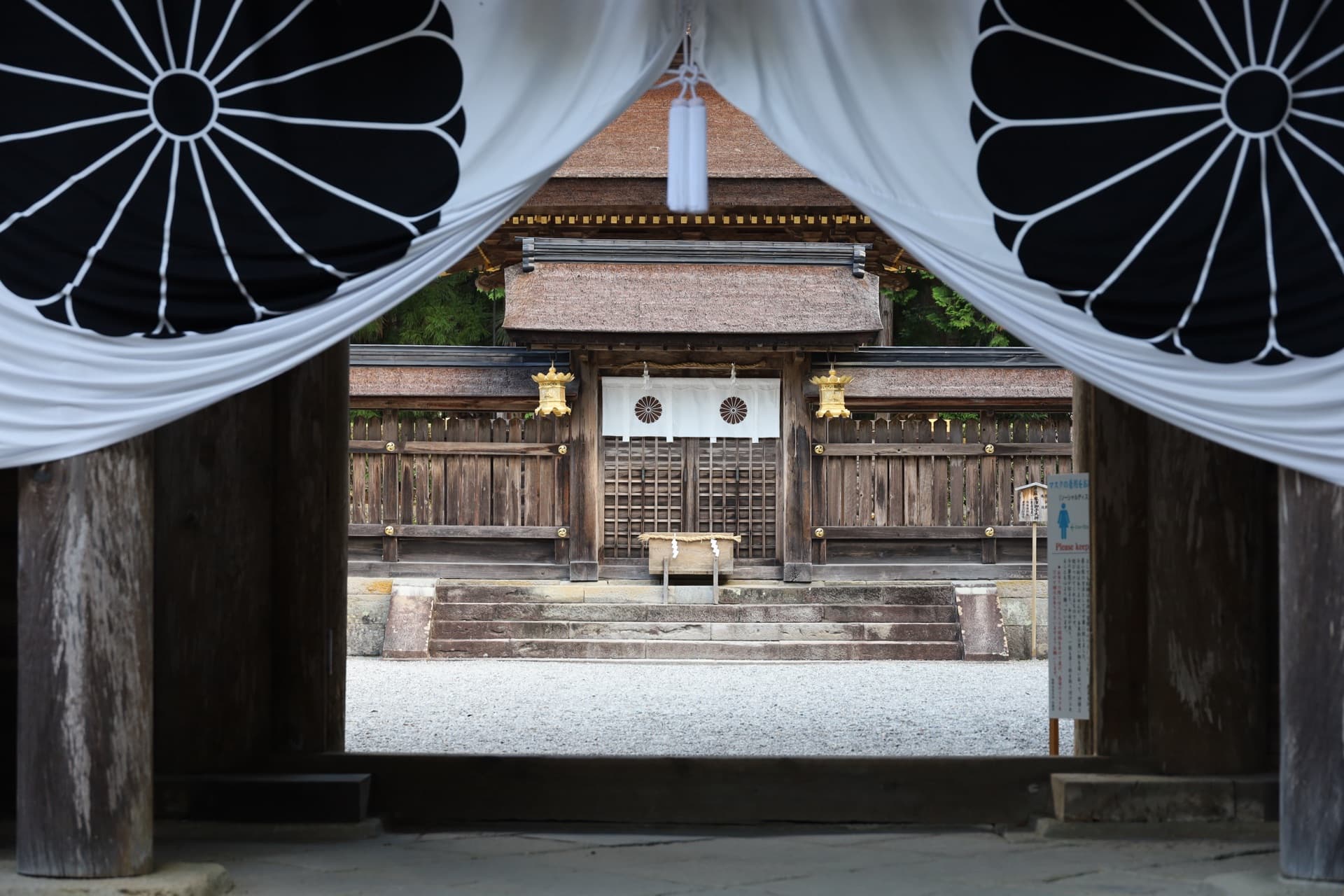
The Three-Legged Crow Soaring Above the Kumano Sky
As you walk through Kumano, you'll encounter images of crows in surprisingly many places—on banners before shrines, in the designs of sacred items, in small marks on information signs. In fact, in Kumano, the crow has long been cherished not as a bird of ill omen, but as a messenger of the gods.
This crow is the 'Yatagarasu.' This time, with the intention of actually walking around looking for crows, we've put together some background.
Who Is Yatagarasu?
The Guide Who Led Emperor Jimmu
The 'Kojiki' and 'Nihon Shoki' tell of how, when Emperor Jimmu pressed into the mountains of Kumano on his way to Yamato, a great crow sent from heaven showed him the way. A crow led the party as they lost their way in the deep mountains of Kii. This legend is what ties Kumano and Yatagarasu together.
'Yata' is often explained as a word meaning 'large,' and the character of being 'one who shows the way' later came to be mirrored in the pilgrims who walked the paths of Kumano.
The Meaning in Three Legs
There are several explanations for why the crow has three legs—among them, that the legs represent heaven, earth, and humankind. Rather than settling on just one interpretation, it's nice to think of it as 'open to many readings' as you look at the images. Comparing the direction of the three legs or the shape of the tail can become a small pleasure as you wander.
The Talisman Printed with Crows: The Goō Treasure Seal
One thing you can't leave out when speaking of Kumano's crow culture is the Kumano Goō-fu. These are talismans printed with stylized characters and pictures of crows, and in the past, they were used not only as amulets for warding off misfortune, but also as paper for kishōmon—written oaths.
Because they carried the weight of 'if you break your oath, you will be punished,' they appear in old tales and even in rakugo storytelling. Today, you can enjoy them by looking at the designs that have been handed down, while thinking of such history.
'Crow-Spotting' as You Walk
Kumano Hongu Taisha, Kumano Hayatama Taisha, and Kumano Nachi Taisha—each of the three shrines has a different atmosphere. When you look for them, the crow designs may also have slightly different expressions.
- Crows drawn on banners and signs at the shrine fronts and precincts
- Crows you can hold in your hand, on sacred items and ema votive plaques
- Small marks on the signposts along the old pilgrimage routes and on pamphlets
When you spot one, take a photo with your smartphone. After visiting all three shrines, look back through them and you'll have your own personal 'crow field guide.' Note that the types of sacred items offered and their distribution hours may change, so if there's something you're particularly interested in, it's a good idea to check the official information in advance.
In the Spirit of Being Guided by a Divine Messenger
What Yatagarasu pointed to may not have been a special destination so much as a sense of reassurance—that 'even if you lose your way, a path will open.' The Kumano Kodo, where you tread the stone-paved paths, is precisely a road where you can feel that sensation with your body.
If you meet a crow along your journey, pause for a breath and look up. It may become a small chance to step away from the hurried everyday and recover your own stride.
Image: 熊野本宮大社 (via (公社)和歌山県観光連盟)


