 LOCAL FIT KUMANOBack to list
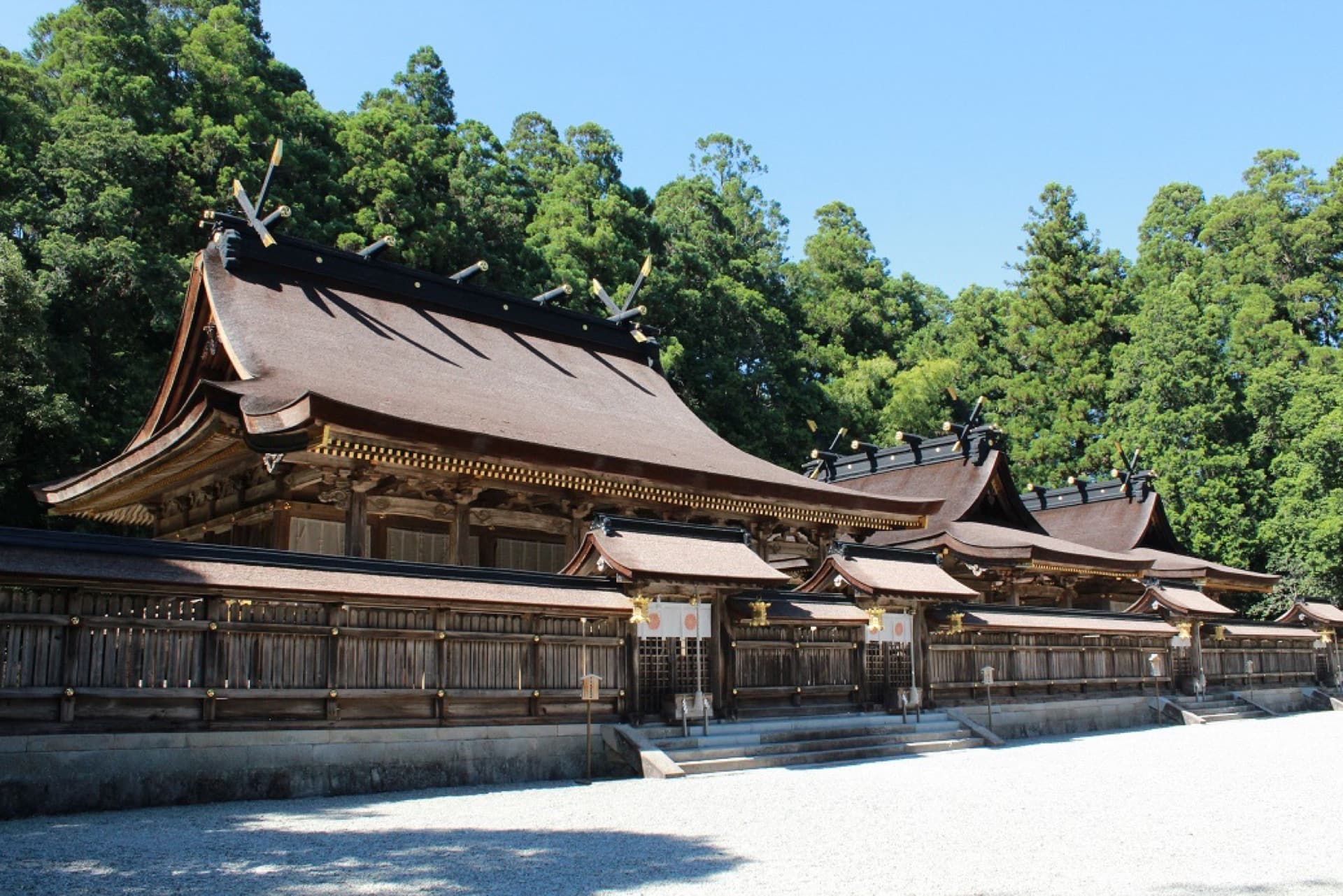
Walking through Kumano, you'll come across paintings and statues of a three-legged crow. This is the Yatagarasu. Familiar as the emblem of Japan's national soccer team, its true home is deeply connected to Kumano. Knowing a little about this crow before your visit can change the way you see the shrine grounds and the ancient trails.
Yatagarasu, the 'God of Guidance'
Yatagarasu is a great crow that appears in the Kojiki and Nihon Shoki, Japan's oldest chronicles. In mythology, when Emperor Jinmu and his party lost their way in Kumano's rugged mountains, the crow was sent down from heaven to guide them to Yamato.
In Kumano — a land of steep mountains and deep forests — this figure, 'the one who shows the way,' resonates even today as you walk the Kumano Kodō. In an age without signposts or maps, having a guide was so vital that it naturally became an object of prayer.
What Do the Three Legs Mean?
There are several interpretations of the three legs — one theory says they represent heaven, earth, and humanity. Since no single explanation is definitive, it's best to take these as 'one of the stories told about it' rather than fixed fact.
Another Bond Between Crows and Kumano
Kumano is also famous for the Kumano Goō-fu, a protective talisman featuring letters drawn in the stylized shape of crows. Spread across Japan as a sacred charm of the Kumano deities, it was once even used as paper on which to write solemn vows.
In Kumano, the crow is regarded as a messenger of the gods (shinshi), and this lives on in the design of the talismans. Which shrine offers which items is best confirmed on-site when you visit.
Try a 'Motif Hunt' During Your Visit
If you're touring the Kumano Sanzan — Kumano Hongu Taisha, Kumano Hayatama Taisha, and Kumano Nachi Taisha — hunting for images of Yatagarasu as you walk is a delightful way to spend your time.
- Look for the three-legged crow on signage and around the talisman offices
- See if it's hidden in the designs of stone monuments, statues, flags, or lanterns
- Notice how the drawing style and feel differs subtly from shrine to shrine
The locations and number of motifs vary by shrine, and may even change with the seasons. When you set out to 'find' something, your eye catches details you'd normally walk past, and conversation with your companions picks up too. If you're with children, it becomes a little treasure hunt.
A Bonus Perspective When Walking the Old Roads
On the Kumano Kodō, you may hear or spot a crow crossing the sky. Of course, not every wild crow is a divine messenger, but looking up and thinking 'perhaps that's today's guide' can lift your spirits a little.
That said, crows are clever birds. If you leave food wrappers open, they may come close, so pack up your bento and snacks as soon as you're done eating, and always take your trash home with you. Respect for the mythic messenger and a proper distance from wild birds should go hand in hand.
In Summary
Yatagarasu is Kumano's symbol of guiding the lost. Without needing specialist knowledge, simply 'looking for the three-legged crow' gently connects the threads of mythology, the ancient trails, and sacred talismans. On your next visit to Kumano, as you walk the approach to each shrine, keep an eye not only on the path beneath your feet but also on the crow motifs that quietly catch your gaze.
Image: 熊野本宮大社 (via (公社)和歌山県観光連盟)


