 LOCAL FIT KUMANOBack to list
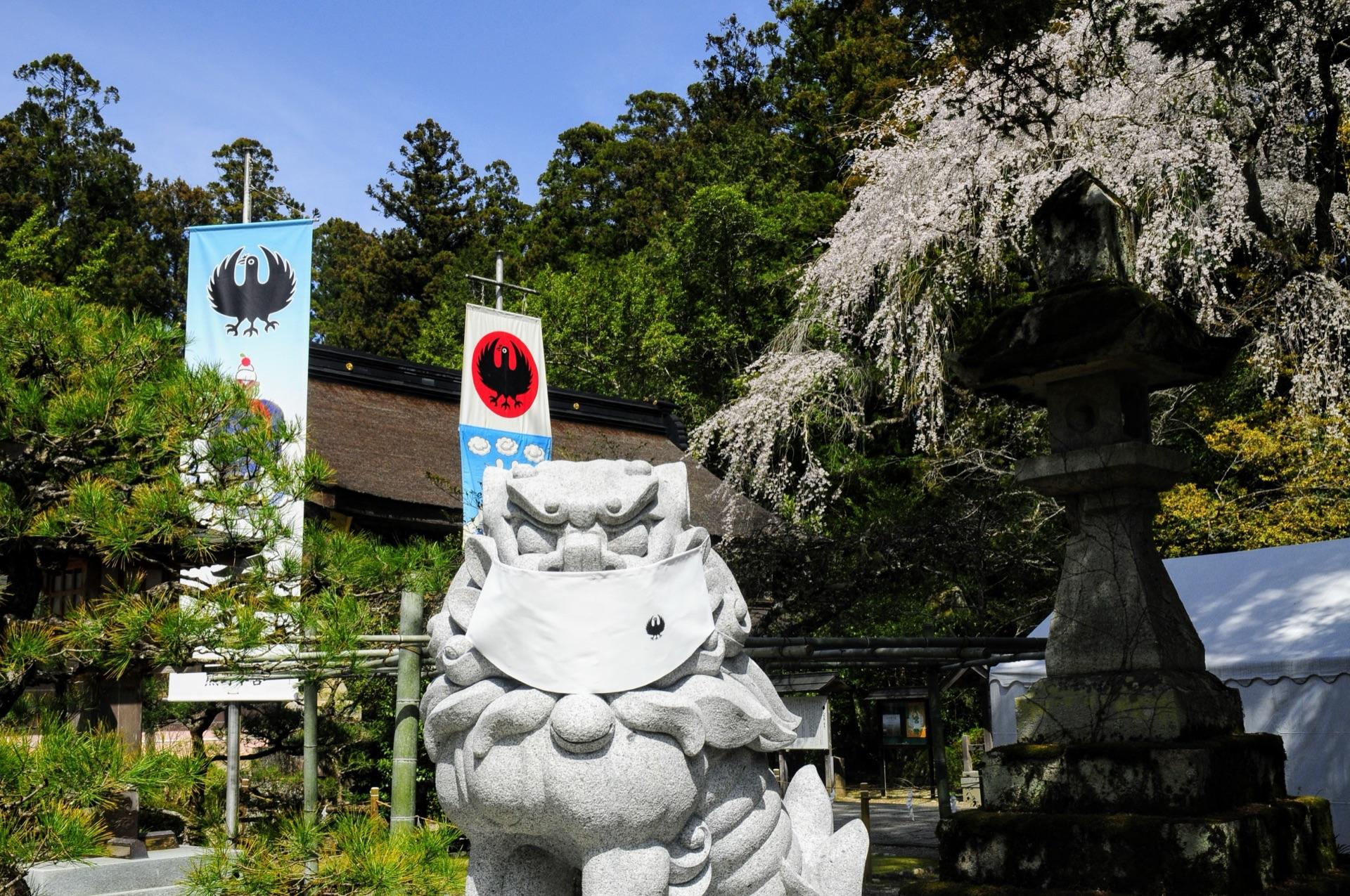
Walk through Kumano, and you'll start noticing the crows
As you walk along the approach to Kumano Hongu Taisha, you'll repeatedly spot the figure of a black bird on flags, on items offered at the shrine, and in illustrated signs. This three-legged bird is the Yatagarasu.
In Kumano, it has long been loved as a 'messenger of the gods.' Even without any specialized knowledge, simply walking along while searching—'ah, there's another crow'—makes the pilgrimage much more enjoyable.
What is the Yatagarasu? The legend of the guiding bird
The bird that led Emperor Jimmu to Yamato
The *Kojiki* and *Nihon Shoki* tell a story: when Emperor Jimmu lost his way in the mountains of Kumano, a great crow sent from the heavens guided him on his path. The 'ata' in Yatagarasu is an ancient unit of length, and the name is said to mean 'a great crow.'
In Kumano, where deep mountains stretch on and on, it feels somehow natural that a story would arise about a bird that shows the way. For those who walk the Kumano Kodo, the bird overlaps with the wish to 'walk the path safely, without losing the way.'
What do the three legs represent?
There are several theories about why the bird has three legs. Some say they represent heaven, earth, and humanity; others say they stand for the three shrines of the Kumano Sanzan. Rather than settling on just one interpretation, I think it's just right to enjoy the fact that 'there are many ways to read it.'
As a familiar example, the Yatagarasu is used in the symbol mark of the Japan Football Association. It's said to have been chosen for the image of 'guiding to victory,' so many visitors may have seen the bird even before coming to Kumano.
Perspectives for spotting the Yatagarasu in Kumano
Take a look at flags, shrine items, and designs
At the Kumano Sanzan, Yatagarasu designs appear in many places. Take your time to look at the flags in front of the shrines, the amulets and talismans, and the patterns on hand towels and other items. Even though it's the same Yatagarasu, the expressions and compositions vary subtly from shrine to shrine and from item to item—that's part of the fun.
Notice the patterns on the 'Goō-fu' talisman
The Kumano talisman known as 'Goō Hōin' is famous for its design that stylizes the figure of crows. It's said to have been used in the past for *kishōmon* (written oaths), suggesting that the gods of Kumano were considered 'witnesses to vows.' Some readers may remember seeing it in a history class.
Just one thing before you set out
When searching for the Yatagarasu, don't approach actual wild crows, and avoid walking around with food in plain sight. On the old roads and shrine grounds, we recommend taking in the scenery at a leisurely pace while letting your thoughts wander to the story of the guiding bird.
What to take home: 'the feeling of being shown the way'
The Yatagarasu is a bird that symbolizes 'guidance' rather than strength. Perhaps that's why so many people visit Kumano at turning points, before making decisions or taking a new step forward—because of this very story.
As you make the rounds of the three shrines, try looking beyond the torii gates and partway up the stone steps, wondering, 'Where will I meet one today?' Each time you spot one, the mountains and myths of Kumano should draw a little closer.
*Note: Shrine items and details on the grounds may vary by season and by shrine. Please check each shrine's official information before visiting.*
Image: 熊野本宮大社 (via (公社)和歌山県観光連盟)


