 LOCAL FIT KUMANOBack to list
Time Spent Beneath Towering Cedars in the Nakahechi Mountains
The Nakahechi route of the Kumano Kodo is often remembered for its stone-paved paths and mountain passes. But what tends to stay with you, as you walk, are the "big things" you happen upon by the roadside.
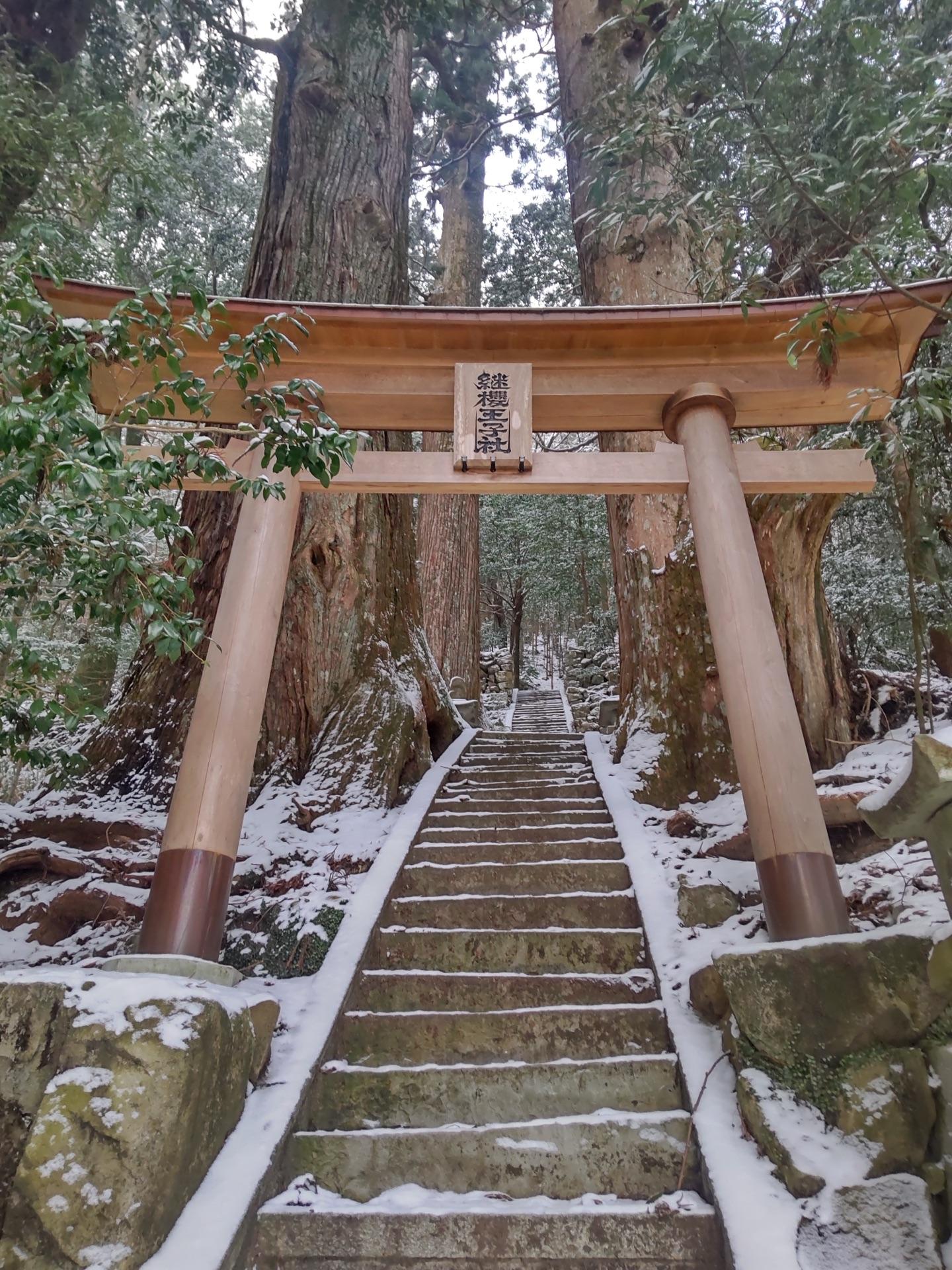
This detour takes us to Tsugizakura-oji, in the village of Nonaka in Nakahechi-cho, Tanabe City. It's a small resting spot visited by both those walking the old road and those arriving by car.
What Is Tsugizakura-oji?
"Oji" refers to the small shrines that were placed along the Kumano Kodo, serving as waypoints where pilgrims to Kumano would stop to pray as they continued their journey. Tsugizakura-oji is one of these.
The name has a legend tied to cherry blossoms (sakura). It's said that Fujiwara no Hidehira, a powerful lord of the Oshu region who once set out for Kumano, pushed his cherry branch walking stick into the ground, and it took root and grew. It's a legend, so there's no way to verify it, but the image of "a traveler's walking stick becoming a tree" evokes the length of the long pilgrimage beautifully.
The Nonaka Ipposugi | The Mystery of Branches All Reaching the Same Way
The greatest sight here is the Nonaka Ipposugi (One-Direction Cedars) that tower around the shrine grounds.
- Many thick trunks stand in a row, so tall that looking up makes your neck ache
- The name comes from the way the branches all extend in a single direction
- It's been said that "the branches reach toward the Kumano deities"
Standing at the base of these trees, the sheer size and stillness of the cedars reach you before any numbers or explanations do. The way the branches all flow in the same direction can be explained by natural factors like wind and sunlight, but it's easy to understand why people long ago linked it to faith—the sight has that kind of power.
A Tip for Looking Up
Rather than only gazing up from right beside the trunks, step back a little and take in the whole row. The way the branches align, and how the sunlight filters through, will look quite different.
A Breather at the Nonaka Spring
In the village is Nonaka no Shimizu (the Nonaka Spring), long beloved by locals. Known as one of Japan's famous waters, this spring is said to have quenched the thirst of those traveling the old road.
A few things to keep in mind at the spring:
- Check the on-site signage for guidance on whether the water is drinkable
- Since this is part of local residents' daily lives, please use it quietly
- When drawing water, don't keep others waiting, and take your trash with you
Even just dipping your hands into the cold water, you can feel the clean, mountain air.
How Long to Linger, and a Note for Walkers
If you're just looking around the shrine grounds and the village, a stroll around Tsugizakura-oji won't take much time, even at an unhurried pace. It fits easily into a rest stop along a Nakahechi walking day, or a drive through the mountains.
- If you're walking the old road, check the distances of the sections before and after, as well as the weather, ahead of time
- The ground can be slippery with cedar roots and damp earth, so wear comfortable walking shoes
- For information on shops and facilities that are open, look up the latest details before your visit
What Stays with You After the Trip
Aside from the famous grand shrines and waterfalls, Kumano is dotted with "quiet places where great trees stand." Between the lively tourist spots, pause for ten minutes beneath a cedar. That kind of time, I think, gently rounds off a journey through Kumano.
Image: 熊野古道中辺路 継桜王子 (via (公社)和歌山県観光連盟)


