 LOCAL FIT KUMANOBack to list
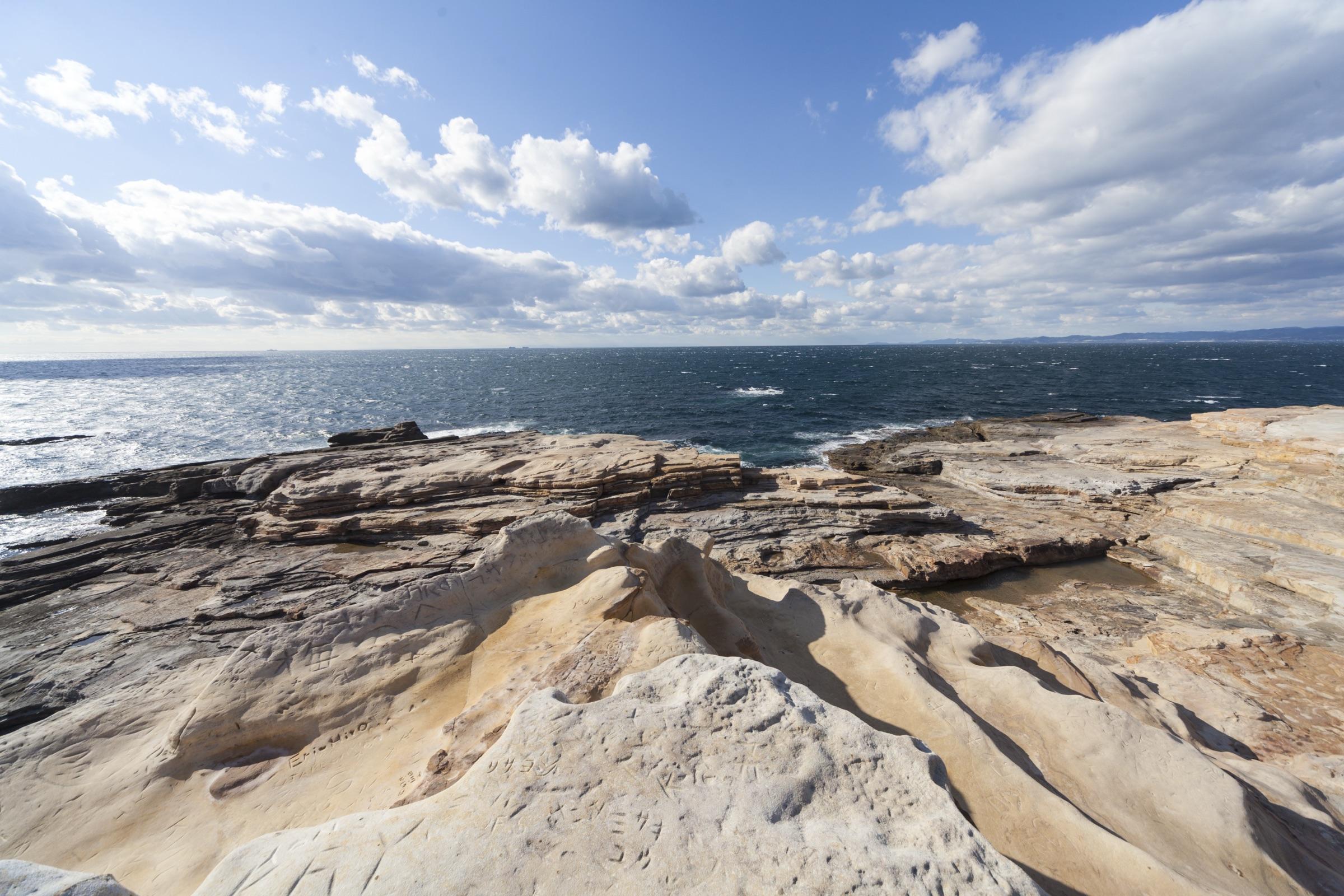
When people think of Shirahama, Shirarahama Beach and the hot spring town usually come to mind. But step out to the western coastline, and you'll find scenery with a rather different expression. This note introduces Senjojiki and Sandanbeki—both famous rocky landmarks facing the Pacific, yet so different in impression that it's hard to believe they share the same coast. This time, let's read about them with the idea of "walking and comparing" the two.
Senjojiki | A Rock "Tatami" Spreading Gently Toward the Sea
As its name suggests ("a thousand tatami mats"), Senjojiki is a place where flat rock beds spread out toward the sea like tatami mats laid side by side. Shaped over long ages by wind and waves, the rock surface is etched with layered patterns and undulating contours.
In local terms, Senjojiki is "a place where you can get right up close to the sea." Walking across the rocks, you can study the patterns at your feet and watch the waves breaking just beyond. Your gaze naturally drops low, and the distance between you and the sea shrinks dramatically.
Tips for Enjoying Your Visit
- Take a close look at the rock layers and color variations
- Savor the openness of a horizon with nothing to block the view
- In the evening, watch the changing colors of sky and sea
The rocks may look smooth, but they can get slippery when wet or when seaweed and moisture remain. It's easy to focus on the scenery and forget your footing, so take it slow.
Sandanbeki | The Drama of Cliffs Plunging Straight into the Sea
Shift your gaze from Senjojiki, and the coastline transforms into sheer cliffs. This is Sandanbeki. A series of cliffs rises straight up from the sea, and the sound of waves crashing at their base echoes up from below.
If Senjojiki is "the sea that draws close," Sandanbeki is "the sea seen from above." From up high, you can clearly make out the deep colors of the water and the way waves shift shape as they strike the rock walls. It's also known as a prime sunset spot, and many visitors come specifically to enjoy the sky's colors just before and after dusk.
The cliffs here are also tied to legends of the Kumano Suigun (the Kumano naval forces). The way the terrain itself is woven into stories of local life and history feels very characteristic of Kumano. Since details about tours and facilities may change by season, it's a good idea to check local information before heading out.
How to Walk the Two Together
Our recommendation is the order "Senjojiki first, Sandanbeki after."
1. At Senjojiki, feel the rock surface and the closeness of the waves with your whole body
2. At Sandanbeki, take in the height of the cliffs and the sweeping view down over the sea
Moving from a low vantage point to a high one changes how the same sea appears, adding rhythm and contrast to your trip. Time your visit for the evening, and you can also enjoy the shifting light around sunset.
A Few Small Preparations for Safe Enjoyment
- Choose shoes with good grip (avoid sandals or heels)
- On days with high waves or strong winds, don't get too close to the water's edge
- Near the cliffs, respect railings and signs—don't step back too far while absorbed in taking photos
- After sunset, it's hard to see your footing, so move around while it's still light
- Wind can be strong, so secure hats and belongings so they don't blow away
In Summary
Even within the same Shirahama coastline, Senjojiki is "the sea you draw close to and touch," while Sandanbeki is "the sea you take in from above." Experiencing the two side by side reveals the rich variety of this coastline facing the Kumano-nada Sea. Beyond hot springs and swimming, come meet another face of Shirahama—ideally in the soft light of evening.
Image: 千畳敷 (via (公社)和歌山県観光連盟)


