LOCAL FIT KUMANOBack to list
Shirahama's sea is more than just 'white sand'
When you hear 'Shirahama,' the first thing that comes to mind is probably the bright sands of Shirarahama Beach. But if you venture a little further south along the coastline, you'll meet a completely different side of Shirahama — a rocky shore shaped slowly over time by wind and waves.
The most striking contrast is between Senjojiki and Sandanbeki. Both are scenic spots facing the Pacific Ocean, and many visitors tour them together on the same day.
Senjojiki: A 'rock stage' opening out to the sea
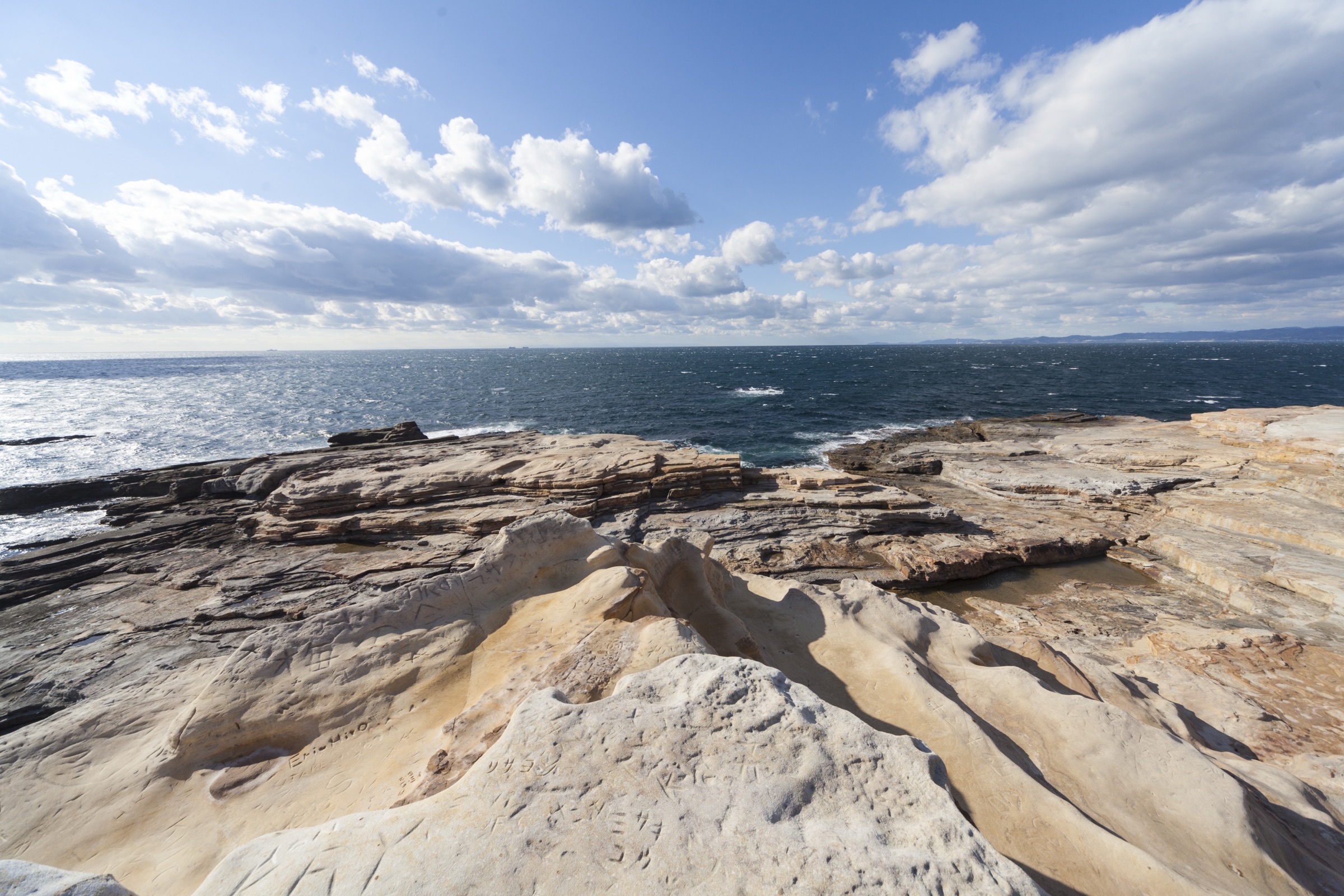
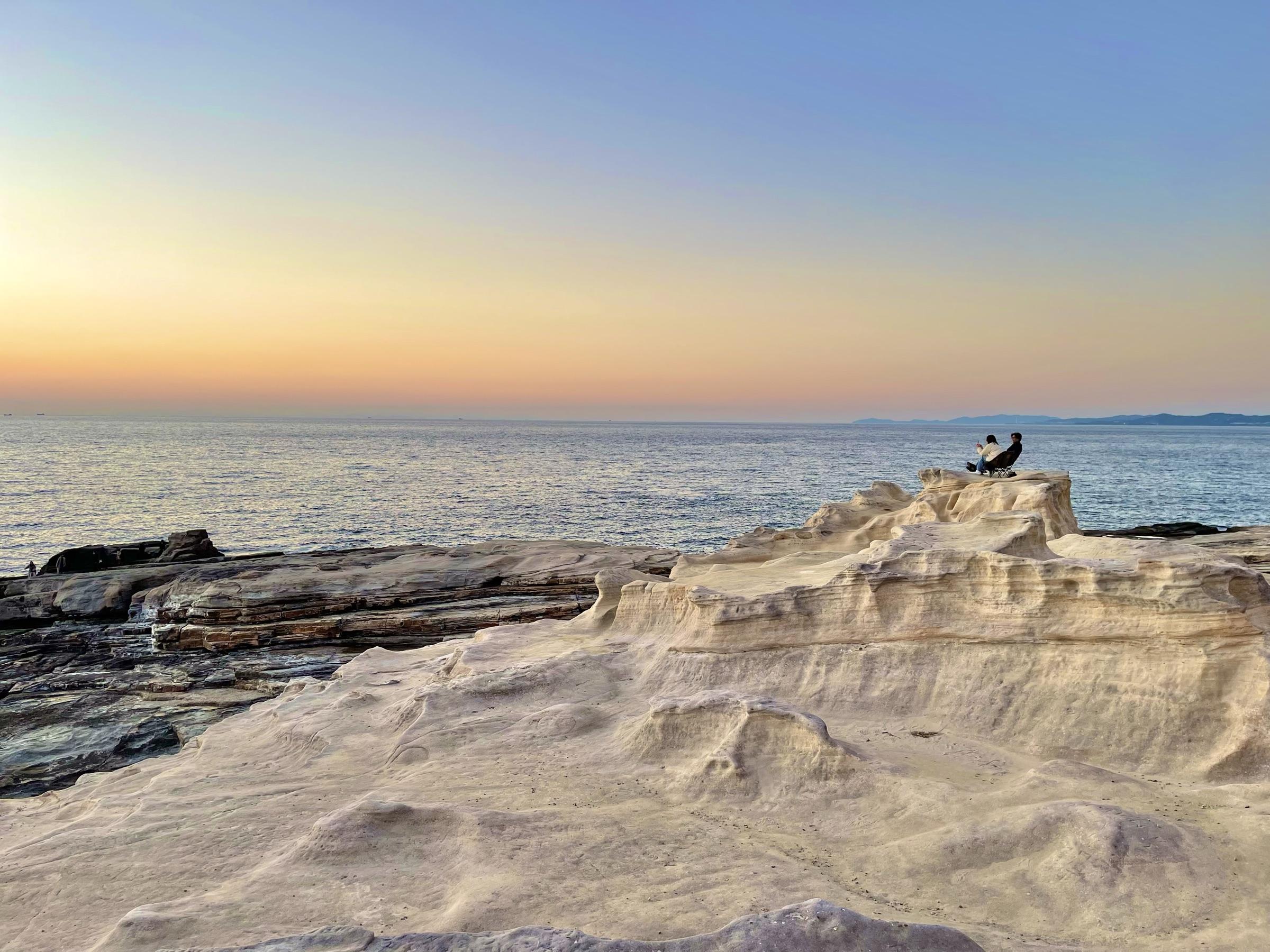
Senjojiki — literally 'a thousand tatami mats' — is a vast, gently sloping expanse of rock that looks as if a thousand tatami mats have been laid out. Layers of sandstone, carved by waves, step gradually down toward the sea at a slight tilt.
Things you notice when you walk it
- The rock surface is dotted with grooves and round hollows made by the waves
- The rocks beneath your feet aren't flat — they tilt gently
- With little blocking your view, the horizon feels incredibly wide
My impression is that this is a place to 'see the sea from the side.' Because your eye level is close to the waves, you can feel the swell rolling in and out, and even the salty scent of the sea feels close at hand. In the late afternoon, when the sky changes color, the rocks also shift their tones little by little.
Sandanbeki: Looking down on the sea from above
Sandanbeki, by contrast, is a line of sheer cliffs dropping straight into the ocean. Peering down from behind the railing, you'll see waves crashing far below, breaking white against the rocks. Unlike Senjojiki, this is a view of 'the sea from above.'
At the base of the cliffs lies a sea cave carved out by the waves, and local legend holds that it was used by the Kumano Suigun (Kumano Navy) to hide their boats. Picturing the stories of the people who once sailed these seas adds real depth to what might otherwise just be a spectacular view.
How to enjoy both together
1. Start at Senjojiki to feel the closeness of the sea
2. Then move on to Sandanbeki for its height and power
In this order, your impression shifts from a 'gentle sea' to a 'wild sea,' bringing out the contrasting faces of the same Pacific. The reverse order works too, but in seasons when sunset timing matters, it's worth thinking ahead about which spot you want to catch in the best light.
Before you go
- Be especially careful on windy or rough-sea days. Coastal rocks get wet with sea spray and become slippery. Never cross into restricted areas or go beyond the railings.
- Wear non-slip shoes. Sneakers or other well-fitting shoes are better than sandals.
- Bring an extra hat or jacket. The coast is windier than it looks, and it can feel much cooler than expected.
- For children or those unsure on their feet, don't push your limits. You can appreciate the cliffs' power just fine from inside the railing.
Where this fits in a Kumano journey
If the Kumano Kodo pilgrimage routes and the Three Grand Shrines represent the 'Kumano of mountains and forests,' then Shirahama's coastline is the gateway to a 'Kumano that opens onto the sea.' It makes a perfect detour to shift your mood as you travel from Tanabe to Shirahama. Together with the hot spring town and Shirarahama Beach, consider spending an afternoon taking in the ocean views.
Opening hours, facilities, and access conditions may change by season. Please check the latest information with the local tourism association before heading out.
Image: 千畳敷 (via (公社)和歌山県観光連盟)