 LOCAL FIT KUMANOBack to list
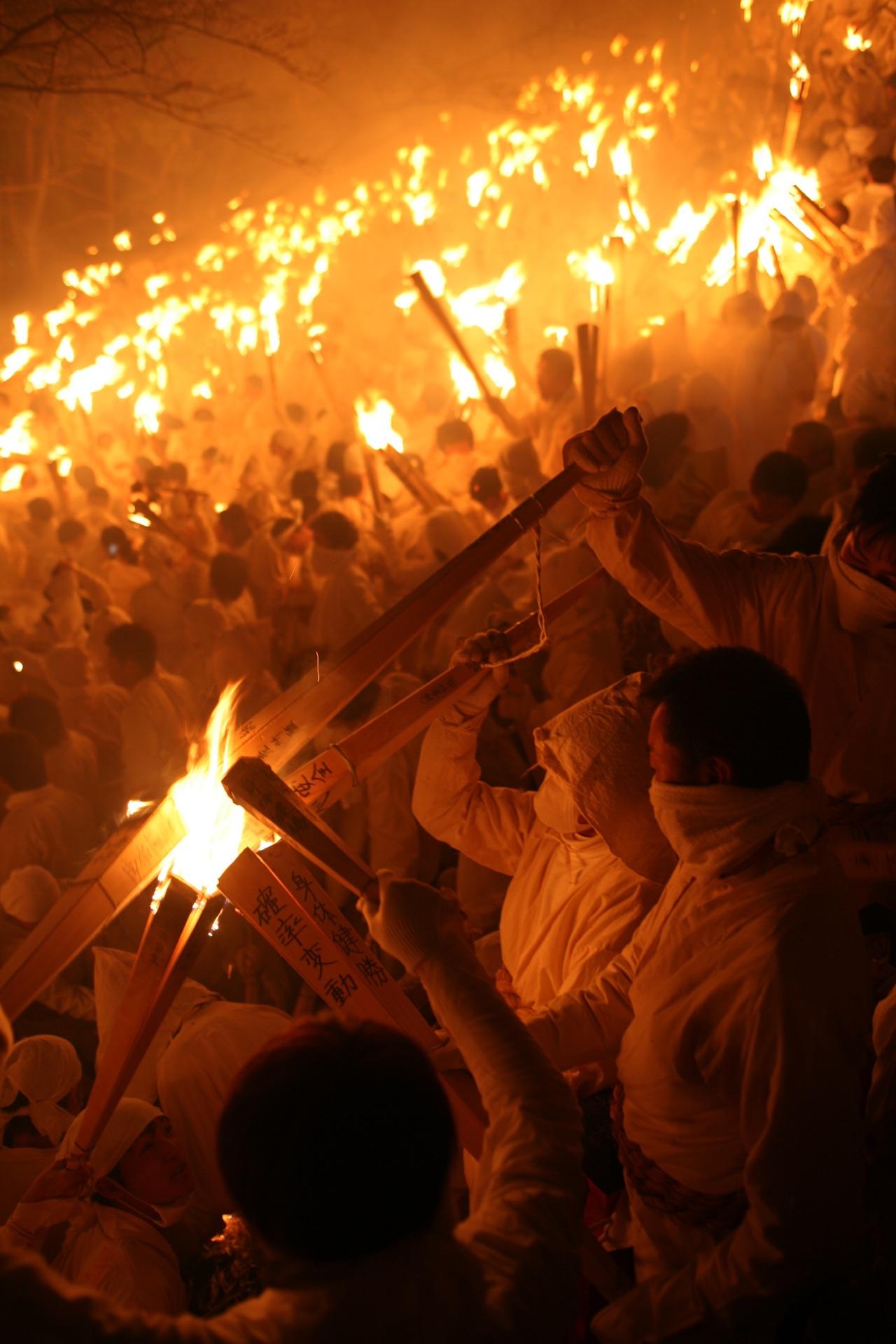
A Night When Fire Runs Through Winter Shingu
When locals talk about winter in Kumano, one of the first names that comes up is Shingu's "Oto Matsuri." Held every year in early February on Kamikura Mountain — home to Kamikura Shrine — this fire festival wraps the darkened mountain and town in the glow of torches and the fervor of the people.
Rather than a tourist-oriented event, it is a deeply rooted ritual in local life. For the people here, it signals that "when this festival comes, spring is near." If you plan to see it, knowing a little about its background will give what unfolds before your eyes a much deeper meaning.
An Overview of the Oto Matsuri
The White-Robed "Noboriko"
The main participants are the "noboriko" — men dressed in white robes with a rope tied around their waists. By long-standing custom, only men are allowed to climb the mountain and take part. Before the festival, they are said to purify themselves and practice restraint, readying their minds for the day.
Receiving the Sacred Fire and Racing Down the Stone Steps
As night falls, the noboriko gather on Kamikura Mountain and transfer the fire divided from before the deity to their torches. When the mountain gate opens, they all race down the steep stone steps at once. The streams of flame flowing down through the darkness are sometimes described as a "river of fire."
Kamikura Shrine, the stage for all this, is an ancient sacred site where the massive Gotobiki Rock is enshrined as the deity itself. The power dwelling in the rock atop the mountain is carried down to the village together with fire. Viewed as a form of prayer, even the speed and wildness of the descent begin to take on meaning.
What Visitors Should Keep in Mind
The Stone Steps Are a "Sacred Space"
The stone steps and the mountaintop are sacred ground for the participants, and they also carry real danger. Spectators should follow directions and restrictions, and watch quietly from designated areas.
Dress Warmly and Allow Extra Time
February nights can be cold, even in this seaside town. Gloves, hand warmers, and a wind-resistant jacket will keep you comfortable. On the day, large crowds gather, and traffic restrictions and congestion can occur around roads and the station. Transportation, whether viewing is possible, and where you can watch from may change from year to year, so be sure to check the latest information from Shingu City or the local tourism association before you go.
Savor the Sounds and Scents, Not Just the Photos
The crackle of the torches, the scent of smoke, the sound of feet on stone steps. These are moments to take in with your own eyes, not just through a smartphone screen. Be mindful of those around you when using flash or tripods.
Walking Through Shingu Before and After the Festival
Even outside the festival day, Shingu offers unhurried walks to places like Kumano Hayatama Taisha and the mouth of the Kumano River. Looking up at the mountain where Gotobiki Rock sits, from the town side, in the clear winter air, you can picture the fire descending from above — and the festival will feel all the more vivid in your imagination.
Editor's Note
The Oto Matsuri is a little different from a lively tourist festival — it is a prayer ritual with a sense of tension. If you visit with the mindset of being "allowed to witness" it, you will be able to quietly receive the winter night that the people of Shingu have long protected.
Image: 神倉神社 お燈祭り (via (公社)和歌山県観光連盟)


