 LOCAL FIT KUMANOBack to list
What Is Kamikura Shrine in Shingu City? | The Origins of Kumano Faith, Where a Giant Rock Is Enshrined
Halfway up a mountain close to the center of Shingu City in Wakayama Prefecture stands Kamikura Shrine. It is a subordinate shrine of Kumano Hayatama Taisha, and its object of worship is a massive rock atop the mountain known as "Gotobiki Rock." "Gotobiki" is a local word for toad, and the rock is said to have earned this name because its shape resembles a crouching toad.
Long before shrine buildings were constructed, the gods of Kumano were believed to dwell in nature itself — in rocks, mountains, and waterfalls. Gotobiki Rock on Mt. Kamikura is a sacred place said to be where the Kumano deities first descended to earth. It can truly be called a place where you can feel "the landscape of the very beginnings of Kumano faith."
Climbing the 538 Stone Steps | What to Know Before You Go
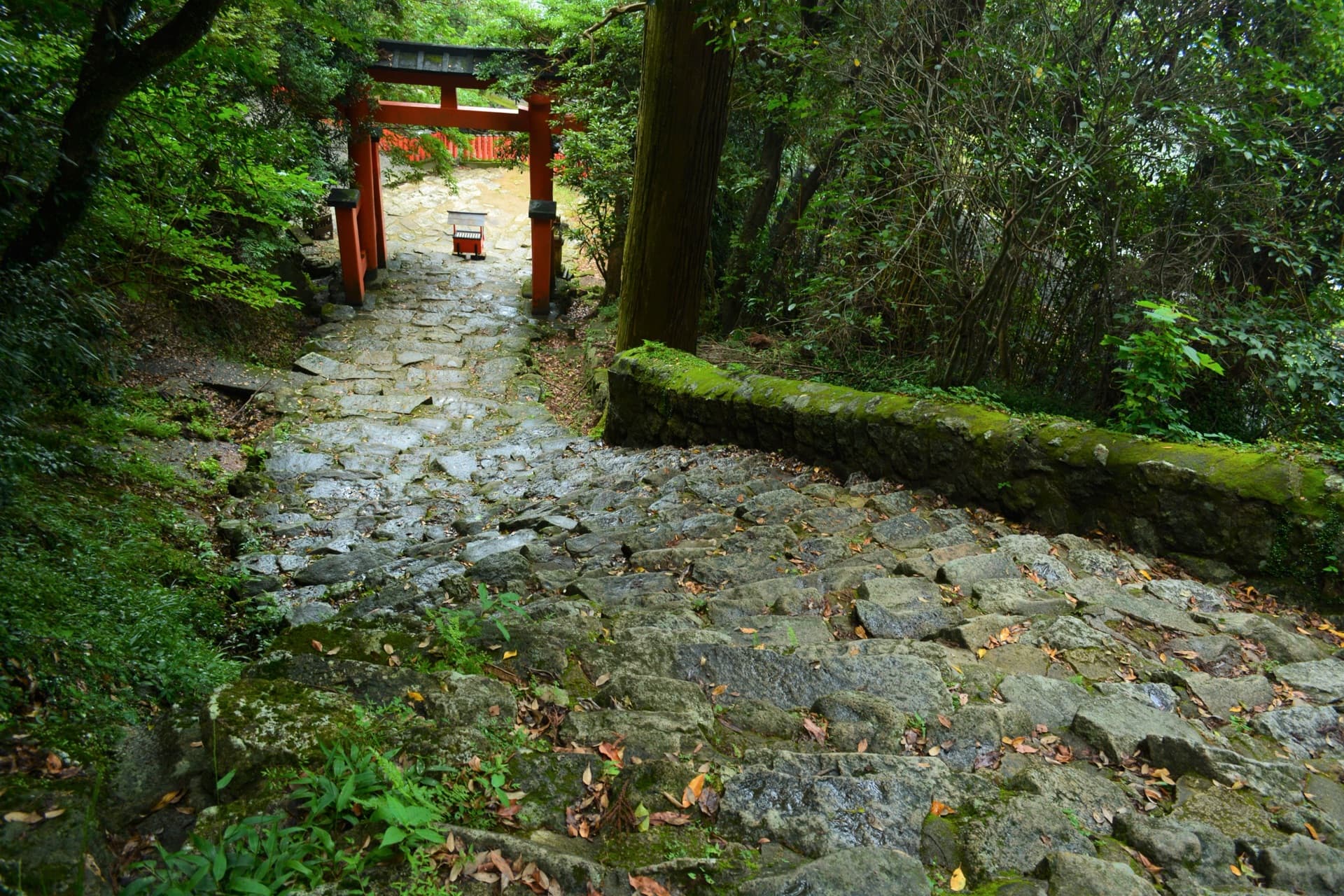
Kamikura Shrine is famous for the steep stone steps along its approach. There are said to be 538 of them — rough steps built from natural stones, said to have been donated by Minamoto no Yoritomo in the Kamakura period.
How to Climb Safely and Comfortably
- The steps are high and the slope is steep: There is little in the way of handrails, so check your footing one step at a time as you climb.
- Wear sneakers or trekking shoes: The stones have worn smooth and can be slippery, so avoid sandals and leather shoes.
- Take extra care in rain or just after rain: Moss and moisture make the steps slippery. If the weather or your physical condition is a concern, it's wise to choose another day.
- The descent is surprisingly scary: Steps that have tired your knees on the way up will feel even harder going down. Save some energy for the return trip.
- It's fine to take breaks: There's no need to rush. If you pause and look back, the townscape of Shingu gradually spreads out below.
For families with small children or anyone unsure about their legs, deciding in advance to go only partway is also a perfectly fine way to enjoy the visit.
Meeting Gotobiki Rock at the Summit
When you finish climbing the steps, a small shrine stands nestled beneath the rock, with the massive boulder looming overhead. You will likely be overwhelmed not by anything human-built, but by the sheer presence of the rock itself. As you catch your breath and quietly press your hands together in prayer, you may sense that "climbing the mountain" itself was part of the act of worship.
Below, you can see the town of Shingu and the Kumano River, and on clear days, the open expanse of the Kumano Sea. Footing at the summit is limited, so be mindful of other visitors and your own footing when taking photos.
Don't Overlook the Winter Fire Festival "Oto Matsuri"
Kamikura Shrine is also known as the stage for the fire festival "Oto Matsuri," held every February. Men clad in white robes dash down the stone steps carrying lit torches — a signature winter tradition of Shingu. This festival is a sacred rite that local people have carefully passed down, and there are specific rules and etiquette for watching or taking part. If you plan to visit during the festival season, check the latest information and be sure to show respect for the local community.
Combine Your Visit with Kumano Hayatama Taisha
Kamikura Shrine is known as the "Moto-miya" (original shrine), and it is said that the deities were welcomed from here to the land of Shingu. For this reason, visiting it together with Kumano Hayatama Taisha gives you a clearer sense of the flow from the worship of rocks to the worship of shrine buildings.
1. At Kamikura Shrine, experience the simple, direct prayer offered to the rock.
2. At Kumano Hayatama Taisha, enjoy the vermilion-painted shrine buildings and the world of the Kumano Gongen deities.
3. If you have time to spare, take a stroll through town to soak in the atmosphere of Shingu.
We recommend climbing the stone steps in the morning while you have energy, then heading to Hayatama Taisha in the afternoon.
Summary
Kamikura Shrine in Shingu City is a place where, after climbing 538 stone steps, you come face to face with Gotobiki Rock and touch the very origins of Kumano faith. Rather than a tourist spot, please visit with a quiet heart as a "place of prayer." With proper footwear and plenty of time, your Kumano journey will gain an experience that stays deeply in your memory.
Image: 神倉神社 (via (公社)和歌山県観光連盟)


